

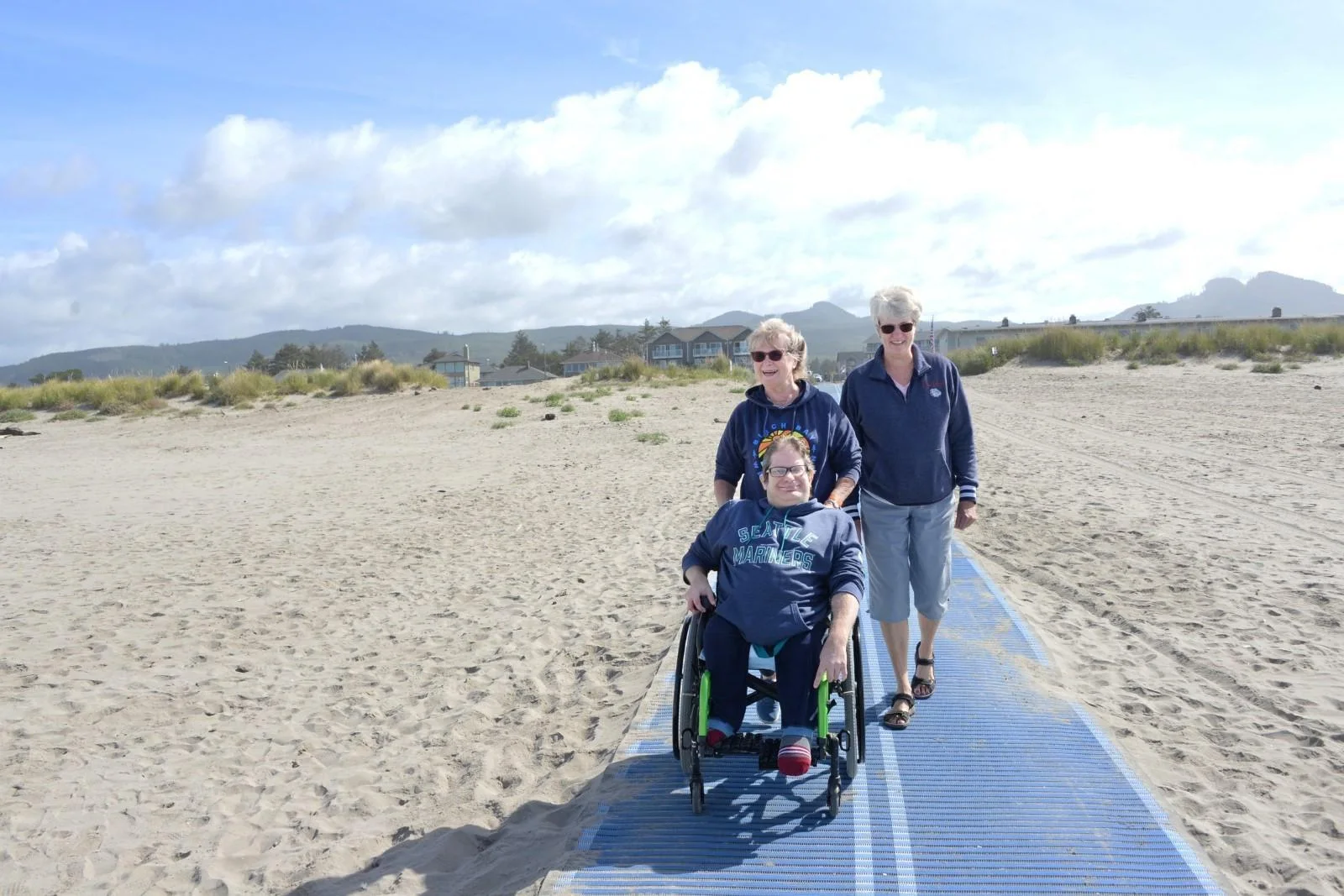
JurnalPost.com - Tourism should be a space that can be enjoyed by everyone, regardless of age, physical condition, economic capacity, or social background. However, in practice, not everyone has equal opportunities to access tourist destinations. Inadequate facilities, limited information, and a lack of readiness among service personnel remain obstacles to achieving truly inclusive tourism.
Inclusive tourism is an approach to tourism development that prioritizes openness, equality, and justice for all groups in society. This concept encompasses the needs of children, the elderly, people with disabilities, and community groups that have historically faced barriers to accessing services and benefiting economically from tourism activities.
Its implementation is not just about providing wheelchair ramps or special facilities for tourists. More broadly, inclusive tourism emphasizes equal opportunities to participate, receive proper service, and engage in tourism-related economic activities.
Although awareness of the importance of inclusivity continues to grow, its implementation still faces various challenges that require the attention of the government, destination managers, business operators, and the public.
Barriers to Physical and Architectural Accessibility
One of the main challenges in developing inclusive tourism is the limitation of physical accessibility at tourist destinations.
Indonesia's diverse geographical conditions, ranging from urban areas and mountains to beaches and rural regions, present a unique challenge in providing infrastructure that can be used by all tourists.
Natural tourist destinations, for example, often have steep paths, uneven surfaces, or limited transportation access. Such conditions can make it difficult for wheelchair users, the elderly, and visitors with limited mobility.
Meanwhile, in developed tourist areas, one can still find facilities that do not fully consider accessibility principles, such as toilets unsuitable for wheelchair users, stairs without alternative routes, or a lack of signage accessible to those with sensory disabilities.
Therefore, destination managers need to understand that accessibility is not just about providing additional facilities, but ensuring the entire travel experience can be enjoyed safely, comfortably, and with dignity.
Limitations and Inaccuracies of Digital Information
The development of digital technology has made it easier for tourists to search for information, book accommodations, and plan trips. However, this progress has not fully guaranteed ease of access for all user groups.
Information regarding accessible facilities at a destination is often limited or does not accurately reflect the actual conditions on the ground.
For example, an accommodation might list itself as disability-friendly on a booking platform but fail to provide details regarding door widths, bathroom conditions, the presence of elevators, or access to public facilities.
Such unclear information can cause difficulties for tourists who require certainty before traveling.
Furthermore, a number of digital tourism services still face accessibility issues, especially for users of assistive technology such as screen readers (screen reader).
In fact, the principles of digital accessibility have been outlined in the Web Content Accessibility Guidelines (WCAG), which emphasize the importance of presenting digital information and services so they can be understood and used by various user groups.
Thus, the development of inclusive tourism needs to pay attention to the quality and accuracy of digital information, not just the construction of physical facilities at destinations.
Lack of Staff Readiness and Attitudinal Barriers
Adequate facilities do not necessarily result in an inclusive tourism experience if they are not supported by human resources with the appropriate understanding and service skills.
In the tourism industry, the interaction between tourists and staff is a crucial part of service quality. However, there remain challenges in the form of limited knowledge, lack of training, and attitudes that do not fully understand the needs of diverse tourists.
Tourists with specific disabilities, for example, may require different forms of communication or assistance. Proper service requires an understanding of how to communicate, the use of sign language, the provision of easily understood information, and safe mobility assistance.
Another important point is to avoid attitudes that are overly pitying or assume that tourists with disabilities always require help.
Inclusive service should respect the independence and choices of tourists. Assistance should be provided based on individual needs and consent, not on staff assumptions.
Therefore, training and capacity building for human resources are essential needs for building a tourism environment that is more open, professional, and respectful of diversity.
Financial Limitations and Market Perception
The next challenge relates to the financing of inclusive facility and service development.
For some tourism business operators, particularly micro, small, and medium enterprises, building accessible infrastructure and conducting staff training can be seen as an additional investment burden.
This view is often accompanied by the concern that the number of tourists requiring special facilities is relatively limited, making the development costs difficult to justify in terms of return on investment.
In reality, facilities designed inclusively can provide benefits to a wider group of users. Ramps, for example, not only help wheelchair users but also assist the elderly, parents with strollers, and tourists with temporary mobility limitations.
In the long term, increased accessibility also has the potential to expand the market and improve service quality.
For this reason, government support through policies, incentives, technical assistance, and capacity building for business operators is essential so that the implementation of inclusive tourism is not limited to large companies.
Lessons in Inclusive Tourism from Qeshm Island, Iran
The development of inclusive tourism is not only about access for tourists but also about the involvement of local communities in obtaining economic benefits.
One interesting example can be found on Qeshm Island, Iran, through the development of community-based tourism or community-based tourism.
Research by Adel Nikjoo, Siamak Seyfi, and Jarkko Saarinen published in the Annals of Tourism Research Empirical Insights in 2025 shows how the development of community-based tourism can open opportunities for women's economic participation and influence gender relations in several villages on Qeshm Island.
In Salakh Village, the involvement of women in the development of accommodation and tourism services has become a form of local economic empowerment. Prominent women such as Zinat Daryai have played a key role in opening spaces for women's participation in the tourism sector.
Meanwhile, Shibderaz Village demonstrates how hawksbill sea turtle (hawksbill sea turtle) conservation activities and support from external organizations have helped open up opportunities for handicrafts and economic activities for women. However, the experience of this village also shows that the sustainability of empowerment can face challenges when external support decreases.
In Hengam, the development of tourism activities has encouraged the formation of a beach market managed by local women. Through the trade of handicrafts, food, and local products, women have gained the opportunity to interact directly with tourists while increasing their economic independence.
The experience of Qeshm Island shows that inclusivity in tourism is not measured solely by the number of tourists who arrive. The opportunity for local communities, including women, to be involved in decision-making and obtain economic benefits is also an important indicator.
Inclusive Tourism Innovation in Indonesia
In Indonesia, technological development opens opportunities to integrate digital innovation with the strengthening of the community's role in the tourism industry.
One approach offered in academic studies is the Hybrid Smart Travel Assistant–Community-Based Travel Agent (STA–CBTA) model.
This model is discussed in a study titled Reconfiguring Indonesia's Travel Ecosystem through the Hybrid STA–CBTA Model: A Pathway to Inclusive Innovation in Tourism 4.0, which was published in the Journal of Open Innovation: Technology, Market, and Complexity in 2026.
This approach combines the capabilities of digital technology in providing information and supporting travel planning with the role of community-based travel agents who possess knowledge of local culture, conditions, and community needs.
Through this integration, digital innovation is expected not only to benefit technology companies or large-scale travel service providers but also to provide opportunities for local tourism operators.
This concept is relevant for destination development in various regions of Indonesia, including Yogyakarta, Lombok, and Bali, which have potential for cultural tourism and community involvement in providing tourism services.
However, the STA–CBTA model should be understood as an approach offered through research, not as proof that the system has been implemented comprehensively across various destinations.
The success of its implementation still requires the readiness of digital infrastructure, cooperation among stakeholders, community capacity building, and fair management of economic benefits.
Realizing Tourism That Is Open to All
Inclusive tourism is essentially an effort to build a tourism industry that does not leave behind certain groups of society.
The provision of accessible physical facilities, open digital information, human resource readiness, and financial support are several important aspects that must be developed simultaneously.
However, the success of inclusive tourism must also be viewed from the extent to which local communities have the opportunity to participate and benefit from tourism activities.
The experience on Qeshm Island and the development of community-based tourism innovation concepts in Indonesia show that inclusivity can be built through a combination of community empowerment, the use of technology, and sustainable destination management.
Ultimately, inclusive tourism is not just about presenting destinations that can be visited by everyone, but also ensuring that every individual has an equal opportunity to enjoy, participate in, and benefit from the development of the tourism sector.






Comments 0
Write a Comment Share your response