

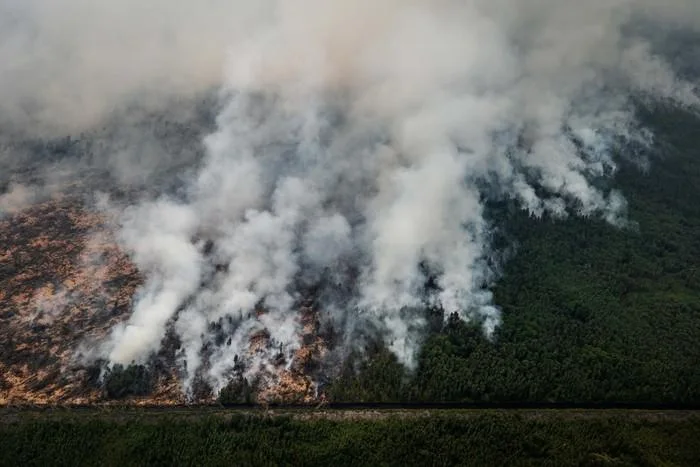
MALANG, JurnalPost.com – The commemoration of World Tree Day, which falls every 21 November, is often marked by mass tree-planting events. However, amidst the threat of forest and land fires (karhutla) that continue to occur across various regions of Indonesia, this commemoration serves as a moment to reflect on the extent to which the trees that have been planted are truly protected and maintained.
From an environmental engineering perspective, trees are not merely aesthetic elements of green spaces, but a vital part of ecological infrastructure. Trees play a role in absorbing carbon dioxide, producing oxygen, maintaining soil fertility, and helping to reduce the risk of flooding and erosion.
This was stated by Mochammad Rizky Alfarizy, an Environmental Engineering student at the State Islamic University (UIN) Maulana Malik Ibrahim Malang. According to him, the essence of World Tree Day should not stop at planting activities alone.
"So, the commemoration should not just be about planting trees, but also ensuring that those trees are cared for and grow well," said Rizky in his statement on Tuesday (17/11/2026).
Forest Fires Threaten Ecosystem Balance
The importance of protecting and caring for trees is felt even more acutely amidst the threat of forest and land fires that still occur in Indonesia.
In environmental studies, forest fires are not just events that scorch trees, but can also damage the balance of the entire ecosystem.
When fire strikes a forest area, wildlife habitats, biodiversity, carbon stocks, and the functions of water catchment areas are all threatened. The impact of such damage can even extend to areas far from the fire site.
"The impact of forest fires can be felt as far as major cities because smoke from the fires can be carried by the wind to distant regions. The consequences include a decline in air quality due to PM2.5 particles, respiratory problems, eye irritation, and disruption to public activities," explained Rizky.
In addition to reducing air quality, forest and land fires also release greenhouse gases into the atmosphere, contributing to global warming and climate change.
Damage caused by forest fires cannot be restored in a short time. Rizky explained that although pioneer vegetation may grow back within a few years, the full recovery of ecosystem functions can take decades.
Post-fire rehabilitation processes require various environmental restoration steps, ranging from replanting local plant species and improving soil conditions to restoring water management in peatlands and conducting periodic environmental quality monitoring.
Mitigation and Prevention Must Be a Priority
Given the magnitude of the impact, efforts to prevent forest and land fires are considered more effective than simply relying on suppression once the fire has spread.
Several mitigation steps that can be taken include maintaining peatland moisture, stopping the practice of land clearing by burning, and increasing the monitoring of hotspotshotspotperiodically and in real-time.
These steps also need to be supported by consistent supervision, enforcement of regulations, and education for the public regarding the dangers of forest and land fires.
"Community involvement is also very important because the prevention of forest fires cannot rely solely on the government," emphasized Rizky.
According to him, environmental protection requires shared responsibility. The government, the community, the education sector, and the business sector all have a role in maintaining the sustainability of forest areas and preventing fires.
The Role of Students in Building Environmental Awareness
The geographical distance from forest areas sometimes makes urban communities feel they have no direct connection to the issue of forest fires.
In reality, the impact of forest fires can reach various regions through air pollution, changes in environmental conditions, and public health disturbances.
For Environmental Engineering students, this situation is an opportunity to apply the knowledge gained during their studies through concrete activities in their surrounding environment.
Contributions can start from the campus environment, such as ensuring the sustainability of tree planting and maintenance programs, conducting simple research on air quality, and evaluating the effectiveness of greening programs.
In addition, students can also utilize social media as a means of education and environmental literacy campaigns to increase public awareness about the importance of maintaining the ecosystem.
Through these various activities, students are expected not only to understand environmental issues theoretically but also to be able to take an active role in efforts to prevent and overcome environmental damage.
The commemoration of World Tree Day 2026 serves as a reminder that environmental issues cannot be solved solely through symbolic activities held once a year.
Commitment and sustainable action are needed so that the trees planted can grow, provide ecological benefits, and become part of the effort to maintain environmental balance.
"The point is, do not just commemorate World Tree Day by planting trees, but make it a momentum to build care and responsibility for the surrounding environment," concluded Rizky.



Comments 0
Write a Comment Share your response