

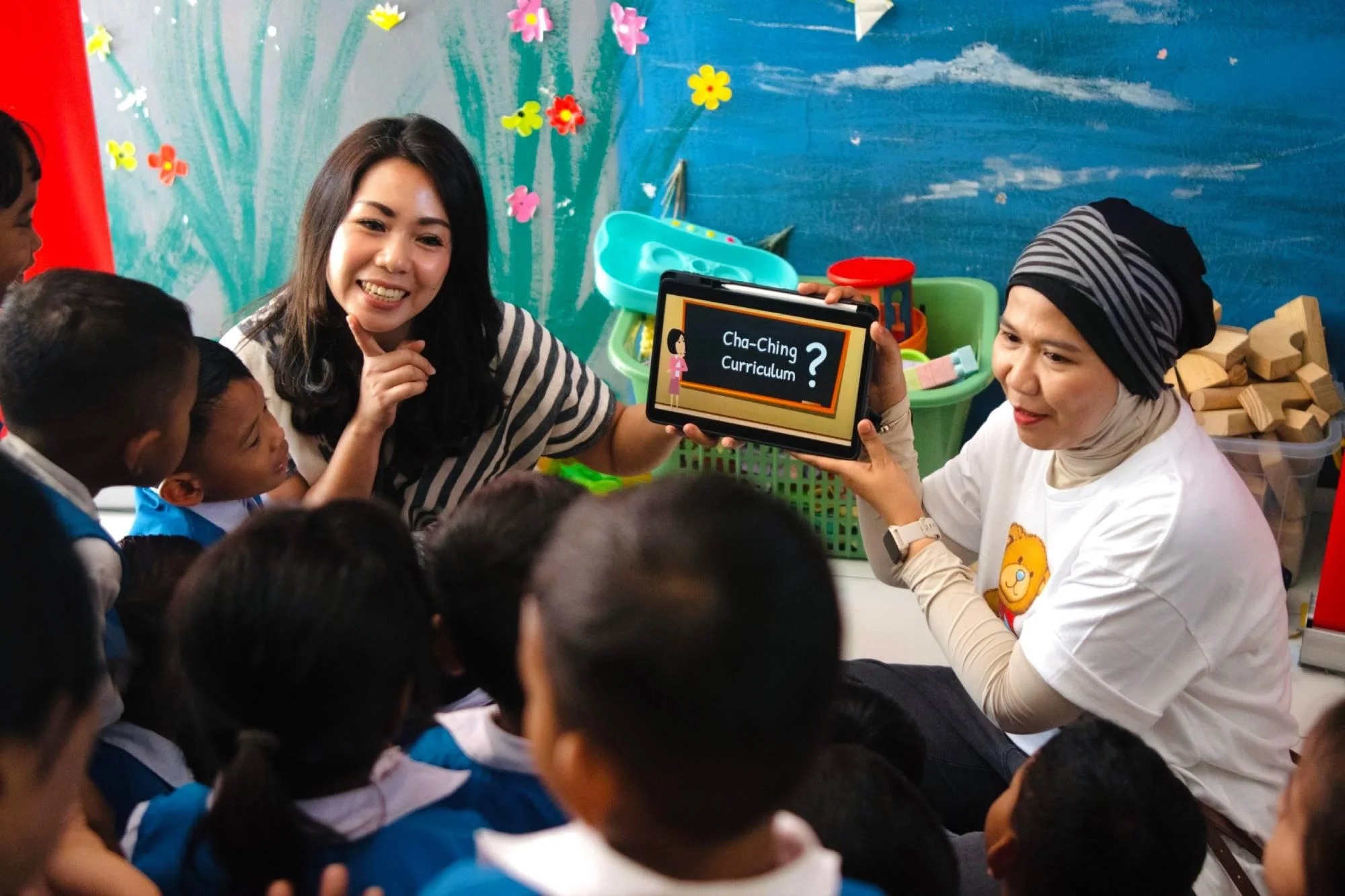
JurnalPost.com - Imagine a family dinner at seven in the evening. A toddler is eating while staring at a smartphone screen placed in front of their plate, while the parents finally get a moment of rest after a long day.
Scenes like this are becoming increasingly common in modern family life. Digital devices have become a part of a child's daily routine, even from a very young age.
However, behind the convenience offered by technology, an important question arises regarding its impact on child development.
In a report by Media Indonesia in April 2026, Prof. Rini Sekartini of the Indonesian Pediatric Society (IDAI) revealed that she frequently encounters children experiencing speech delays and difficulties socializing with peers. This condition is linked to uncontrolled device usage.
The government has responded to the challenges of child protection in the digital space through Government Regulation Number 17 of 2025, known as the Tunas Regulation. Its implementation has been carried out in stages since 28 March 2026, including regulations for accounts of children under the age of 16 on high-risk digital platforms.
The Central Information Commission emphasizes that this regulation is an instrument to assist in child protection, not a replacement for parental responsibility in guiding their growth and development.
However, amidst various rules and restrictions, a more fundamental question remains: is the experience currently received by early childhood children appropriate for their brain development needs?
Dewi Mike Oktavia, a doctoral student in Early Childhood Education at the State University of Surabaya, often called Mike, believes that discussions regarding device usage often stop too quickly at the question of whether or not children should use technology.
In fact, what is far more important is understanding the actual experience children gain when interacting with the digital environment.
Understanding Early Childhood Brain Development
Early childhood is a critical period in human brain development.
The Center on the Developing Child at Harvard University explains that in the early years of life, more than one million new neural connections can form every second.
As a child develops, the brain undergoes a process known as synaptic pruning, which is the strengthening of frequently used neural connections and the reduction of those used less often.
This process is closely related to neuroplasticity, the brain's ability to change and adapt based on experience.
This means that a child's brain development is not only determined by biological factors but is also influenced by the quality of experiences and interactions they receive every day.
Greenough, Black, and Wallace (1987) distinguish experiences that affect brain development into two categories: experience-expectant and experience-dependent.
Experience-expectant relates to general experiences needed in human development, such as basic sensory stimulation. Meanwhile, experience-dependent relates to specific experiences gained by each individual through interaction with their environment.
In the context of language development, for example, a child's vocabulary increases through the experience of hearing, speaking, and interacting with others.
Thus, the quality of stimulation received by a child becomes a crucial factor in supporting the development of their thinking, language, and social-emotional abilities.
Learning Through Real Experience and Social Interaction
A number of child development experts have emphasized the importance of direct experience in the early childhood learning process.
Jean Piaget (1952), through his theory of cognitive development, explains that infants and toddlers build knowledge through direct interaction with the environment, especially during the sensorimotor stage.
At this stage, children learn by reaching, grasping, dropping, moving, and exploring objects around them.
These experiences provide children with the opportunity to understand the relationship between actions and their consequences.
When physical exploration activities are too often replaced by interaction with touchscreens, the child's opportunity to gain diverse sensorimotor experiences potentially becomes more limited.
Meanwhile, Lev Vygotsky (1978) emphasized that the development of thinking abilities cannot be separated from social interaction.
Through the concept of the Zone of Proximal Development (ZPD), Vygotsky explained the importance of guidance from adults or more capable individuals in helping children reach the next level of development.
In early childhood education, such interaction can take place through conversation, playing together, reading books, or simple activities in daily life.
The importance of direct interaction is also seen in research by Kuhl and her colleagues (2003).
The research shows that nine-month-old infants can learn Mandarin sounds through direct interaction with speakers of the language, but do not show the same learning results when only exposed to audiovisual recordings.
These findings demonstrate that human presence and social interaction play a vital role in the language learning process for infants.
On the other hand, the development of communication technology also opens opportunities for more active digital interaction. However, its benefits still need to be understood based on age, form of interaction, and the context of its use.
The perspective on child development is further complemented by John Bowlby's attachment theory (1969), which places a secure emotional bond between child and caregiver as a critical foundation for environmental exploration and emotional regulation development.
Urie Bronfenbrenner (1979) also reminded us that child development takes place within interconnected environmental systems, ranging from family, school, and community to social policy.
These various theories point in a similar direction: child development requires rich experiences, meaningful social relationships, and an environment that provides opportunities for exploration.
What Does Research Say About Screen Use?
The debate regarding the impact of device usage on child development is still evolving.
A systematic review conducted by da Silva Junior and his colleagues (2025) on observational studies of children aged 0–6 years shows that research results are not yet fully consistent.
However, there is evidence indicating that long-term, unsupervised use of digital devices may be associated with delays in language development, particularly expressive language and vocabulary acquisition.
Other research conducted by Gaol and Fajar (2025), through a review of 15 studies published throughout 2021–2025, reported that excessive screen time is associated with negative impacts on a number of aspects of child development.
These aspects include motor, language, cognitive, and social-emotional abilities.
These findings need to be understood proportionally. Not all digital activities have the same impact, and the relationships found in observational studies do not always indicate direct cause-and-effect.
Factors such as the child's age, duration of use, type of content, parental involvement, and other activities replaced by screen time also determine the quality of the child's digital experience.
The World Health Organization (WHO), through its 2019 guidelines, provides recommendations regarding physical activity, sedentary behavior, and sleep for children under five years old.
The WHO does not recommend sedentary screen time for one-year-olds, while for children aged two to four, sedentary screen time is limited to a maximum of one hour per day. Less duration is considered better.
In Indonesia, efforts to build healthier digital habits are also being carried out through family education campaigns.
As reported by Medcom in July 2026, the Ministry of Primary and Secondary Education is encouraging families to implement the 200 Minute Device-Free Movement.
The movement aims to encourage families to provide higher-quality time for interaction without the distraction of digital devices.
According to Mike, limiting the duration of device use and the existence of regulations are important steps, but they are not enough.
What needs to be considered is the quality of the child's experience while using technology and their opportunity to continue receiving stimulation appropriate to their developmental stage.
Technology Is Not the Enemy, But It Should Not Be the Primary Caregiver
The presence of devices in a family cannot always be viewed as a form of poor parenting.
In daily life, parents face various work demands, household responsibilities, and the need to rest.
It is not uncommon for videos or digital games to be used to help calm a child when parents need to finish certain tasks.
According to Mike, this condition needs to be understood humanely. Parents who occasionally use devices to help manage family activities cannot immediately be considered as neglecting the child's needs.
The problem arises when screens continuously take over the role of direct interaction between the child and the people around them.
Children need opportunities to talk, ask questions, move, play, observe facial expressions, and respond to the environment in a real way.
These simple experiences are an important part of brain development stimulation.
Mike also reminds us that adults are sometimes too quick to admire children who are able to operate digital devices or answer questions through a screen.
In fact, the ability to use technology does not necessarily reflect balanced development in language, motor, social, and emotional aspects.
A child may appear skilled at swiping screens or choosing answers in an app, but they still need the experience of playing together, expressing opinions, dealing with differences, and learning to manage feelings.
Therefore, the success of child stimulation should not be measured solely by their ability to use digital devices.
What is more important is whether the experience helps the child develop the skills needed in real life.
The Role of Parents, Early Childhood Teachers, and Educational Institutions
In supporting early childhood in the digital age, every party has complementary responsibilities.
For parents, the question regarding device usage should not only focus on how long the child stares at a screen.
An equally important question is who the child is using the technology with and for what purpose the device is provided.
Parental guidance can help children understand information, connect digital content with real-world experiences, and build two-way communication.
For example, when a child watches a video about animals, parents can invite them to discuss the sounds, shapes, colors, and habitats of those animals.
Digital experiences can then be followed up through activities such as reading books, drawing, imitating movements, or observing the surrounding environment.
In this way, technology functions as a complement to the learning experience, not the sole source of stimulation.
For Early Childhood Education (PAUD) teachers, the challenge is to create a learning environment rich in direct experience.
Role-playing activities, exploration of natural materials, constructive games, art activities, physical movement, and two-way conversations can be means to support various aspects of child development.
Teachers also need to understand that the use of technology in early childhood learning must consider the developmental stages and individual needs of the students.
Not all learning activities require digital devices. In fact, many of the most meaningful learning experiences take place through simple activities with friends and educators.
Meanwhile, educational institutions and policymakers need to strengthen digital parenting literacy.
Education regarding healthy technology use can be reached through various services close to families, such as Posyandu, the Bina Keluarga Balita program, and PAUD units.
This approach is important so that the understanding of child development stimulation is not only possessed by families with adequate access to education and information, but also reaches the wider community.
Adaptive Education Must Understand Children's Needs
The development of digital technology is an unavoidable reality.
Children today grow up in a different environment than previous generations. Digital devices are increasingly accessible, information is available in an instant, and various life activities are connected to technology.
However, these environmental changes do not eliminate the basic needs of child development.
Children still need secure emotional bonds, opportunities to play, diverse sensory experiences, social interaction, and space to develop curiosity.
According to Mike, adaptive education is not education that is fastest at following every technological development, but education that is able to understand children's needs deeply.
This view is important to serve as a reflection for families, educators, and policymakers.
Technological progress should help enrich children's learning experiences without reducing their opportunities to experience the real world.
Children do not always need to be introduced to the latest devices to be considered ready for the future.
Instead, they need a strong developmental foundation so that they can later utilize technology wisely, critically, and responsibly.
Every Child Has the Right to Grow According to Their Developmental Stage
Understanding children's brain development in the digital age is not just about limiting device usage.
Such efforts also mean ensuring that every child receives experiences, interactions, and stimulation appropriate to their growth and development needs.
Technology will continue to evolve and present various forms of new experiences. However, a child's need to be noticed, talked to, listened to, and given the opportunity to play will not lose its relevance.
In Mike's view, every child has uniqueness that needs to be appreciated. Their development should not be viewed solely as a series of achievement numbers, academic abilities, or skills in using technology.
Children are individuals who are building an understanding of themselves, others, and the environment in which they grow.
Therefore, the responsibility of adults is not only to ensure that children can keep up with changing times, but also to ensure that their growth process takes place in a healthy and meaningful way.
As an educator, Mike hopes that the understanding of the importance of appropriate stimulation in early childhood can become a shared concern.
Ultimately, the most important question is not how sophisticated the technology used by the child is, but whether that technology helps them grow into healthy, active, confident individuals capable of building meaningful relationships with others.
Because, in a world that is increasingly digital, children still need touch, conversation, play, and human presence that cannot be fully replaced by a screen.
References
Antara. (2026). PP Tunas bantu orang tua lindungi masa depan anak. https://www.antaranews.com/berita/5520447/pp-tunas-bantu-orang-tua-lindungi-masa-depan-anak
Bowlby, J. (1969). Attachment and Loss, Vol. 1: Attachment. Basic Books.
Bronfenbrenner, U. (1979). The Ecology of Human Development. Harvard University Press.
Center on the Developing Child at Harvard University. Brain Architecture. https://developingchild.harvard.edu/key-concept/brain-architecture/
da Silva Junior, D., dkk. (2025). Impact of the use of interactive screens on language development in children up to 6 years of age: A systematic review. Child: Care, Health and Development, 51(6), e70176. https://doi.org/10.1111/cch.70176
Gaol, R. C. C. L., & Fajar, N. A. (2025). The effects of screen time on early childhood development: A systematic literature review. Jurnal Info Kesehatan, 23(4), 805–818. https://doi.org/10.31965/infokes.Vol23.Iss4.2009
Greenough, W. T., Black, J. E., & Wallace, C. S. (1987). Experience and brain development. Child Development, 58(3), 539–559. https://doi.org/10.2307/1130197
InfoPublik. (2026). Aturan PP Tunas ketat, KIP sentil pola asuh “terserah saya”. https://infopublik.id/kategori/pp-tunas/987226/aturan-pp-tunas-ketat-kip-sentil-pola-asuh-terserah-saya
Kuhl, P. K., Tsao, F.-M., & Liu, H.-M. (2003). Foreign-language experience in infancy. PNAS, 100(15), 9096–9101. https://doi.org/10.1073/pnas.1532872100
Lytle, S. R., Garcia-Sierra, A., & Kuhl, P. K. (2018). Two are better than one: Infant language learning from video improves in the presence of peers. PNAS, 115(40), 9859–9866. https://doi.org/10.1073/pnas.1611621115
Media Indonesia. (2026, 1 April). Dampak gawai pada balita: Risiko keterlambatan bicara dan gangguan sosialisasi. https://mediaindonesia.com/humaniora/875220/dampak-gawai-pada-balita-risiko-keterlambatan-bicara-dan-gangguan-sosialisasi
Medcom. (2026, 27 Juli). Anak kecanduan gadget? Coba Gerakan 200 Menit Tanpa Gawai. https://www.medcom.id/pendidikan/tips-pendidikan/eN44Da7N-anak-kecanduan-gadget-coba-gerakan-200-menit-tanpa-gawai-ini-caranya
Piaget, J. (1952). The Origins of Intelligence in Children. International Universities Press.
Vygotsky, L. S. (1978). Mind in Society. Harvard University Press.
World Health Organization. (2019). Guidelines on physical activity, sedentary behaviour and sleep for children under 5 years of age. https://www.ncbi.nlm.nih.gov/books/NBK541173/






Comments 0
Write a Comment Share your response