

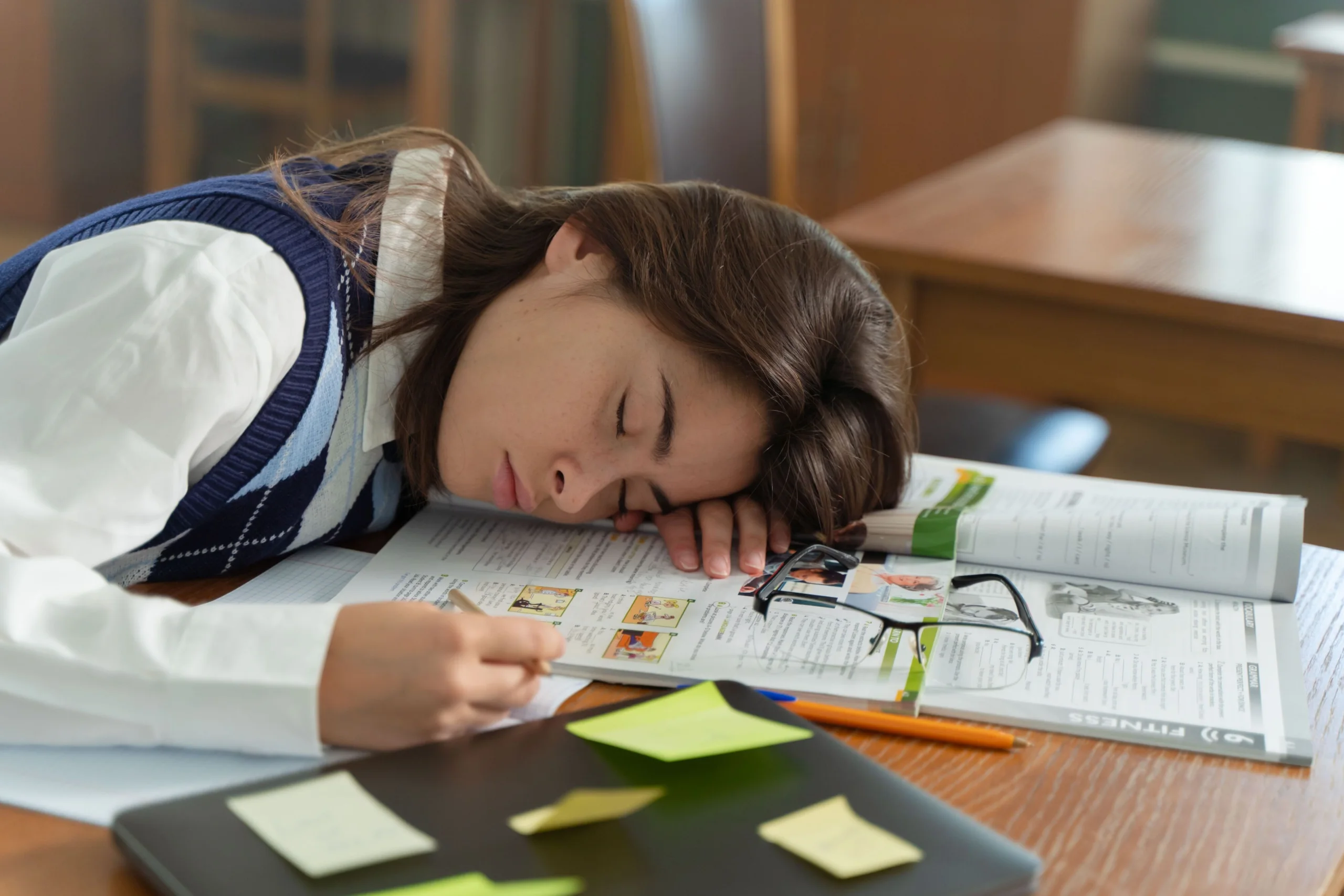
JurnalPost.com - Imagine Raka, a fifth-semester university student. He sleeps nine hours every night, yet he has to set his morning alarm five times, only to wake up with a heavy head and a foggy mind. In class, his eyes drift shut on their own. He naps during the day, only to wake up feeling even more lethargic. His friends joke that he is just lazy, and his professors reprimand him. Over time, Raka begins to believe that he is indeed lazy.
What if the problem isn't laziness? Raka is a fictional character, but this pattern is real and has a medical name: hypersomnia.
More Than Just Being Sleepy

Everyone feels sleepy after a late night or a heavy lunch. Hypersomnia is different. In the DSM-5-TR, the diagnostic manual for mental disorders used by psychiatrists and psychologists in many countries, this condition is officially called hypersomnolence disorder (hypersomnolence disorder), although it is more commonly known as hypersomnia. Essentially, it involves persistent excessive sleepiness despite having had adequate sleep time.
According to the manual, the primary sign is persistent sleepiness despite a nightly sleep duration of at least seven hours. This is accompanied by at least one of three features: falling asleep or drifting off multiple times a day, sleeping for very long periods (more than nine hours a day) but waking up unrefreshed, or difficulty becoming fully alert after being awakened.
To be classified as a disorder, these symptoms must occur at least three times a week for at least three months and significantly impair one's studies, work, or relationships. A doctor must also ensure that the sleepiness is not caused by other medical conditions, medication side effects, or other types of sleep disorders.
What Does It Feel Like?
The sleepiness usually comes on gradually, rather than as a sudden attack. It most often occurs during sedentary activities: in class, while reading, watching television, or driving long distances. In more severe cases, individuals may fall asleep during meetings or while socializing with friends.
Approximately 40% of sufferers may experience "sleep drunkenness." Upon waking, they appear disoriented, sometimes irritable or unsteady, and require anywhere from a few minutes to several hours to become fully alert. Consequently, many set multiple alarms or rely on others to wake them up. About 80% feel that their sleep is not refreshing, and on weekends, their sleep duration may increase by up to three hours.
Some also experience "automatic behavior": suddenly finding themselves having driven several kilometers without remembering how they got there. This is clearly dangerous.
Why It Is Easily Mistaken for Laziness
Hypersomnia typically begins in late adolescence to early adulthood, with an average onset age of 17 to 24 years old. This is a time when people are in university or just starting their careers. At that age, students who fall asleep in class or young workers who are frequently late are easily labeled as undisciplined or unmotivated, leading them to blame themselves.
Perhaps this is why it takes an average of 10 to 15 years after the first symptoms appear for patients to receive a diagnosis. For years, many try to cope with coffee or energy drinks that are easily accessible. While occasional use is fine, relying on them as a chronic fix for sleepiness only delays the necessary medical evaluation.
Recent medical studies on idiopathic hypersomnia, a form of hypersomnia within international sleep disorder classifications, also acknowledge that such disorders are difficult to identify. The reasons include the rarity of cases, symptoms that mimic other sleep disorders, and the fact that diagnosis requires objective sleep studies that are not always easily accessible.
The risks on the road are also real. Many of us rely on motorcycles and long-distance land travel. Ride-hailing drivers, public transport drivers, or anyone driving themselves can pose a danger to themselves and others if sleepiness strikes suddenly.
Still Largely Unknown
Based on interviews and an Instagram survey conducted by the author, most respondents had never heard of the terms hypersomnolence or hypersomnia. While the data is limited and not representative of the entire population, the findings align with Raka's story: this disorder is not widely known.
The interviews revealed several patterns. Many assume excessive sleepiness is just normal fatigue due to a busy schedule. Knowledge of the warning signs is also vague, with some being completely unaware. The information circulating generally comes from social media platforms like TikTok and Instagram rather than medical sources, leading to incomplete understanding.
Interestingly, almost everyone interviewed agreed that excessive sleepiness significantly impairs concentration, can endanger oneself and others, and requires medical attention if it persists or interferes with daily activities. This means the awareness is there; what is lacking is knowledge. The advice offered often involves getting more rest or managing activities. While good as a first step, it does not replace a medical examination if the sleepiness continues.
Not Necessarily Hypersomnia
It is important to note: not everyone who is frequently sleepy has hypersomnia. Some people naturally require more sleep but wake up refreshed and do not feel sleepy during the day. Others may simply be sleep-deprived and feel relieved only after "paying off their sleep debt" on the weekend. To differentiate, doctors may ask patients to get adequate sleep for 10 to 14 days to see if the sleepiness subsides.
In Indonesia, sleepiness among university students is frequently reported. A study at the University of Indonesia involving 107 health science students found that about half (48.6%) experienced excessive daytime sleepiness according to the Epworth Sleepiness Scale, and about 75% had poor sleep quality. That study only measured sleepiness, not diagnosed hypersomnia. This means daytime sleepiness is very common and does not automatically imply hypersomnia.
Sleepiness can also stem from sleep apnea (indicated by loud snoring and brief pauses in breathing), depression, or narcolepsy. In narcolepsy, short naps of 15 to 20 minutes are usually refreshing, and there may be sudden muscle weakness when laughing or experiencing strong emotions. In hypersomnia, naps tend to be long and do not leave the person feeling refreshed.
Because there are so many possibilities, do not self-diagnose. A medical professional must determine the diagnosis.
So, What Can Be Done?
The DSM-5-TR is a diagnostic guide, not a treatment manual, so treatment is determined by a doctor based on the underlying cause. Nevertheless, there are initial steps anyone can take.
Start by tracking your sleep patterns for two weeks: bedtime, wake time, naps, and when sleepiness occurs. This record is very useful for your doctor. Also, ensure your sleep is adequate and consistent, put away gadgets before bed, and limit caffeine and alcohol intake in the evening. Do not drive when extremely sleepy, and avoid using stimulants or sleeping pills without a prescription.
If sleepiness persists for weeks despite getting enough sleep, if you have had near-accidents due to falling asleep while driving, or if it interferes with your studies and work, get checked. Start with a general practitioner or a community health center (Puskesmas), and if necessary, get a referral to a neurologist or psychiatrist. Specialized sleep studies like polysomnography are generally only available at certain hospitals in major cities. For JKN participants, there is a tiered referral system, but check the latest regulations at your healthcare facility.
Note: This article is for informational purposes and does not replace professional medical examination or advice. The character Raka is purely illustrative.







Comments 0
Write a Comment Share your response