

The author is an employee of the Rupiah Currency Management Implementation Unit at the Bank Indonesia Representative Office in Jember, East Java.
Interest rate hikes always present a dilemma for the economy. On one hand, higher rates can increase the attractiveness of domestic financial assets and help maintain exchange rate stability. On the other hand, such policies potentially increase financing burdens for households and businesses. Credit installments may become more expensive, while investment plans and business expansions face higher capital costs.
It is within this tug-of-war that Bank Indonesia's decision to raise the benchmark interest rate must be understood. Monetary policy is not merely about numbers; it is about maintaining a balance between economic stability and sustainable growth.
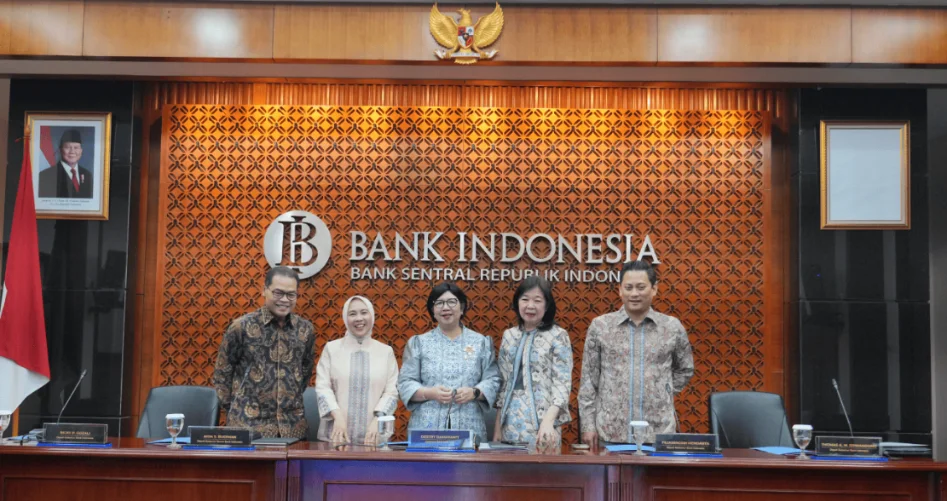
The Bank Indonesia Board of Governors Meeting (RDG) on 17–18 November 2026 decided to raise the BI-Rate by 25 basis points to 6.00 percent. In line with this decision, the Deposit Facility rate increased to 5.25 percent, while the Lending Facility rate became 6.75 percent.
This step was taken as pressure on the rupiah intensified due to global economic uncertainty.
On 17 November 2026, the rupiah was recorded at Rp18,245 per US dollar, a depreciation of 0.66 percent compared to the end of October 2026. This condition reflects the challenges facing the national economy amid a strengthening US dollar and shifting international capital flows.
Geopolitical tensions, high energy prices, and expectations of US interest rate hikes have further increased financial market uncertainty. The rise in yields on US government bonds or US Treasury securities has prompted global investors to be more selective in allocating their funds, including in emerging markets like Indonesia.
In such a situation, allowing the rupiah to remain under pressure is not a choice without consequences.
Prolonged currency depreciation can increase the costs of imported raw materials, energy, food, and capital goods. If this pressure continues, production costs could rise, ultimately affecting the prices of goods and services paid by the public.
Therefore, the BI-Rate hike can be understood as an anticipatory measure to maintain market confidence, preserve the attractiveness of rupiah-denominated assets, and prevent exchange rate volatility from escalating into broader inflationary pressure.
Rupiah Stability and Economic Growth Momentum
The decision to raise interest rates is interesting because the domestic economy is actually still showing relatively good performance.
In the third quarter of 2026, the Indonesian economy grew by 5.47 percent year-on-year, an increase from the previous quarter's growth of 5.29 percent.
Manufacturing industry activity also showed improvement. This is reflected in the increase of the Purchasing Managers' Index (PMI) for manufacturing from 52.40 in September to 53.98 in October 2026.
In terms of prices, national inflation remains within Bank Indonesia's target range. Consumer Price Index (CPI) inflation in October 2026 was recorded at 3.23 percent year-on-year, a slight decrease from 3.28 percent the previous month.
Core inflation even fell to 2.56 percent, while inflation for government-administered prices was at 3.24 percent.
However, pressure on the volatile food group has begun to emerge. Inflation in this group reached 5.81 percent due to weather disruptions affecting the production of several food commodities.
This condition shows that the BI-Rate hike is not merely a response to already high inflation, but a step to anticipate risks that could develop in the future.
Monetary policy indeed has a different character from other short-term policies. Changes in interest rates do not immediately affect all economic activities but work gradually through financial markets, banking, investment decisions, and consumer behavior.
Therefore, maintaining stability early on is important so that emerging pressures do not develop into larger economic problems.
External Resilience Remains Adequate, but Risks Persist
Amid global pressure, Indonesia actually still has a number of sufficiently strong economic buffers.
Foreign exchange reserves at the end of October 2026 reached 146.8 billion US dollars, equivalent to financing approximately 5.3 months of imports. This position is above the international adequacy standard generally used, which is around three months of imports.
Foreign trade performance also continues to provide support. In September 2026, Indonesia's trade balance recorded a surplus of 3.36 billion US dollars.
Meanwhile, portfolio investment inflows in the fourth quarter of 2026 still recorded a net inflow of 4.80 billion US dollars as of 16 November 2026.
However, this resilience does not mean the economy is free from risk.
During the same period, the stock market experienced capital outflows of 0.9 billion US dollars. This condition shows that foreign capital movements are still heavily influenced by changes in global sentiment and risk perception.
In such a situation, rupiah stability should not be interpreted merely as an effort to maintain the exchange rate at a certain figure.
What is more important is to ensure that exchange rate fluctuations do not become too sharp and do not disrupt the economic planning of the public or the business world.
For companies dependent on imported raw materials, certainty in exchange rate movements is crucial for calculating production costs. Similarly, for investors, exchange rate stability is one of the considerations in making long-term investment decisions.
Thus, the policy of maintaining rupiah stability is ultimately also related to efforts to maintain the continuity of domestic economic activities.
Interest Rate Hikes and Risks to the Real Sector
Although necessary to strengthen stability, the BI-Rate hike still carries consequences that need to be calculated.
A higher benchmark interest rate has the potential to increase bank funding costs. In its development, these changes can be passed on to lending rates, although the magnitude of the impact and the timing of adjustments are not always the same for every bank or type of loan.
For households, the impact can be felt especially on loans with floating rates, such as some home ownership loans, vehicle loans, and consumer loans.
Meanwhile, for business players, higher financing costs can affect decisions to expand businesses, increase production capacity, or make new investments.
This risk needs attention because economic growth is determined not only by financial market stability but also by the ability of the productive sector to keep moving.
Fortunately, the condition of the Indonesian banking industry still shows quite good resilience.
In October 2026, bank credit grew by 13.21 percent year-on-year. Investment credit increased by 21.32 percent, working capital credit grew by 12.99 percent, while consumer credit increased by 4.73 percent.
In terms of capital, the banking capital adequacy ratio in September 2026 was at the level of 24.30 percent. The non-performing loan ratio is also relatively controlled, at 2.07 percent gross and 0.82 percent net.
These figures show that the banking system still has room to carry out its intermediation function.
The next challenge is to ensure that interest rate hikes do not hinder financing to productive sectors, especially micro, small, and medium enterprises (MSMEs), which have an important contribution to economic activity and job absorption.
Maintaining Productive Credit through Policy Mix
Tighter monetary policy does not always have to be followed by overall financing restrictions.
This is where the importance of Bank Indonesia's policy mix lies, namely combining monetary policy oriented toward stability with macroprudential policy that continues to support credit growth.
One of the instruments used is the Macroprudential Liquidity Incentive Policy (KLM).
As of the first week of November 2026, the KLM incentives received by banks reached Rp466.2 trillion. These incentives are directed at encouraging financing for priority sectors, supporting business activities that create jobs, and expanding credit access for MSMEs.
This approach shows that monetary stability and economic growth do not always have to be pitted against each other.
Interest rates can be directed to respond to exchange rate pressures, while macroprudential instruments help ensure that liquidity and financing remain available for productive economic activities.
The success of this policy certainly depends on the effectiveness of credit distribution and the ability of banks to translate incentives into financing that truly reaches the real sector.
The Role of Foreign Exchange Intervention and Payment Digitalization
In addition to interest rates, strengthening rupiah stability is also carried out by optimizing various instruments in the foreign exchange market.
Bank Indonesia uses spottransactions, Non-Deliverable Forward (NDF), and Domestic Non-Deliverable Forward (DNDF) to help maintain exchange rate stability.
Hedging instruments are also important for business players who have obligations in foreign currency. Through this mechanism, companies can reduce uncertainty due to exchange rate changes when planning payments or international transactions.
Since June 2026, incentive policies related to hedging transactions have encouraged domestic hedging activity of around 14.10 billion US dollars as of 17 November 2026.
At the same time, support for economic growth is also carried out through the strengthening of digital payment systems.
The volume of digital payment transactions in October 2026 reached 6.18 billion transactions, an increase of 31.47 percent year-on-year.
QRIS transactions even grew by 70.95 percent, supported by the number of users reaching 71.91 million and the number of merchants totaling 51.31 million.
This development shows the increasingly widespread use of digital payment services in public activities.
For MSME players, the ease of digital transactions opens up opportunities to expand markets, increase efficiency, and build a transaction history that can support access to financial services.
Thus, strengthening the payment system can be part of a strategy to maintain economic activity when monetary policy needs to take more cautious steps.
Stability as a Foundation, Not a Barrier to Growth
The BI-Rate hike to 6.00 percent carries the message that stability and economic growth need to be placed as two complementary goals.
Exchange rate stability is needed so that the business world has certainty in preparing investment plans, while controlled inflation helps maintain public purchasing power.
However, stability should not be achieved by ignoring the ability of the productive sector to develop.
Therefore, the effectiveness of interest rate policy is not sufficiently assessed by whether the rupiah immediately strengthens after the decision is announced.
The measure of its success is broader, namely whether inflationary pressure remains controlled, exchange rate volatility subsides, productive financing continues to grow, MSME credit access remains maintained, and public consumption does not experience excessive weakening.
Coordination between monetary, macroprudential, fiscal, and payment system policies is an important factor in achieving this balance.
Ultimately, interest rate hikes are an instrument to face risks, not the final goal of economic policy.
A stable rupiah is not just a symbol of national currency resilience, but a foundation for confidence, investment, and sustainable economic growth.
When all policy instruments move in a directed and complementary manner, interest rate hikes can function as a shield that protects the economy from global pressure, without having to become a brake that stops growth.









Comments 0
Write a Comment Share your response