

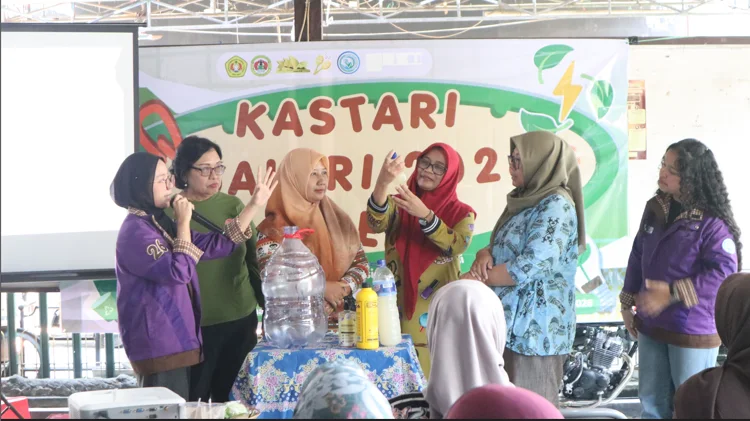
SURABAYA, JurnalPost.com — Household waste can provide extra income while simultaneously nourishing plants. This message was delivered by faculty and students from the Environmental Engineering department at UPN "Veteran" East Java, members of the GALERI community, during the KASTARI Day 1 community service event in RW 10 Ngageldadi, Ngagelrejo Village, Wonokromo, on Saturday (7/11/2026).
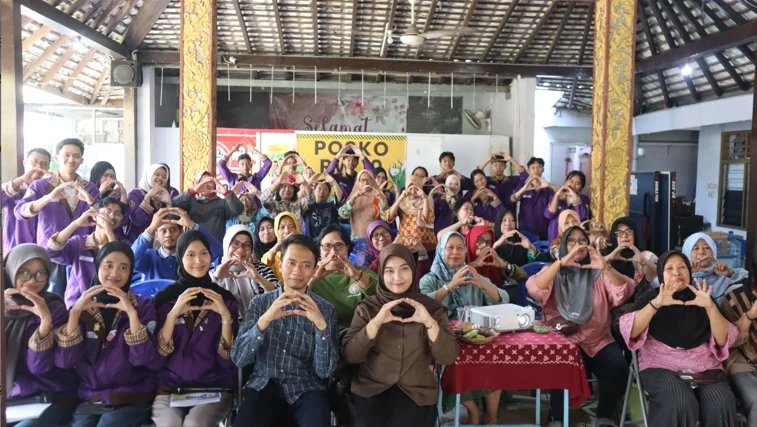
The event was attended by approximately 30 residents, primarily consisting of Surabaya Hebat Cadres (KSH) and Family Welfare Empowerment (PKK) members. Residents were encouraged to view waste from two perspectives: inorganic waste that can be saved, and organic waste that can be processed into fertilizer.
Inorganic waste as savings
The circular economy presentation was delivered by Rizana Hasna Yusuf, S.T., Marketing Department Manager at the Surabaya Central Waste Bank (BSIS). She explained that more than half of the city's waste originates from households, with food scraps being the largest contributor.
According to BSIS, much of the household waste still holds market value. PET (polyethylene terephthalate) plastic bottles, paper, cardboard, and cans can be deposited at local Unit Waste Banks (BSU). These deposits are recorded in SIBASAM, the Surabaya City Government's digital waste bank platform, allowing residents to track their savings.
Kitchen waste as fertilizer
The organic aspect was addressed by the collaborative GALERI research team and R. Mohammad Alghaf Dienullah, S.T., M.T., a lecturer in the Environmental Engineering Study Program at Universitas Pembangunan Nasional "Veteran" East Java, through a demonstration of a liquid organic fertilizer (POC) called NUTRIBOOST. The primary ingredient is rice washing water, which is typically discarded.
Rice washing water contains vitamin B complex (B1, B3, B6) as well as minerals such as iron (Fe) and manganese (Mn). In front of the residents, the team mixed 1.3 liters of rice washing water with 30 grams of sugar solution as a microbial food source and 20 milliliters of EM4 bioactivator. The mixture is then fermented for 7–14 days.
The result is a liquid bio-fertilizer that also improves soil quality. This fertilizer is ready to be used to nourish plants in residents' gardens.
Two paths, one goal
Through these two paths, inorganic waste enters the waste bank system while kitchen waste returns to the soil as fertilizer. This reduces the amount of waste ending up in landfills, while residents gain economic benefits and a greener environment.
This activity also involved the Surabaya City Environmental Agency, the Head of RW 10, and the Ngagelrejo Village administration. GALERI hopes that the combination of government regulations, economic opportunities from waste banks, and applied campus innovations will help Ngageldadi become an independent and sustainable community.


Comments 0
Write a Comment Share your response