

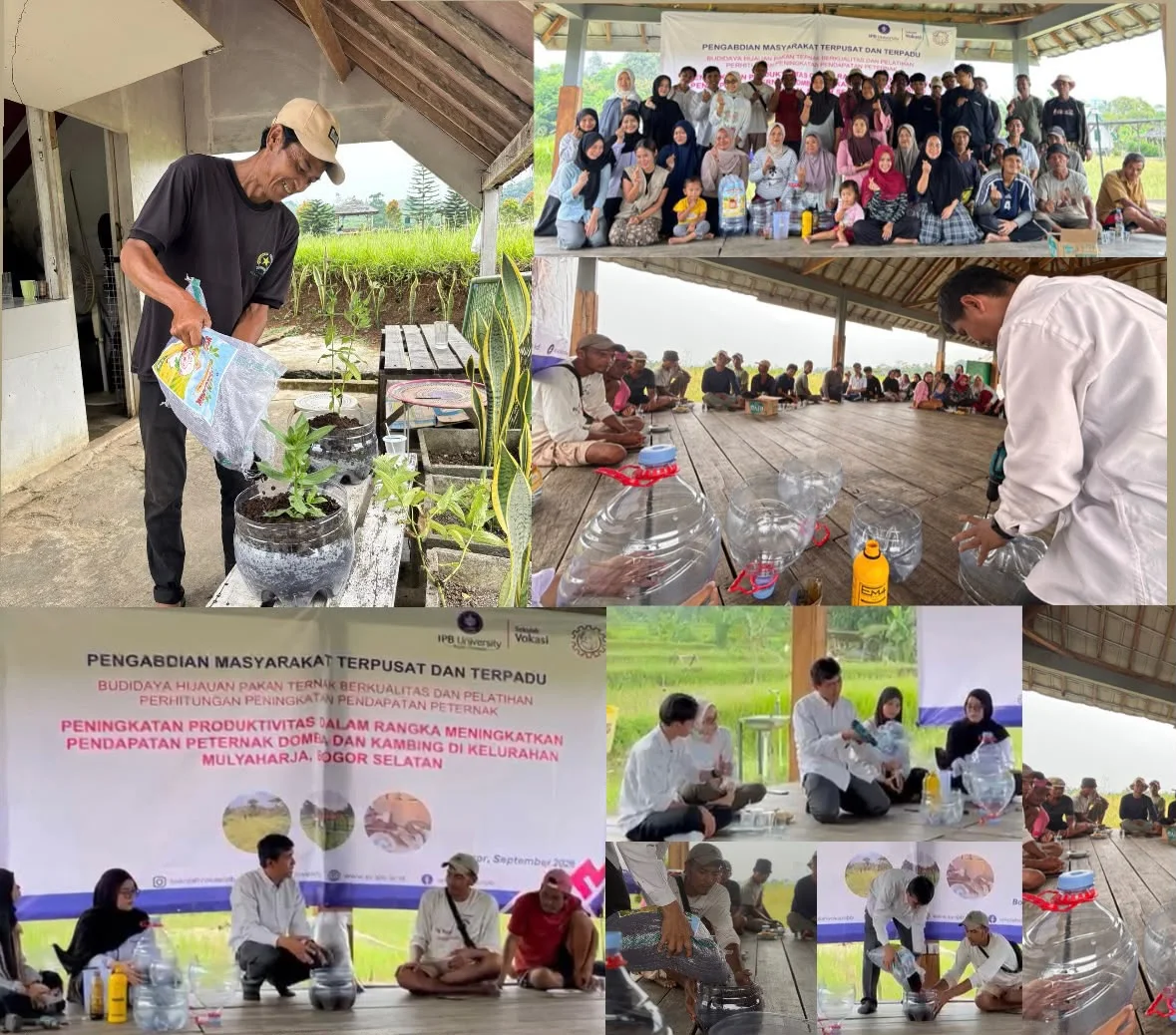
BOGOR, JurnalPost.com – The Livestock Technology and Management (TNK) Study Program at IPB University's Vocational School has reaffirmed its commitment to sustainable environmental management through a Community Service Program (PPM) in Mulyaharja Village, South Bogor District, Bogor City, on Monday (16/11/2026).
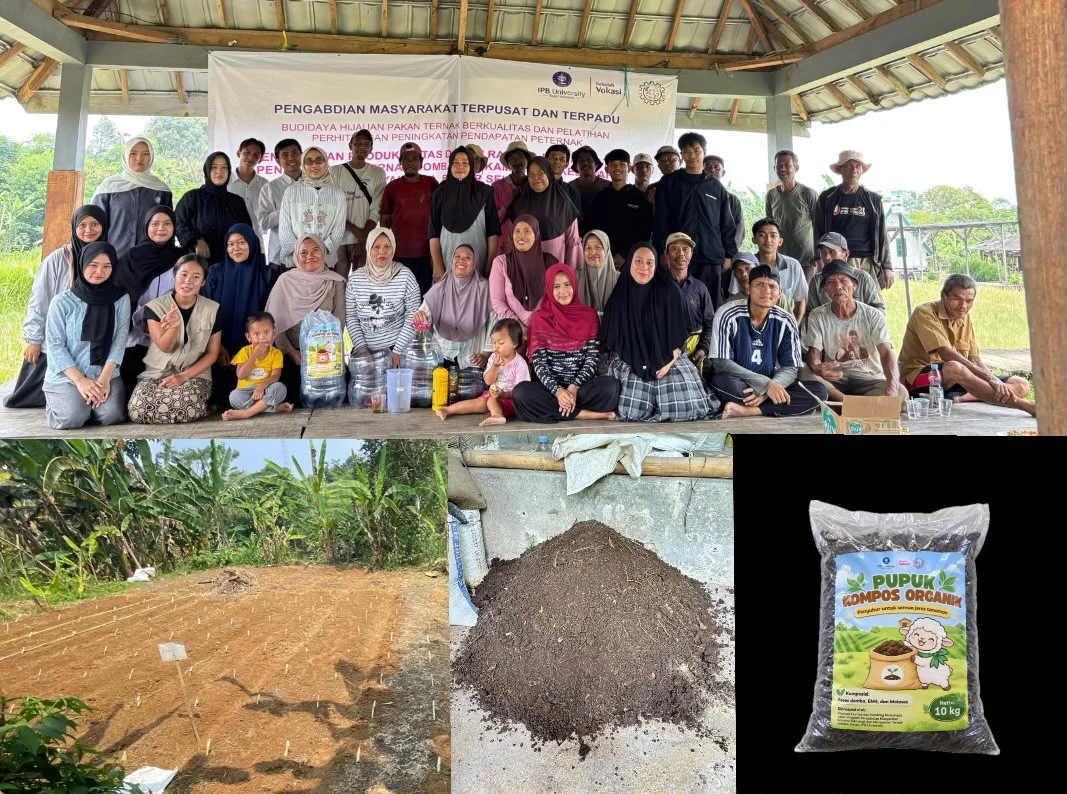
This initiative introduces the use of compost made from sheep and goat manure as a simple solution to support environmental greening while reducing potential pollution from livestock waste.
The compost utilization introduced is not only intended for agricultural needs and forage cultivation but can also be applied in daily life, particularly for greening home gardens and residential areas.
Through this approach, the community is encouraged to view livestock waste as a resource with inherent value and economic potential when managed correctly.
Utilizing Compost and Recycled Water Jugs for Greening
One simple innovation introduced during this activity is the use of discarded mineral water jugs as plant containers, filled with compost derived from processed livestock waste.
Single-use jugs that are no longer in use can become household waste if discarded without proper management. However, through community creativity, these items can be transformed into useful plant pots.
Used jugs can be modified into hanging or standing pots. To enhance their aesthetic appeal, residents can also add colors, drawings, or various decorations according to their individual creativity.
These creative pots can then be used to grow various types of ornamental plants or greenery, utilizing compost as organic fertilizer.
The combination of livestock waste processing and the reuse of discarded items serves as an example of applying circular economy principles at the household level.
Compost acts as a source of organic material to support soil fertility, while the recycled jugs serve as planting containers that can beautify home yards, roadsides, and village public spaces.
In addition to helping reduce waste accumulation, this activity provides a greening alternative that is relatively easy to implement without requiring large plots of land or specialized equipment.
Livestock Waste Processing Offers Economic Potential
The head of the PPM for the IPB Vocational School's Livestock Technology and Management Study Program, Fariz Am Kurniawan, S.Pt., M.Si., explained that processing livestock manure into compost has economic potential because the cost of activator materials is relatively affordable.
Based on calculations presented during the activity, the cost of purchasing EM4 and molasses to assist the composting process for approximately 150 kilograms of sheep and goat feces is estimated to be only around Rp5,000.
However, this figure is an estimate of the cost of activator materials and does not include total production costs, such as labor, equipment, packaging, and other supporting needs.
During the composting process, organic material also experiences a weight reduction of approximately 30–40 percent. Thus, from 150 kilograms of raw material, it is estimated that approximately 90–105 kilograms of compost can be obtained.
These calculations demonstrate an opportunity to increase the utility of livestock waste. The resulting compost can be used by farmers and the community for agriculture, ornamental plants, and environmental greening.
If production exceeds personal needs, the compost also has the potential to be developed into a product with economic value. However, a comprehensive calculation of production costs remains necessary to determine profitability and business feasibility.
By utilizing resources available in the surrounding environment, the community is expected to develop greening activities independently while reducing dependence on external fertilizers.
Community Begins Implementing Innovations Directly
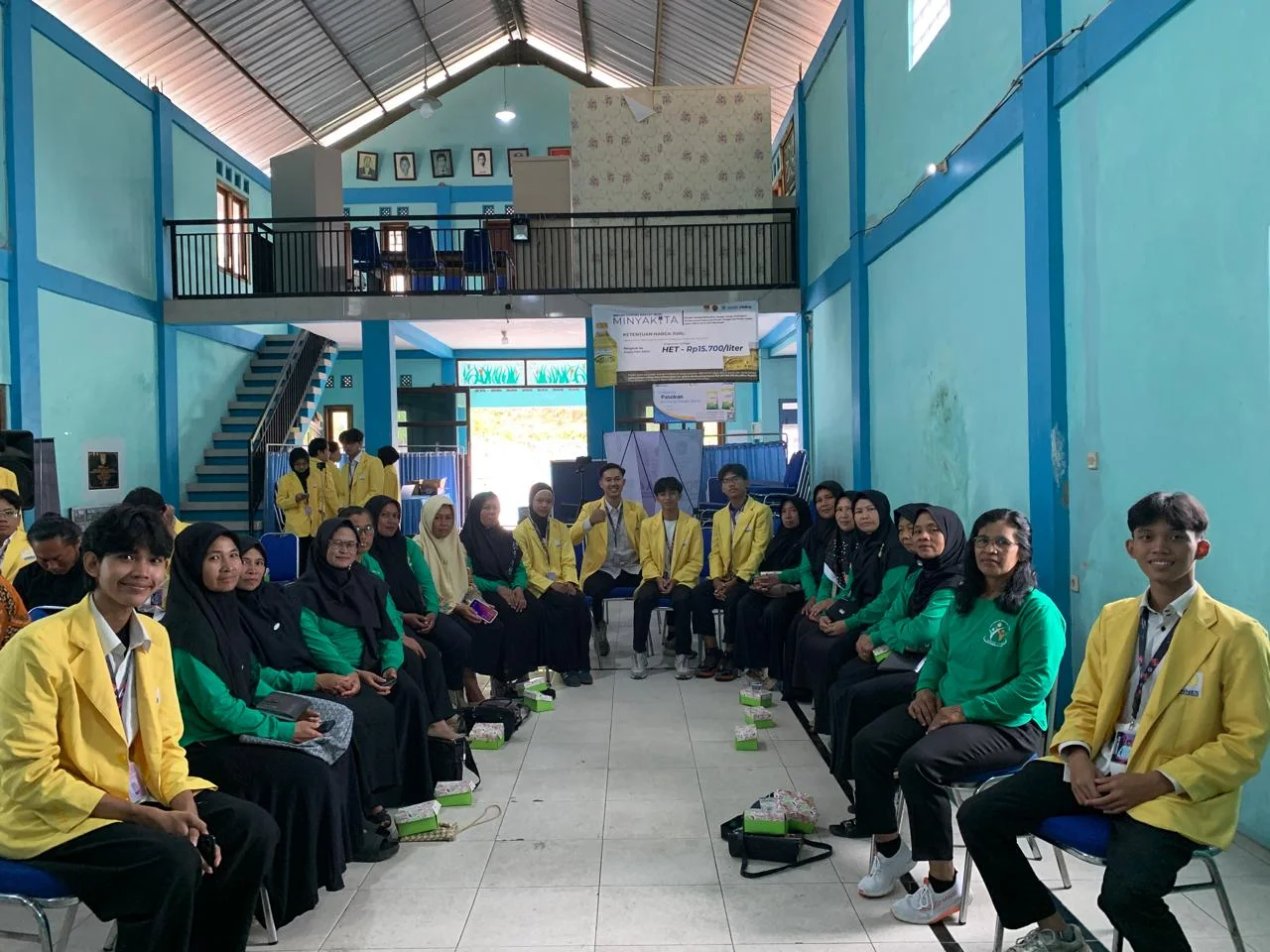
This Community Service Program was also attended by the Secretary and Head of the Research Team for the Livestock Technology and Management Study Program for the year 2026, Dr. Sari Putri Dewi, S.Pt., M.Si., along with teaching assistants and students from the IPB Vocational School's Livestock Technology and Management Study Program.
Also present were Mulyaharja Agricultural Extension Officer (PPL) Agus Faisal, Village Coordinator Mansyur, and local community members, including farmers and livestock breeders.
The activity received a positive response from the community. The participants' enthusiasm was evident not only during the presentation of the material but also through the direct application of the activity's results.
One resident has already begun using the compost introduced in the program along with pots made from recycled jugs to grow ornamental plants.
This simple step illustrates that waste management innovation can be accepted and implemented by the community without requiring complex technology.
Direct implementation by residents is also expected to serve as an example for other community members to start utilizing compost and recycled items as part of environmental greening activities.
Through this program, the IPB Vocational School strives to connect academic knowledge with the real needs of the community, particularly in the utilization of local resources and more productive waste management.
Collaboration between universities, agricultural extension officers, village governments, and the community is expected to foster awareness regarding the importance of sustainable environmental management.
With simple steps such as processing livestock manure into compost and using recycled jugs as plant pots, the people of Mulyaharja Village are expected to develop a greener, cleaner, and more productive residential environment.



Comments 0
Write a Comment Share your response