

JurnalPost.com — Traveling does not always mean visiting as many destinations as possible in a short amount of time. Amidst the trend of increasingly dense and fast-paced travel, a tourism approach has emerged that invites travelers to slow their rhythm to gain a more profound experience.
This concept is known as slow tourism, a form of tourism that prioritizes the quality of experience, interaction with local communities, and a closer relationship with the environment and culture of the destination.
Unlike mass tourism, which is generally synonymous with visiting various tourist attractions within a limited timeframe, slow tourism encourages travelers to enjoy their journey in a more relaxed, deep, and meaningful way.
This approach serves as an alternative for travelers who want an experience different from conventional travel patterns. It is not just about visiting interesting places, but also about understanding the lives of the people, enjoying the atmosphere of the environment, and building emotional connections with the destination.
Originating from the Movement Against Fast-Paced Culture
The concept of slow tourism is linked to the Slow Movement, a movement that grew from the Slow Food initiative in Italy in 1986.
The movement emerged as a response to a modern culture that increasingly prioritizes speed, efficiency, and consumption.
In the tourism industry, a similar approach has developed as an alternative to mass tourism, which often emphasizes the number of visits and the volume of activities in a single trip.
Slow tourism offers a different perspective. The success of a trip is not measured solely by the number of destinations visited, but also by the quality of the experience gained by the traveler.
Thus, travelers have the opportunity to understand the character of a region without having to constantly move around following a tight travel schedule.
Building Authentic Relationships with Local Communities
One of the main characteristics of slow tourism is a more authentic relationship between travelers and local residents.
In this concept, the interaction between thehostand theguestbecomes an important part of the travel experience.
Travelers do not just act as visitors enjoying facilities, but can also be directly involved in various community activities.
For example, participating in agricultural activities, learning farming techniques, exploring plantations, getting to know traditional culinary arts, or understanding the process of making local handicrafts.
Activities like these allow travelers to gain knowledge that is not always available in conventional tour packages.
For the local community, this involvement can also open economic opportunities through guide services, accommodation, culinary offerings, and the marketing of micro, small, and medium enterprise (MSME) products.
The relationships built are expected to go beyond economic transactions, fostering an exchange of knowledge and cultural experiences.
Prioritizing Sustainable Tourism
Environmental aspects are a major concern in the development of slow tourism.
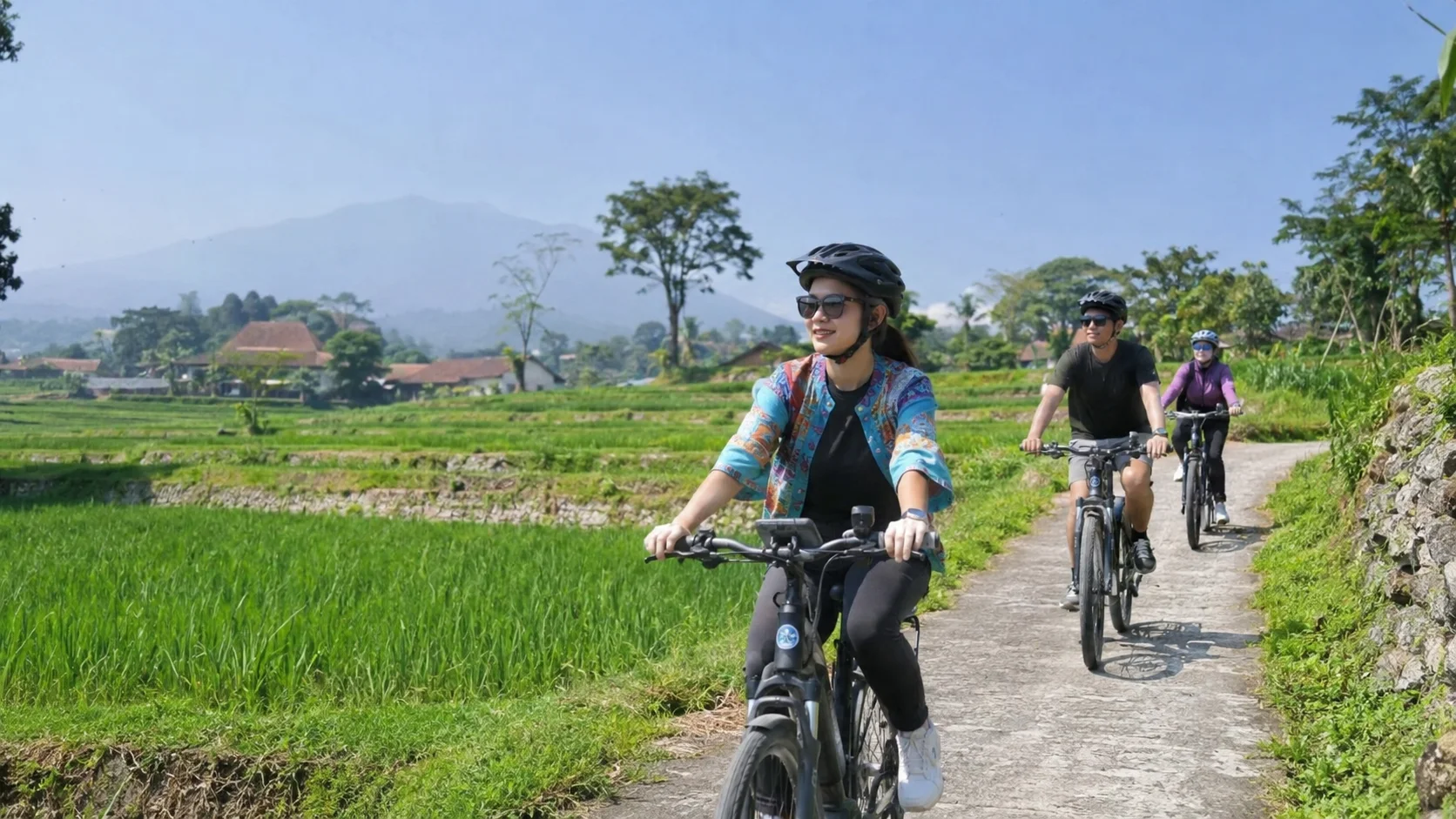
This concept encourages the use of transportation modes with relatively low environmental impact, such as walking, cycling, or exploring tourist areas through responsibly managed hiking trails.
The duration of the trip also tends to be more flexible. Some travelers choose to stay for more than a week, or even up to a month, to get to know a region more deeply.
A longer stay can provide an opportunity for travelers to enjoy the daily lives of the community without having to constantly move between destinations.
However, sustainability is not determined solely by the length of the visit or the type of vehicle used. Waste management, energy consumption, ecosystem protection, and the distribution of economic benefits to the local community are also important factors.
Therefore, the implementation of slow tourism requires destination management that considers the environmental capacity and the needs of local residents.
Emotional Experience as a Main Attraction
Slow tourism is not just about the physical speed of travel. This concept also touches on the psychological and emotional experiences of the traveler.
The term slowness describes a condition where someone can enjoy time and their environment more consciously, without the pressure to keep chasing the next activity.
This experience encompasses several dimensions.
First, a change in the perception of space and time. Travelers have the opportunity to experience a journey with a rhythm different from their daily lives.
Second, the experience of emotional recovery. The natural atmosphere, simple activities, and reduced schedule pressure can help some travelers find peace and an opportunity for self-reflection.
Third, the strengthening of values like simplicity and authenticity. Travelers are invited to find meaning in their journey through direct experience, rather than merely consuming facilities or commercial activities.
In this context, tourism can be an opportunity to rebuild a relationship with oneself, the environment, and the community.
Aligning Traveler Rhythms with Local Life
The development of slow tourism also demands harmony between the needs of travelers and the lives of the local community.
Travelers need to respect the rhythm of community activities, including traditions, work patterns, rest times, and prevailing social customs.
This is important to avoid the phenomenon of temporal colonization, a condition where the rhythm of community life and the environment is forced to adapt to the needs or comforts of visitors.
For example, the schedules of community cultural activities should not always be changed just to satisfy the wishes of tourists.
The same applies to agricultural activities and village life, which have their own cycles.
By respecting local rhythms, the tourism experience can take place more naturally without erasing the identity and daily life of the local community.
Electric Bicycles Can Be an Alternative for Slow Tourism Development
One form of slow tourism application that has the potential to be developed is tourism using electric bicycles or electric bicycle (e-bike).
This mode of transportation allows travelers to explore wider areas with the help of electric power.
E-bikes also provide convenience for groups of travelers with diverse physical abilities, especially when facing long travel routes or challenging terrain.
Compared to fossil-fuel-powered vehicles, electric bicycles do not produce direct exhaust emissions when used. However, the overall environmental impact still depends on the source of electricity, the production process, and battery management.
In Indonesia, one of the challenges in developing e-bike tourism is the limited availability of charging facilities in rural areas.
However, this limitation also presents an opportunity to integrate transportation infrastructure with village economic activities.
When travelers stop to charge their electric bicycles, they can use the time to visit MSMEs, enjoy local culinary delights, buy handicrafts, or learn about community activities.
With proper planning, charging facilities can become stopover points that encourage the equitable distribution of tourism economic benefits.
Learning from the VENTO Cycle Path in Italy
The development of long-distance cycling tourism can be seen through the VENTO project in Italy.
The cycle path, designed to connect the regions of Venice and Turin, is approximately 700 kilometers long and crosses areas along the Po River.
This project shows how cycling infrastructure can be integrated with regional development, including small towns located along the travel route.
A planning approach based on geographic information systems or Geographic Information System (GIS) can be used to identify strategic locations for supporting facilities, including electric bicycle charging stations.
The existence of these stopover points has the potential to encourage travelers to visit areas that previously received less attention in tourism activities.
For Indonesia, a similar approach can serve as a learning resource for developing village tourism destinations, especially regions with rich natural landscapes, culture, and community economic activities.
The Potential of Slow Tourism for Indonesian Tourism
Indonesia has a great opportunity to develop the concept of slow tourism through its diversity of tourist villages, agricultural areas, mountains, coasts, and community traditions.
The development of tourism products can be directed toward activities that offer direct interaction and a more personal experience.
However, its success requires infrastructure support, community readiness, environmental management, and collaboration between the government, business actors, and local communities.
Slow tourism does not mean that all tourism activities must take place slowly. The core of this approach is to provide space for travelers to enjoy their journey in a more meaningful way while still respecting community life and environmental sustainability.
Ultimately, the quality of a trip is not always determined by how far someone travels or how many places they visit.
Sometimes, the most memorable experiences come when travelers choose to stay longer, get to know the community better, and enjoy every part of the journey without rushing.


Comments 0
Write a Comment Share your response