

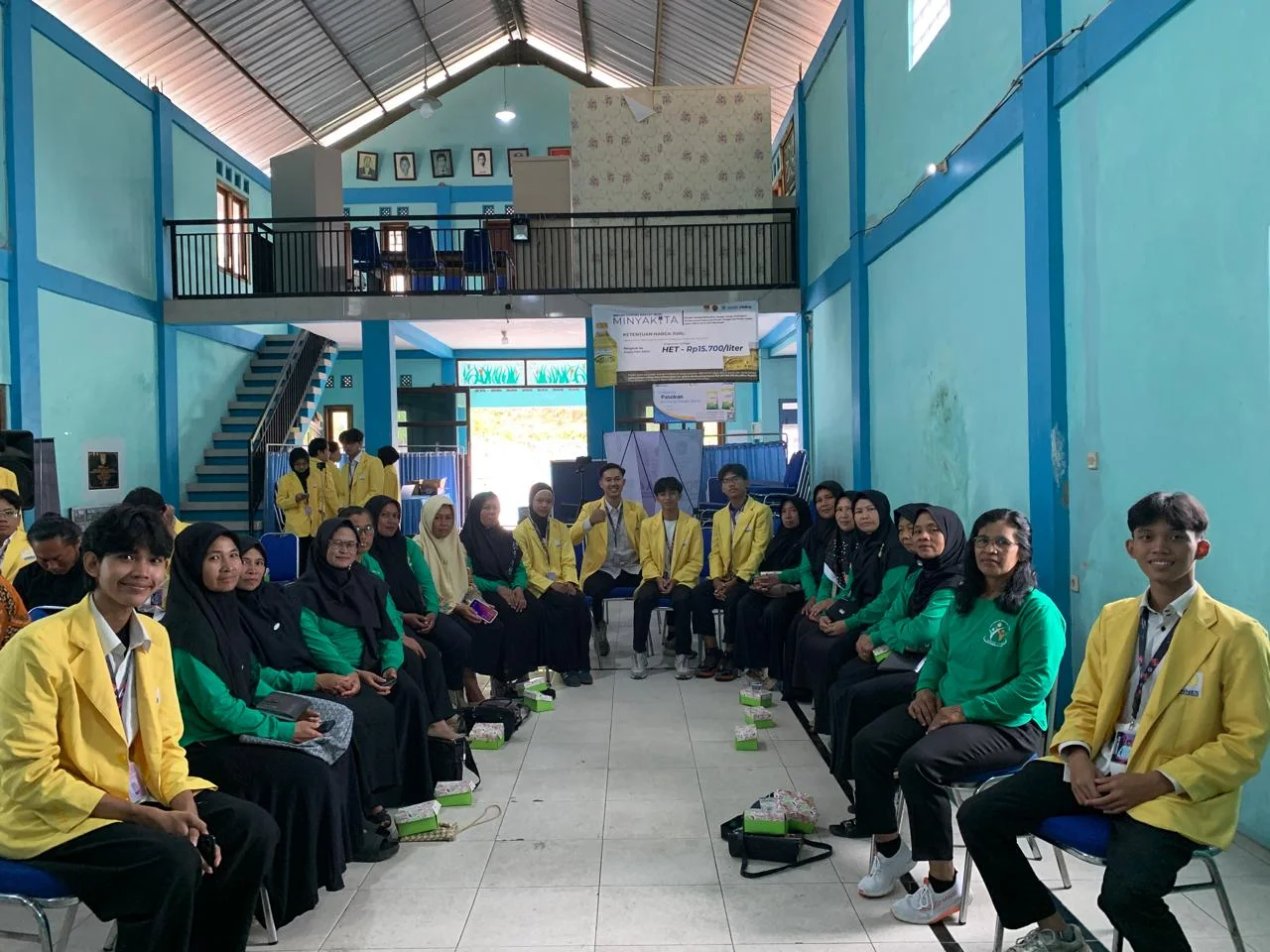
JurnalPost.com - Community empowerment programs rarely begin with the main activities. They usually start with a less visible phase: identifying who will be involved and how they are prepared. This is the stage that students underwent at the Ketep Village Hall on Wednesday (4/11/2026).
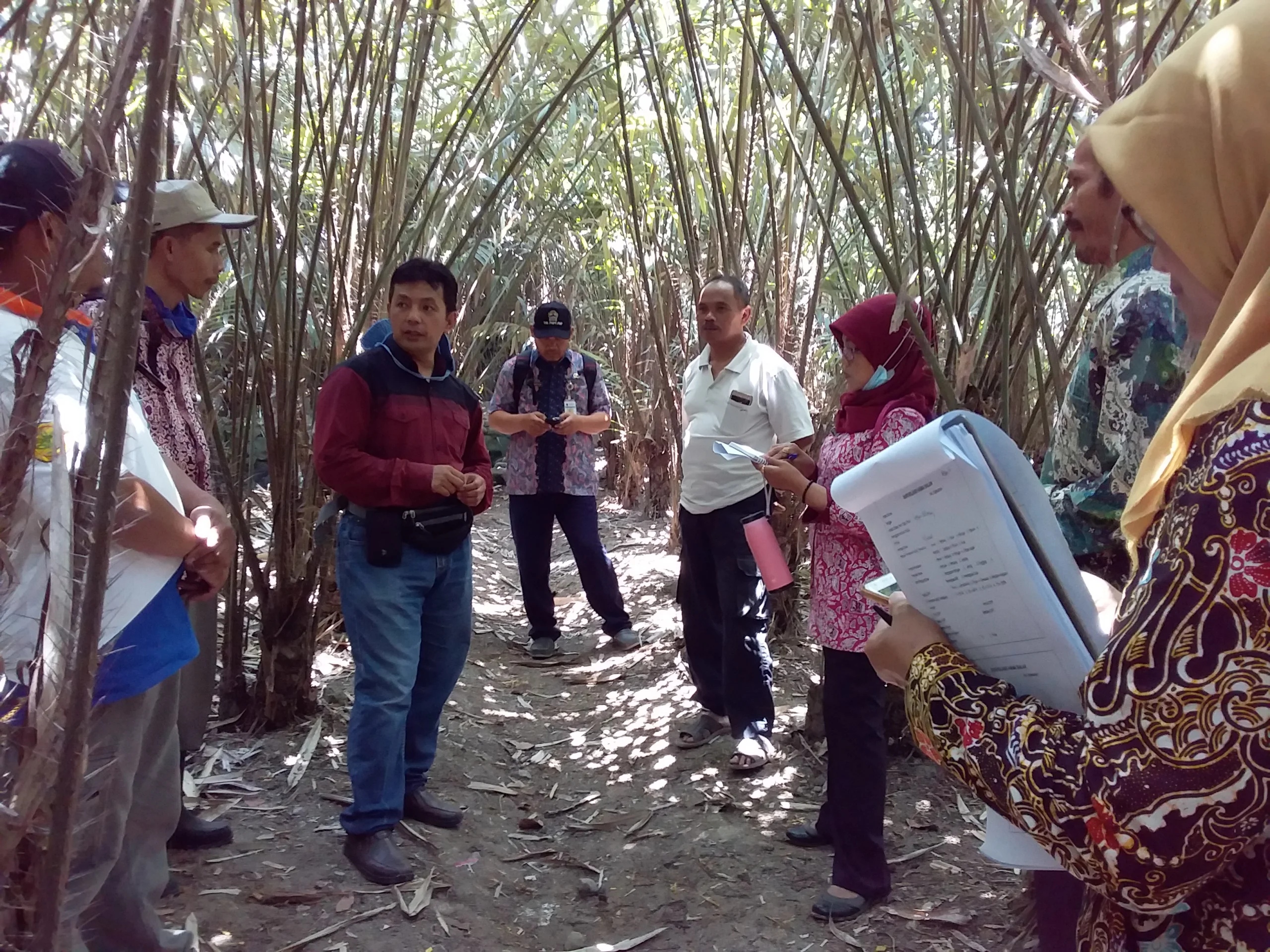
At the village hall in Ketep Village, Sawangan District, Magelang Regency, Central Java, the UNNES Gardatara team—comprising members from the UNNES Geography Student Association and the UNNES Research Student Activity Unit—held an initial coordination meeting. The agenda focused on discussing program preparations involving two partner groups: the Women Farmers Group (KWT Mekarsari) and the Disaster Preparedness Group (KSB). The meeting took place within the village government office and was attended by the Head of Ketep Village, Siswanto.
Two Partners, Two Roles
The Women Farmers Group serves as a platform for rural women to engage in agricultural activities. In the Impactful Student Program: Aksara Peduli 2026, KWT Mekarsari is a key community empowerment partner. Having the status of a partner means this group is not positioned merely as a recipient of activities, but as a party whose needs must be identified and who must be involved from the preparation stage.
The second partner, the Disaster Preparedness Group, plays a role in strengthening community readiness against potential disasters. Preparedness is not something that can be built in one or two meetings. It requires the involvement of residents who understand their own environment, and the group working in this field is closest to those needs.
Women in villages are often at the intersection of family economic activities and daily community life, making groups like KWT a channel close to the daily lives of the people. Meanwhile, disaster preparedness groups are generally composed of local residents who are most familiar with their own territory.
Their fields are indeed different. One touches on the residents' agricultural activities, while the other deals with readiness for disasters. However, both are community groups located within the village environment that serve as the foundation for the program.
Why is Preparation Necessary First?
In empowerment work, the needs of partner groups cannot be assumed from the outside. Identifying needs and thorough preparation are ways to ensure that the main activities are not based on guesswork. The student team needs a complete picture of the group they will be assisting, while the partner group needs clarity on what will be done together.
This approach is also related to sustainability. Activities prepared together with partner groups are generally easier to understand and accept by their members compared to activities that arrive without prior discussion. Preparation is not just about schedules and technicalities, but also about building trust between students and residents.
Therefore, coordination before the main activities is a stage that cannot be skipped. The meeting at the Ketep Village Hall is the initial phase of that process. At this stage, the discussion still revolves around preparation; the implementation of joint activities with each group will follow the program stages.
The presence of the Head of Ketep Village at the meeting provides context that the preparation of both partner groups is taking place within the village government environment. However, the focus of the discussion did not stop at the relationship between students and village officials, but rather on the readiness of the community groups that will be directly involved in the program.
The Common Thread with Aksara Peduli 2026
The Impactful Student Program: Aksara Peduli 2026 is part of the Aksara Student Program, a community service initiative that received funding in 2026 from the Directorate of Research and Community Service, Directorate General of Research and Development, Ministry of Higher Education, Science, and Technology.
Within the framework of the program, KWT Mekarsari and the Disaster Preparedness Group serve as entry points for students to work with the village community: one through the agricultural sector pursued by the women's group, and the other through efforts to strengthen preparedness against potential disasters.
The UNNES Gardatara team itself is a collaboration of students from the UNNES Geography Student Association and the UNNES Research Student Activity Unit. They are running this program in Ketep Village, Sawangan District, Magelang Regency, and starting it from a stage that might seem simple: gathering, coordinating, and preparing partners.
For students, this stage is also an opportunity to read the village context before acting. The team coming from the campus needs to understand that every group has its own activities and rhythms, and that the presence of the program must adapt to those, not the other way around.
That simple stage determines what happens afterward. Empowerment that begins with clear preparation gives partner groups space to be involved, rather than just following along. In Ketep, that space is beginning to open from a village hall and chairs arranged in a circle.
Author Identity
First author: Dr. Andi Irwan Benardi, S.Pd., M.Pd., Head of the Aksara Student Program Lecturer Team, Universitas Negeri Semarang (UNNES).



Comments 0
Write a Comment Share your response