


JurnalPost.com Amidst the ongoing evolution of Indonesia's economy, a fundamental question arises: to what extent do the people truly act as the primary drivers of their own nation's economic progress?
This question becomes increasingly relevant when examining the ideas of Prof. Dr. Tuntas Subagyo in his book titled Indonesia Rumah Kaca. This work offers a perspective on the importance of building national economic self-reliance by positioning the people as both the foundation and the primary engine of the nation's economic strength.
This line of thought stems from the realization that a nation's economic power is not determined solely by the volume of investment, industrial growth, or the ability to attract foreign capital. More importantly, there is a foundation that must be built: the community's capacity to manage resources, create added value, and develop economic potential independently.
Within this framework, economic development should not be oriented solely toward achieving macroeconomic indicators. Economic growth must also be reflected in the increased production capacity of the community, the opening of business opportunities, and broader public access to sources of prosperity.
Learning from History to Build the Future
One compelling aspect of Prof. Dr. Tuntas Subagyo's thinking is his effort to connect the future direction of economic development with the historical journey of the Nusantara civilization.
The Srivijaya, Singasari, and Majapahit empires serve as historical inspirations, demonstrating that Nusantara once possessed a powerful civilization, trade networks, and economic capabilities that were influential in the region's history.
Such past glory cannot, of course, be applied directly to modern Indonesia. Current economic challenges are far more complex, ranging from global competition, technological advancements, and structural industrial changes to dependence on international supply chains.
However, history still holds important lessons. The ability to manage resources, build trade networks, develop production, and strengthen economic ties among the community are elements that help determine a nation's progress.
Therefore, history should not stop at being a source of pride for past glories. The values contained within it must be translated into inspiration for building a more independent and sustainable economic system.
Indonesia possesses abundant natural resources, a strategic geographical position, and a large population. The main issue is not just the magnitude of this potential, but how all these strengths can be managed to generate broader benefits for the Indonesian people.
Without proper management, resource wealth will remain a potential that has not fully contributed to the welfare of the people.
People's Economy as the Foundation of National Strength
Another prominent idea in Indonesia Rumah Kaca is the importance of placing the micro-economy as a foundation for national economic development.
Thus far, discussions regarding economic progress have often been dominated by large investments, infrastructure development, industrial expansion, and various macroeconomic growth indicators.
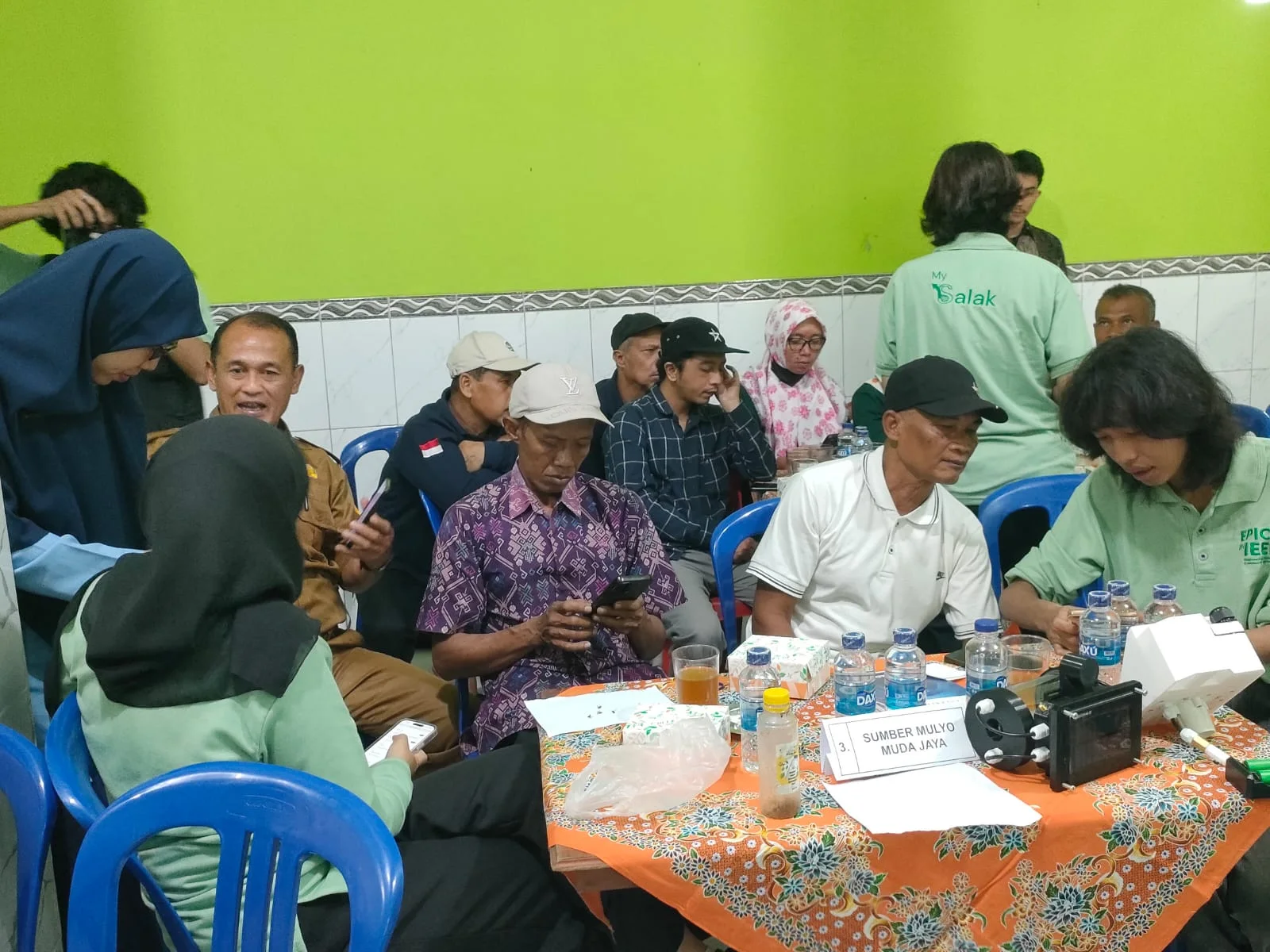
In reality, the community's economic activities take place every day through actions very close to the lives of the people. Farmers cultivate land, fishermen catch fish, traders keep markets moving, small business owners produce goods, and cooperatives and home industries help meet the needs of the community.
If viewed individually, these activities might seem simple. However, when millions of economic actors move and connect with one another, they form a productive force that plays a vital role in supporting the national economy.
This is where micro, small, and medium enterprises (MSMEs) need to be positioned as a strategic part of development, rather than just a supplementary sector that receives attention only when the economy faces pressure.
Strengthening the people's economy must begin by providing greater opportunities for the community to produce, trade, develop businesses, obtain financing, and expand market access.
Successful development does not just produce high economic growth; it also creates an economic structure that provides opportunities for the community to thrive.
Consequently, the people are no longer positioned merely as consumers of products and services generated by large economic powers. They must also have the ability to become producers, entrepreneurs, and owners of productive resources.
Connecting the Micro-Economy with Large Investments
One of the challenges of Indonesia's economic development is bridging the gap between the community's economic potential and large-scale investment power.
In this context, central and regional governments have a strategic role as connectors between micro-economic activities and macroeconomic development.
It is not enough for the government to merely perform regulatory and oversight functions. Its presence is also required to build a business ecosystem that allows the community to gain access to capital, technology, markets, training, and distribution networks.
The reality faced by MSME actors highlights the importance of this role. Many people possess the skills, creativity, and ability to produce goods with development potential. However, limitations in capital, production capacity, technology, and marketing often become obstacles to scaling up their businesses.
On the other hand, large investments require the support of sustainable supplier networks, raw materials, labor, and distribution.
If these two forces can be connected through fair partnerships and appropriate policies, investments have the opportunity to provide broader benefits for the community's economy.
Investment should not only generate profits for capital owners. Its presence also needs to open opportunities for local business actors to be involved in the production process, increase business capacity, and receive a fair share of the economic value added.
With this approach, the micro-economy and the macro-economy do not need to be viewed as two conflicting interests.
Instead, they can be built in a mutually reinforcing relationship. The growth of large industries can open opportunities for small businesses, while the development of small businesses can create increasingly strong production and distribution networks.
The macro-economy should grow by strengthening the micro-economy, not by developing while leaving behind the people who serve as the foundation of the national economy.
Economic Sovereignty Must Not Stop at Being a Slogan
The principle of "By the People, For the People" provides a picture of an economic development direction that favors the interests of the community.
However, this principle is not enough if it is only used as a slogan. Economic self-reliance and sovereignty must be realized through policies and systems that allow the people to participate tangibly in economic activities.
Economic self-reliance is not measured solely by a country's ability to generate wealth, attract investment, or record high growth.
Another equally important metric is the extent to which the community has access to productive resources, opportunities to develop businesses, and the ability to enjoy the fruits of development equitably.
The people should not just be spectators in their own nation's economic development. They must be given the space to become actors, drivers, and owners of economic power.
Economic sovereignty will be difficult to achieve if the majority of the community does not have the ability to determine the direction of their own economic activities.
Conversely, this sovereignty will grow stronger when the community is able to produce goods, develop businesses, manage resources, and build economic networks that provide direct benefits to their lives.
To achieve this condition, concrete steps are needed to expand business financing, improve entrepreneurship education, strengthen cooperatives, develop production technology, and open fairer market access.
Economic policy must also pay attention to the inequality of business opportunities. Without clear partiality, small economic actors risk continuously facing limitations in competition against companies with far greater resources.
Therefore, the people's economy needs to be understood as a development agenda that places the improvement of community capacity and welfare as the primary goal.
From Thought to National Development Agenda
Through Indonesia Rumah Kaca, Prof. Dr. Tuntas Subagyo invites readers to view economic development from a perspective closer to the lives of the people.
This idea opens up space for discussion on how history can serve as an inspiration, how the micro-economy can be strengthened as a national foundation, and how the government and the business world can build more productive economic relationships with the community.
Nevertheless, big ideas still require concrete and measurable implementation steps.
Building economic self-reliance is not a simple task. It requires policy consistency, institutional reform, improvement in the quality of human resources, and cooperation between the government, business actors, cooperatives, universities, and the community.
Furthermore, the success of development needs to be assessed by the impact truly felt by the people. High economic growth will lose some of its meaning if it is not accompanied by the expansion of job opportunities, increased business capacity, and the equitable distribution of development benefits.
This is where the thinking regarding the people's economy needs to be continuously developed into a shared agenda.
A work of thought holds significance when it is able to open space for dialogue, enrich perspectives, and encourage the public to re-examine the direction of development that has been pursued thus far.
Indonesia needs more ideas that position the people as the subjects of development, not just as objects of various economic policies.
In this context, Indonesia Rumah Kaca by Prof. Dr. Tuntas Subagyo is a worthwhile read to discuss for broadening the understanding of the future of Indonesia's economic self-reliance and sovereignty.
This is because building a sovereign nation is not enough through the strengthening of politics and governance alone. National sovereignty also requires an economic foundation that is strong, independent, productive, and rooted in the capabilities of its own people.
It is not enough for Indonesia to be known only as a country rich in natural resources. That wealth must be capable of being processed into an economic force that provides the greatest possible benefit for the prosperity of the people.
Ultimately, the nation's economic sovereignty will find its true meaning when the people are not only part of the development process but also have real opportunities to become the owners, actors, and primary drivers of their own nation's economy.




Comments 0
Write a Comment Share your response