

Staff at the Rupiah Management Implementation Unit, Bank Indonesia Representative Office, Jember, East Java
JurnalPost.com - The digital economy grows on a foundation often overlooked: trust. People are willing to use digital wallets, mobile banking, QRIS, and foreign exchange services because they believe their money, personal data, and rights are protected. However, that trust can collapse due to a single phishing link, a leaked OTP code, or an unresolved complaint.
Amid the massive surge in digital transactions, consumer protection can no longer be treated as a mere accessory to innovation. It is a prerequisite for a payment system that is secure, efficient, inclusive, and sustainable. Innovation that moves rapidly without adequate protection can create new inequalities, where providers hold the technology and information while consumers bear the brunt of the risks.
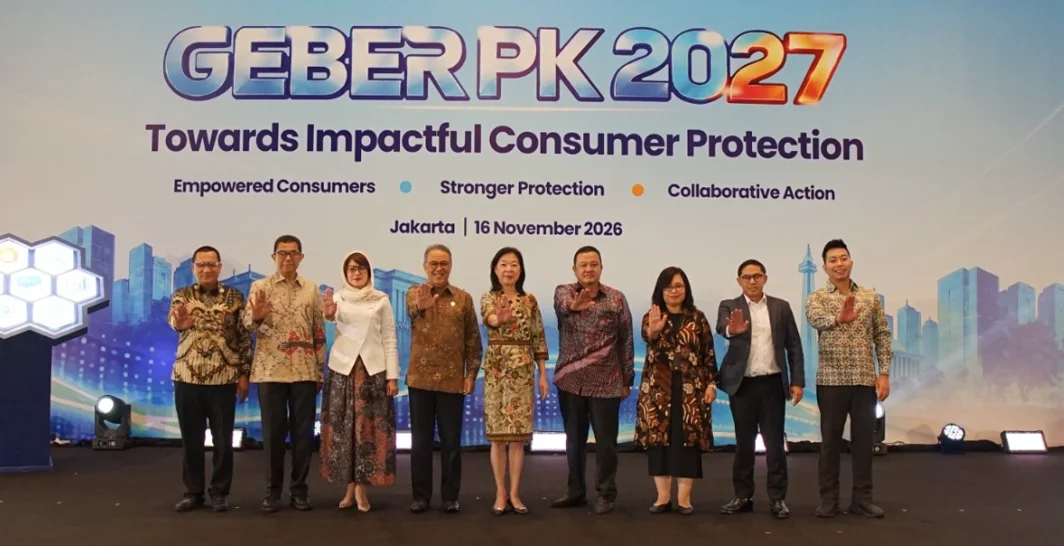
Therefore, the launch of the Joint Consumer Protection Movement (GEBER PK) 2027 by Bank Indonesia on 16 November 2026 marks a significant milestone. This movement sends a clear message that digital transaction security is not just a consumer concern, but a shared responsibility of providers, regulators, and all stakeholders in the financial ecosystem.
The greatest challenge is not merely expanding the use of digital services, but ensuring every user understands the risks and has access to recovery pathways when they suffer losses.
Consumers Are Increasingly Digital, Yet Not Fully Empowered
The Bank Indonesia National Consumer Protection Survey 2026 shows that the Payment System Consumer Empowerment Index (IKK-SP) reached 77.03. This figure increased by 12.36 points compared to 2023, which stood at 64.67. This rise indicates that public literacy, awareness, and capability in using payment systems are improving.
However, that value of 77.03 has not yet brought consumers into the "Empowered" category. This means that while many users may be accustomed to using QRIS, banking apps, and digital wallets, they are not yet fully capable of identifying manipulation tactics, understanding terms of service, securing personal data, or advocating for their rights when problems arise.
The gap between the ability to use technology and the ability to understand its risks is a critical vulnerability. Digital criminals do not always attack technological weaknesses; they exploit panic, ignorance, trust, and user habits through social engineering.
Messages regarding prizes, bills, digital invitations, account updates, or requests for OTP codes can lead consumers to make decisions in mere seconds.
In such situations, consumer education must go beyond normative advice like protecting personal data or being careful when transacting. Education must drive behavioral change.
Consumers need to be accustomed to verifying the identity of those contacting them, reading product information, not sharing PINs, passwords, or OTPs, and knowing where to file complaints.
Bank Indonesia's message, "If in Doubt, STOP!", is relevant because it positions a pause as part of maintaining security. Stopping for a few seconds to verify information can prevent losses that might take months to recover.
In digital transactions, speed offers convenience, but caution provides protection.
Responsibility Must Not Be Shifted to Users
Consumer protection is unfair if the entire burden of security is placed on the public. Advice for consumers to remain vigilant must be accompanied by the obligation of providers to build transparent products, robust security systems, and user-friendly complaint mechanisms.
Bank Indonesia reinforces this responsibility through Bank Indonesia Regulation (PBI) Number 6 of 2026 concerning Bank Indonesia Consumer Protection and Board of Governors Member Regulation (PADG) Number 32 of 2026 concerning Procedures for Implementing Bank Indonesia Consumer Protection.
These provisions regulate the obligations of providers to provide transparent information, treat consumers fairly, protect assets and data, and implement preventive and handling measures against fraud risks.
This obligation is crucial because the relationship between consumers and providers is often imbalanced. Consumers face complex product information, lengthy service agreements, and complaint procedures that are not always easy to understand.
When a transaction goes wrong, consumers are often forced to navigate from one channel to another without obtaining certainty regarding the status of their case or who is responsible.
Collaboration between Bank Indonesia and the Financial Services Authority (OJK) must also be continuously strengthened. Developing anti-scam mechanisms, ensuring access to complaints, and coordinating case handling are necessary because digital crimes often cross accounts, platforms, institutions, and even jurisdictions.
The speed of coordination is a key determinant of whether a victim's funds can still be tracked and potentially recovered.
From Large Campaigns to Real Rights Recovery
GEBER PK has demonstrated a wide reach in education. As of October 2026, 86 Payment System Service Providers have participated through 4,441 educational posts and 71 collaborative videos.
The campaign generated more than 151 million online views, reached 36 million listeners through radio and public service announcements, and involved 2.3 million participants in face-to-face education.
Since the beginning of 2026, Bank Indonesia has also organized 9,575 activities across Indonesia with an estimated reach of 36.7 million people.
This scale shows a significant commitment to building public awareness. However, the reach of the campaign must be followed by more substantive evaluation.
Are people becoming more capable of recognizing fraud? Is the number of victims decreasing? Can consumer complaints be resolved faster and provide certainty?
These questions are important because the success of consumer protection cannot be measured solely by the number of activities, participants, or educational views. Real impact on transaction security and the resolution of public issues must be an equally important metric.
Consumers need complaint mechanisms that are easy, fair, affordable, and effective. When complaints to providers remain unresolved, the public must have guaranteed access to BICARA 131, the official channel according to authority, or the Alternative Dispute Resolution Institution (LAPS).
Trust in the digital economy is not built through slogans and transaction growth alone. Trust is born when users can transact safely, providers are accountable, and disputes are resolved clearly.
Protected consumers are not a barrier to innovation, but the foundation that makes innovation accepted and used sustainably.
The future of Indonesia's digital economy depends on the courage of all parties to place humans at the center of innovation. Technology may become faster and transactions easier, but consumer rights must not be left behind.
Because one case handled fairly can strengthen trust, while one ignored complaint can make the public doubt the entire digital ecosystem.









Comments 0
Write a Comment Share your response