

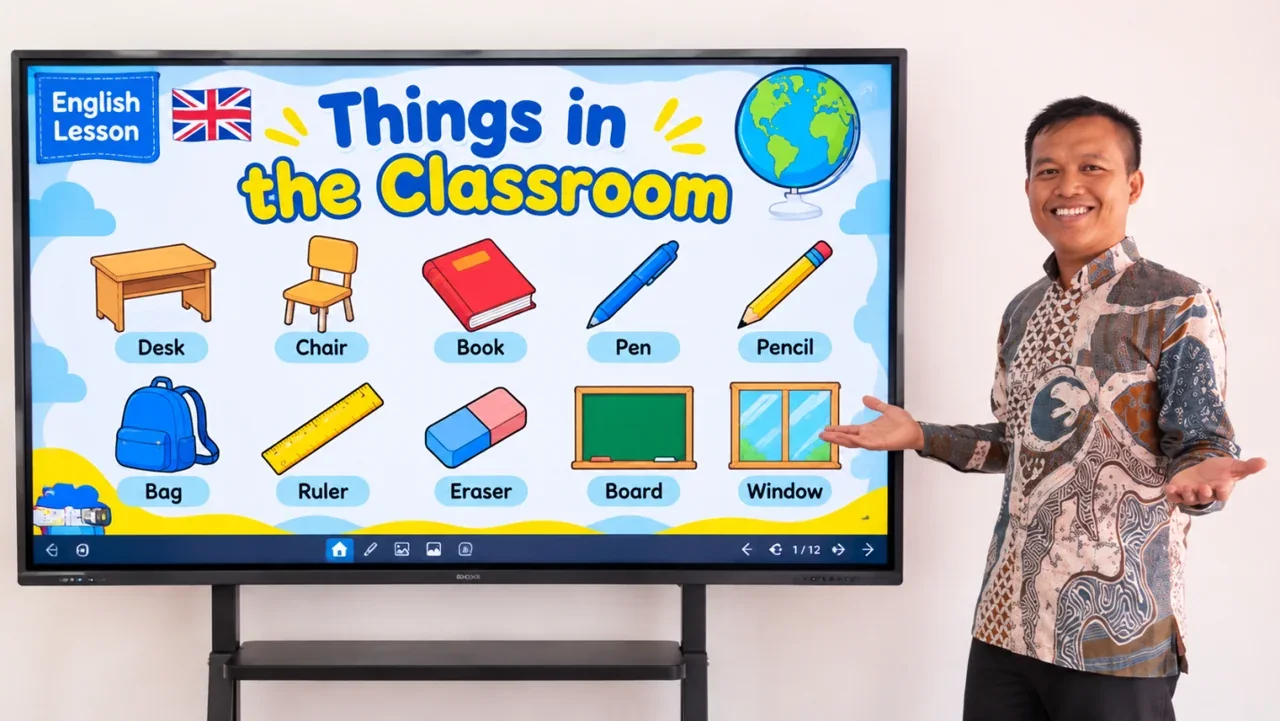
By: Muhammad Yani
Education Management student at UMSU and teacher at a public elementary school in 2 Binjai 024771
The Current Importance of English
English is no longer just a foreign language studied to earn grades in school. Amidst technological advancements, globalization, and the interconnectedness of global society, English has become a vital skill for accessing knowledge, communicating, and competing globally. David Crystal, in his book English as a Global Language (2003), explains that the status of English has evolved into an international language used in various fields, ranging from education and science to business and technology. Similarly, Graddol (2006) in English Next illustrates the increasing importance of English proficiency in navigating global changes and cross-border communication needs. Thus, mastering English is not merely a matter of speaking ability, but also part of an effort to prepare the younger generation for future challenges.
The Situation in Indonesia
According to the 2025 EF English Proficiency Index (EF EPI) report, Indonesia ranks 80 out of 123 countries and regions with a score of 471. This position places Indonesia in the low proficiency category. This figure warrants collective attention as it indicates that improving English proficiency remains a major task for the national education system. Although the EF EPI has limitations because it uses test results from adult participants who take the test voluntarily, the data still provides an overview of the challenges of English proficiency in Indonesia. This means that more planned and sustainable educational steps are needed.
Strategic Steps to Introduce English at the Elementary Level
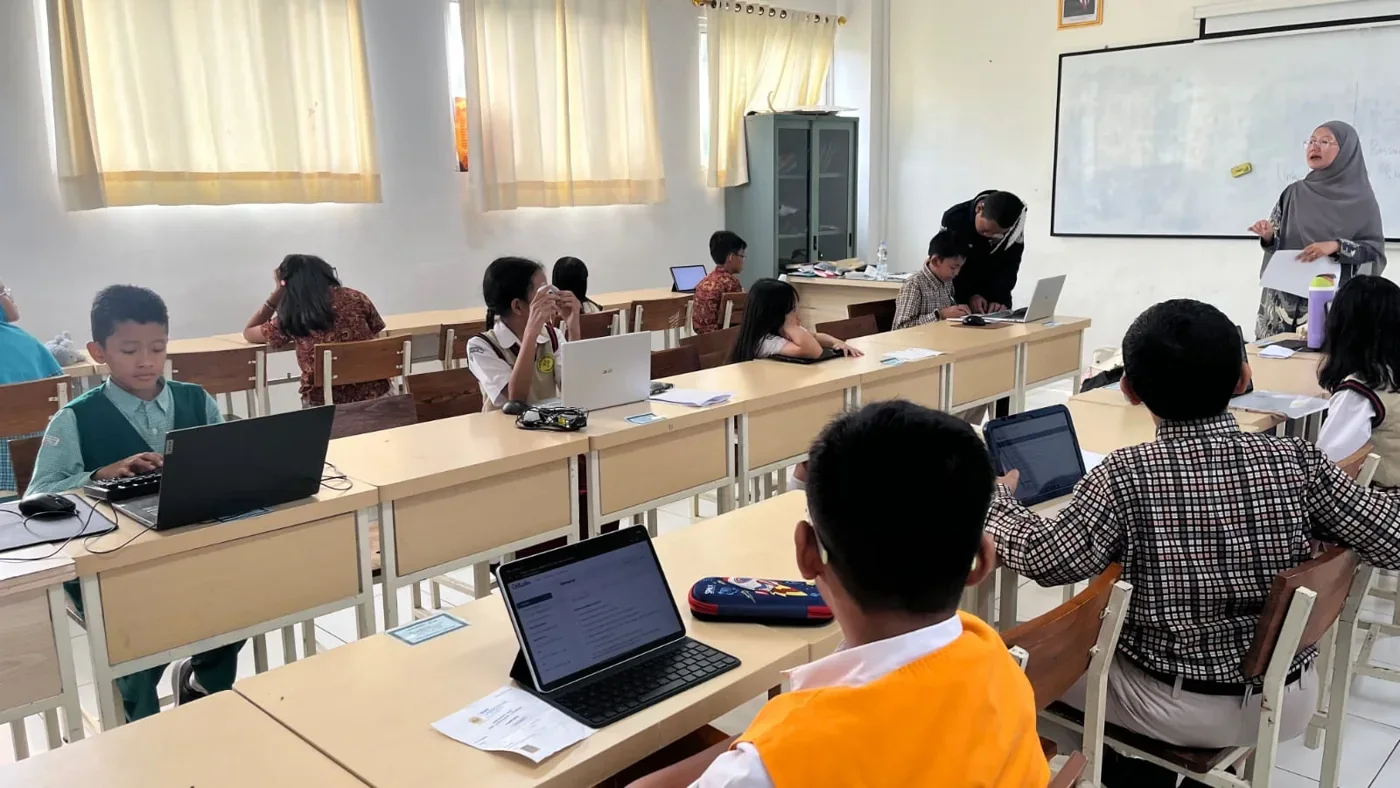
One strategic step is to introduce English at the elementary school age. Lynne Cameron, in her book Teaching Languages to Young Learners (2001), explains that language learning in children has its own characteristics. Children tend to learn through concrete experiences, meaningful activities, repetition, games, and social interaction. Therefore, English learning at the elementary level should not be immediately directed toward mastering complex grammar, but rather start with the introduction of vocabulary, simple expressions, listening skills, and the confidence to communicate. Early learning provides children with the opportunity to build a language foundation gradually. However, early age is not an automatic guarantee of English fluency. The quality of instruction, the language environment, and the continuity of the learning process remain the determining factors.
Government Programs to Prepare Teachers
The Indonesian government has taken steps to strengthen English instruction in elementary schools. Based on the Minister of Education, Culture, Research, and Technology Regulation Number 12 of 2024, as amended by the Minister of Primary and Secondary Education Regulation Number 13 of 2025, English, which was an elective subject until the 2026/2027 academic year, will become a mandatory subject in the 2027/2028 academic year. This policy begins implementation in the third grade of elementary school. The government also recognizes that curriculum changes must be accompanied by teacher readiness. Therefore, the Elementary School Teacher English Competency Development (PKGSD-MBI) program has been prepared as an effort to improve both English proficiency and the pedagogical competence of teachers who will implement this instruction.
The Ministry of Primary and Secondary Education also provides independent PKGSD-MBI training through the Ruang GTK platform within the Rumah Pendidikan application. This program allows teachers to learn independently, flexibly, and in a structured manner. The training consists of three learning topics. The first topic covers self and family introductions, the second covers community at school, and the third covers daily routines. The material is designed to be close to daily life so that teachers can learn relevant expressions and vocabulary for use in elementary school classrooms. Each topic can be completed in a maximum of one month after the teacher begins, followed by a test to assess participant understanding. This program is a positive step as it opens access to competency development for teachers who do not have an English education background.
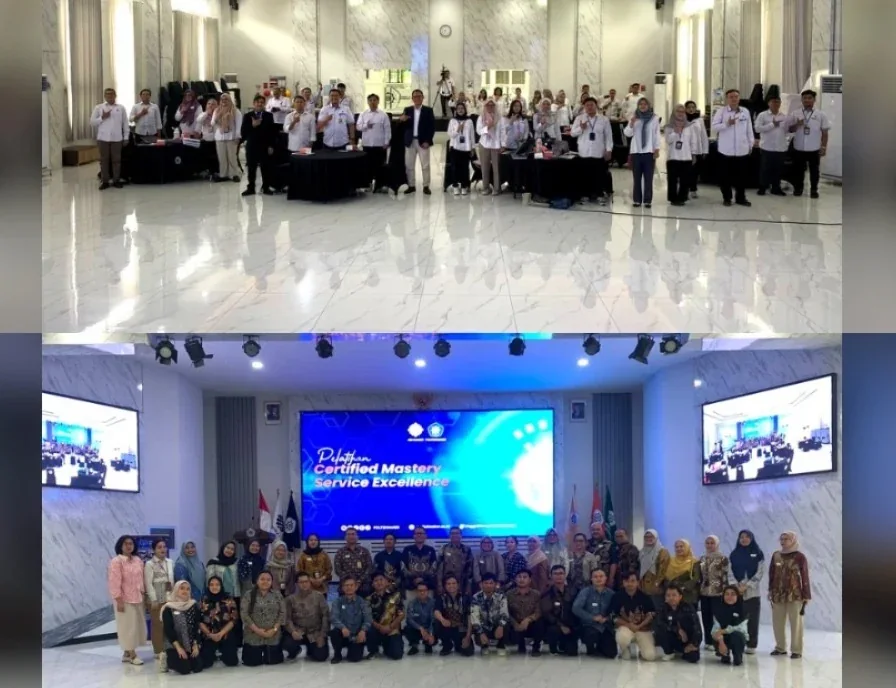
Furthermore, the government is expanding the program through collaboration with 101 public and private universities that have academic capacity in the field of English. Based on the Ministry of Primary and Secondary Education press release dated 6 November 2026, the PKGSD-MBI program is targeted to reach teachers from 58,482 schools across 19 provinces, 227 regencies/cities, and 2,717 sub-districts through 3,002 training classes. The training is conducted over ten effective days with a total of 80 lesson hours, consisting of 40 face-to-face hours and 40 hours of independent learning via Ruang GTK. The material includes strengthening English skills, preparing lesson plans, teaching practice and simulations, and teaching strategies suited to the characteristics of elementary students. The involvement of universities is certainly a strategic step because the teacher competency improvement process receives support from academic staff with expertise in their fields.
The Reality in Schools
These various programs need to be read critically by considering the actual conditions in schools. Teaching English is not the same as simply being able to use a few words or understand simple conversations. There is a difference between someone who can speak English and someone who has the competence to teach English to students.
Lee Shulman (1987), through the concept of Pedagogical Content Knowledge, emphasizes the importance of combining subject mastery and pedagogical knowledge in the teaching profession. This means that a teacher does not just need to understand the subject matter, but must also be able to determine how that material is delivered according to the characteristics and needs of the students. In English instruction, teachers need to understand pronunciation, vocabulary, grammar, listening, speaking, reading, and writing skills, as well as methods for teaching languages to children. Such competence cannot be built instantly through short training sessions.
Another challenge is the issue of teacher availability and placement in elementary schools. So far, most elementary schools have a classroom teacher system where one teacher is responsible for various subjects, while the availability of teachers with an English education background is not evenly distributed. In fact, in the practice of managing educators in some schools, teachers with an English education background may be assigned as classroom teachers due to school organizational needs, workload distribution, and educator staffing arrangements. Certification issues are also a concern, as many teachers certified in English education choose to become classroom teachers due to the clarity of the TPG (Teacher Professional Allowance) payments. This leaves schools with a shortage or a complete lack of specialized teachers to teach English. Thus, teacher assignment policies must consider academic competence, experience, and learning needs, not just the availability of staff.
When the Subject is Mandatory, Are the Teachers Ready?
The PKGSD-MBI training is a commendable step, but its success should not be measured solely by the number of teachers who attend the training or receive certificates. The government must also ensure that teachers are truly able to apply the knowledge gained in the learning process. Periodic evaluations, mentoring by competent instructors, teaching practice, learning communities, and continuous professional development must be part of the policy implementation.
A solution to consider is to prioritize teachers with an English education background to teach English in elementary schools. The presence of specialist teachers is necessary so that instruction has a strong scientific and pedagogical foundation. Meanwhile, classroom teachers can have their competence strengthened through continuous training so they can integrate simple English into daily learning activities, for example through greetings, simple instructions, vocabulary introduction, and contextual activities. With this division of roles, classroom teachers are not burdened with responsibilities that exceed their initial competence, but still have the opportunity to develop their English skills.
Ultimately, the policy of making English mandatory in elementary schools is an important step in preparing the Indonesian generation for the global world. However, the success of education policy is not determined solely by curriculum changes and the addition of subjects. Teacher quality, the equitable distribution of educators, and the sustainability of training are the primary foundations for its success. We must not be so enthusiastic about making the subject mandatory that we forget to ensure who is truly ready to teach it. After all, elementary school children do not just need English lessons; they need teachers who can make them love the language, understand its basics, and have the courage to use it. If it is to become a mandatory subject, classroom teachers can take a role, but English teachers remain necessary.








Comments 0
Write a Comment Share your response