

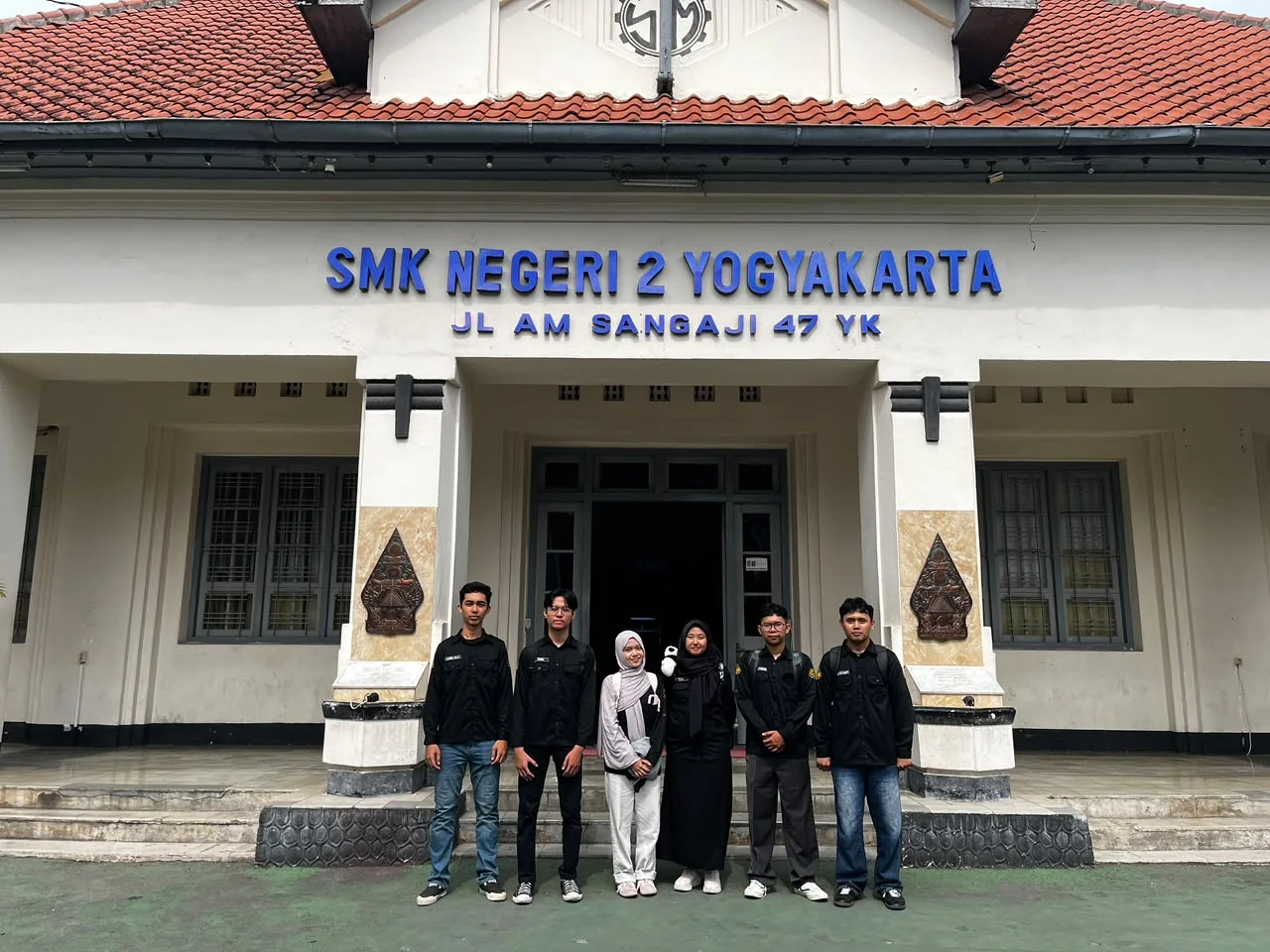
YOGYAKARTA, JurnalPost.com – A group of students from the Bachelor of Electrical Engineering program 1 at Yogyakarta State University (UNY) held a renewable energy education event for students at SMK Negeri 2 Yogyakarta on Friday, 30 October 2026. The activity, which involved 32 eleventh-grade students from the Electrical Power Installation Engineering (TITL) department, aimed to introduce solar panel technology through interactive learning, web-based simulations, and hands-on practice using mini solar panel devices.
The activity was part of the implementation of the Education and Sustainable Development course taken by students of the Bachelor of Electrical Engineering program 1 at UNY, class of 2025. Through a combination of theory and practice, the students aimed to provide an understanding of utilizing solar energy as an environmentally friendly alternative source of electrical energy.
This educational program was carried out by six students from Group 1, Class G: Habibi Aulia Rizki, Daffa Rifqi Mu'afa, Ditha Bapra Nugraha BR P., Eksan Satya Purnama, Rasikha Qarira Rohmad, and Mohammad Nafif Rhanusetyo Haryono.
The entire series of activities was conducted under the guidance of Dr. Ir. Yoga Sahria, S.Kom., M.Kom., M.Pd., the lecturer for the Education and Sustainable Development course.
Supporting Quality Education and Clean Energy Utilization
This solar panel technology introduction activity integrates two Sustainable Development Goals (SDGs): SDG 4 on Quality Education and SDG 7 on Affordable and Clean Energy.
Through this activity, the UNY students sought to bridge university-level learning materials with the needs of vocational education, particularly in the field of electrical engineering.
Introducing renewable energy is considered important for vocational students because electrical technology is no longer limited to conventional energy sources. Utilizing solar energy is a relevant technology to study as the demand for more sustainable energy systems continues to grow.
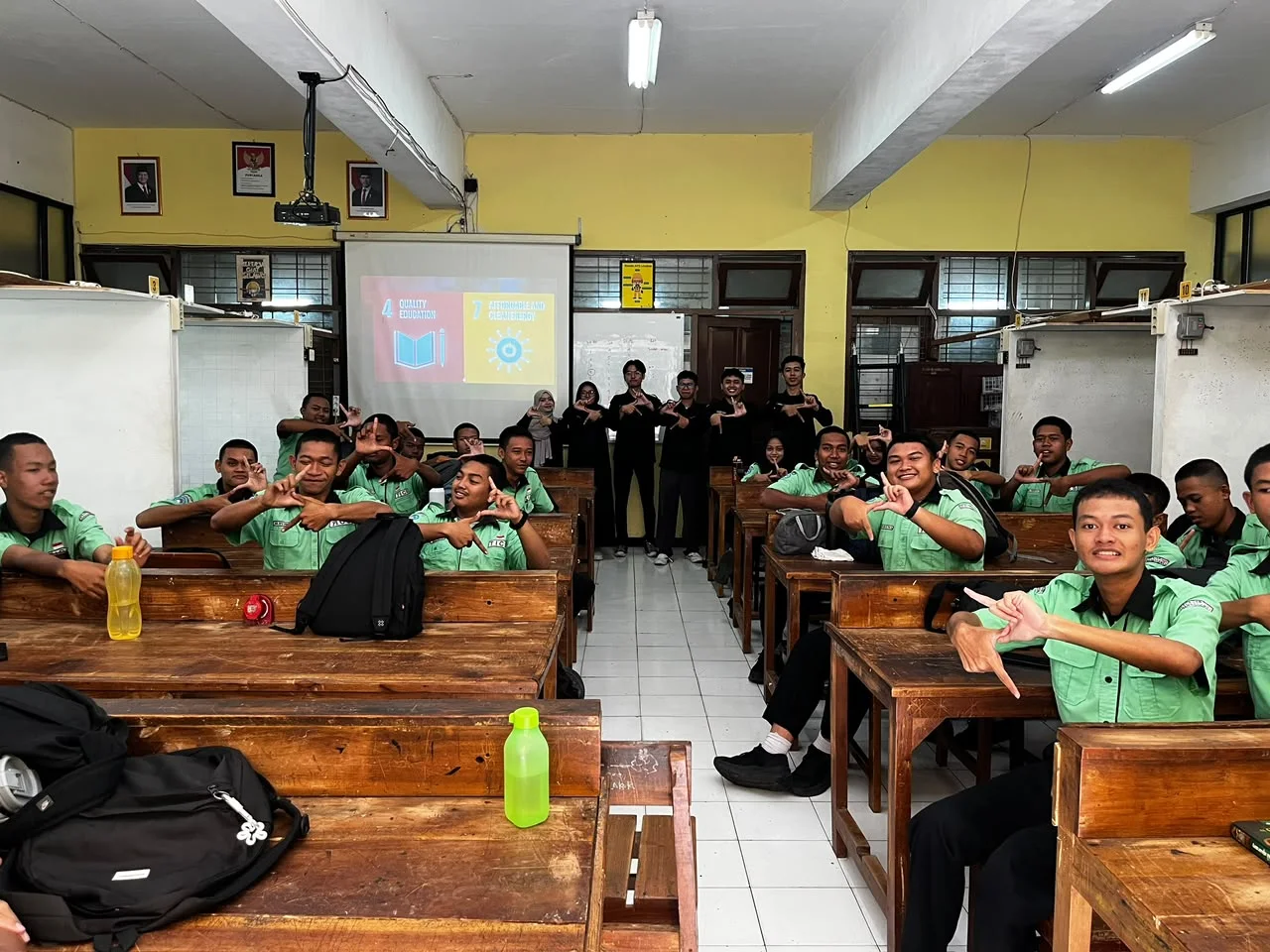
In the opening session, the students presented material on the basic concepts of renewable energy, types of alternative energy sources, and the working principles of solar panels in converting sunlight into electrical energy.
The material was presented in a simple manner to ensure it was easily understood by the students and could be linked to the basic electrical knowledge they had already learned in school.
Students Invited to Try Web-Based Solar Panel Simulations
After receiving the theoretical explanation, the students were introduced to web-based electrical circuit simulations as an interactive learning medium.
The simulation was displayed on a laptop placed at the front of the class. The students were then given the opportunity to try the simulation prepared by the UNY students firsthand.
Through this digital medium, students could gain a basic understanding of electrical circuits related to the use of solar panel technology.
The use of web-based simulations served as a way to help students grasp the material previously presented in theory. By seeing a visual representation of the circuits, it is hoped that electrical concepts become easier to understand.
In addition to providing a different learning experience, this approach also introduced the use of digital technology as a tool to support practical learning in electrical engineering.
Mini Solar Panel Practice Provides Hands-On Learning Experience
Moving beyond digital simulation, the activity continued with an introduction to mini solar panel devices and their supporting components.
In this session, students had the opportunity to observe the physical form of the solar panels and identify the components used in a simple solar-based electrical system.
The mini solar panel devices were used as demonstration media so that students could get a more tangible picture of the application of renewable energy technology.
Through this direct observation, students are expected to connect the concepts they have learned with the use of electrical devices in daily life.
The combination of material presentation, digital simulation, and physical device introduction was designed as a learning approach to ensure students not only understand the concepts but also recognize their applications.
For students in the Electrical Power Installation Engineering department, the introduction of this technology is directly related to the professional competencies they are currently studying. Knowledge of solar energy can provide additional insight into the development of renewable energy-based power generation technology.
UNY Students Promote Sustainable Energy Awareness
Beyond introducing technology, this activity also served as a means to foster student awareness regarding the importance of using more environmentally friendly energy.
Solar energy is a renewable energy source with great potential to meet electricity needs. Solar panel technology allows sunlight to be converted into electrical energy through photovoltaic cells.
Understanding this technology is expected to broaden students' perspectives on opportunities for developing more efficient and sustainable electrical systems.
For the UNY students, this educational activity also served as an opportunity to apply the knowledge gained during their studies through direct interaction with vocational high school students.
Through the solar panel introduction activity at SMK Negeri 2 Yogyakarta, the students hope that learning about renewable energy can become more integrated into vocational education.
This program also demonstrates how collaboration between universities and schools can be leveraged to introduce technological advancements to the younger generation.
Through learning via simulations and observation of mini solar panel devices, students are expected to gain new experiences that enrich their knowledge of electrical technology.
The activity represents a contribution from UNY students toward supporting quality education while expanding the younger generation's understanding of the importance of developing and utilizing clean energy sustainably.



Comments 0
Write a Comment Share your response