

BANYUMAS, JurnalPost.com – A team of lecturers from Universitas Muhammadiyah Surakarta (UMS) has carried out a community service program that combines education on digital fraud prevention with Quranic reading instruction in Banyumas Regency, Central Java.
The program targets residents within the Sumbang Muhammadiyah Branch Leadership (PCM) and the Kebanggan Muhammadiyah Sub-Branch Leadership (PRM). Through this activity, the service team aims to increase public awareness regarding the threats of digital crime while strengthening community-based Quranic learning.
The program's implementation involves collaboration between UMS lecturers and students, Muhammadiyah leadership, mosque officials, and local residents. This approach was taken to ensure that the educational activities address the community's needs and have the potential for sustainable development.
Online Fraud Prevention Education at Baitul Muslim Mosque
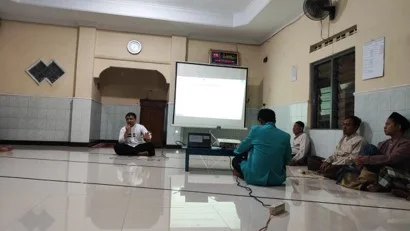
One of the main agendas in this service program is a seminar on digital security held at the Baitul Muslim Mosque.
During the session, the community gained an understanding of various increasingly diverse forms of online fraud, ranging from phishing, prize-based scams, financial transaction manipulation, to the misuse of personal information.
The material was delivered through an interactive seminar using audiovisual media to make it easier for participants to understand examples of threats they might encounter in their daily lives.
Participants were also introduced to preventive measures, such as recognizing suspicious messages or links, maintaining the confidentiality of personal data, and verifying information before making decisions in digital financial transactions.
This education is crucial because the increasing use of technology in public activities also brings risks of information misuse and various modes of cybercrime.
Through this activity, the service team hopes that the community will not only be able to utilize digital services but also possess the basic skills to protect themselves and their families from potential online fraud.
Forming an Intergenerational Quranic Tahsin Community
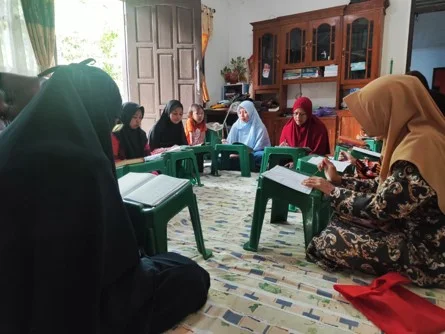
In addition to providing digital security education, the UMS team is developing Quranic reading instruction through the formation of a tahsin (recitation improvement) community involving mothers and children.
This community is designed as a shared learning space to improve Quranic reading skills in a gradual, structured, and sustainable manner.
To support the activities, the service team provided books and Quranic learning sheets used in group mentoring.
Through a community-based approach, it is hoped that the tahsin training will not only last for the duration of the service program but will become a routine activity continuously carried out by the community.
The involvement of different age groups is also part of the effort to build a Quranic learning environment at the family and community levels.
Thus, religious learning does not only focus on improving individual skills but also encourages the habit of reading and studying the Quran together.
Designing a Gamified Tahsin Application
As part of the program's development, the UMS service team has also initiated the design of a gamified tahsin learning application.
The application concept combines Quranic learning materials with digital game elements, such as learning levels, challenges, and indicators of participant progress.
This approach is designed to create a more engaging learning experience, especially for children who are already familiar with using digital devices.
Through a tiered learning system, participants are expected to follow materials according to their skill levels while monitoring their learning progress.
However, the tahsin application is currently still in the blueprint or initial design stage. Technical development and testing are still required before the application can be used directly by the public.
This initiative is an effort to connect religious learning with educational technology advancements without eliminating the role of direct mentoring in the process of learning to read the Quran.
Encouraging the Sustainability of the Community Empowerment Program
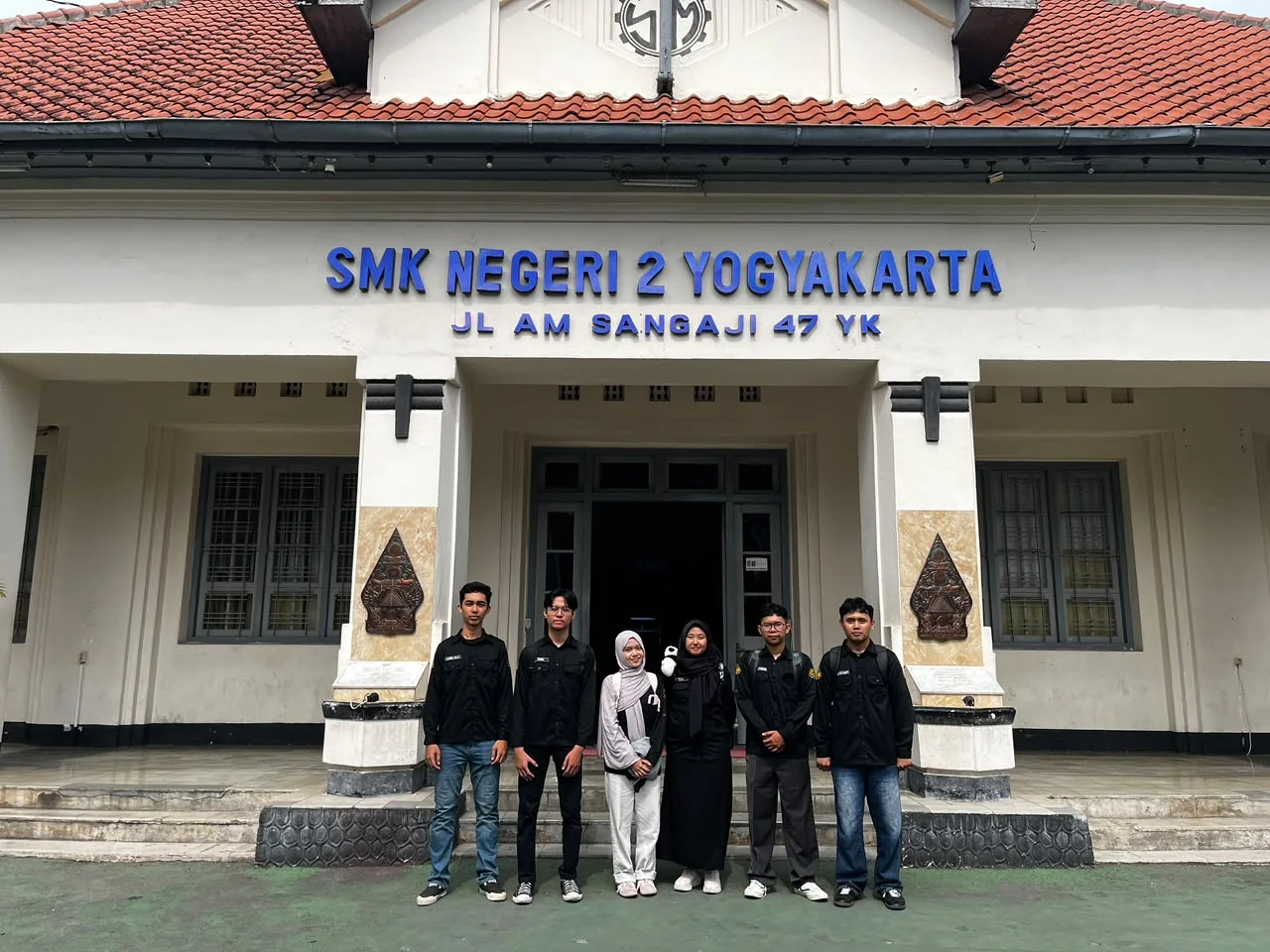
The head of the service team, Fajar Kholillulloh, along with team members Nandya Octanti Pusparini, Bella Ananda Chairunnisa, Santi Putriani, and Trian Gigih Kuncoro, hopes that this activity will be the first step in building a society that is more resilient in facing digital challenges.
This program is also expected to strengthen the role of mosques and the Muhammadiyah organization as centers for community empowerment, not only in the religious field but also in the development of knowledge and skills relevant to current needs.
The activity received funding support from the Muhammadiyah Association Development-Based Community Service Program (P2M) in the year 2026 through Universitas Muhammadiyah Surakarta.
The service team also expressed their appreciation to UMS for the funding support and program facilitation, as well as to the Sumbang PCM, Kebanggan PRM, Baitul Muslim Mosque officials, and the community who participated in the implementation of the activities.
Moving forward, the program's follow-up will focus on routine tahsin community mentoring, evaluation of public understanding regarding digital security, and monitoring of Quranic reading skill development.
In addition, completing the development of the gamified tahsin application is also part of the activity's sustainability plan.
Through the combination of digital literacy and spiritual guidance, this UMS service program is expected to provide long-term benefits for the Banyumas community and serve as an example of community-based education development that is adaptive to technological progress.





Comments 0
Write a Comment Share your response