

Abstract
The nature of political manifestos in Indonesia has shifted dramatically since the end of the Guided Democracy era in 1965. While manifestos in the early independence period and the Old Order served as official doctrines of the ruling power, subsequent periods saw the emergence of civil society declarations aimed at correcting the concentration of power.
This article traces this shift chronologically from 1966 to the administration of President Prabowo Subianto in 2026, while mapping the potential for a new model of political manifesto emerging from Generation Z.
Through literature review and an analysis of the illegal wiretapping scandal involving President Prabowo Subianto in November 2026, this study argues that open-mindedness, pluralistic awareness, and data literacy position Generation Z as key actors in driving cyber governance reform, strengthening inter-institutional checks and balances, and formulating globally competitive national policies.
Keywords: Political Manifesto, Generation Z, Indonesian Political History, Illegal Wiretapping, National Policy, Digital Democracy.
1. Introduction
Every transition of power in Indonesian constitutional history has almost always produced a collective stance that serves as a compass for policy change. Such documents or statements of position are commonly referred to as political manifestos.
Before 1965, this term was synonymous with official products of the executive branch. We recognize the Political Manifesto of 1 November 1945, signed by Vice President Mohammad Hatta to gain international recognition of sovereignty, followed by the Political Manifesto of 17 August 1959, or Manipol-USDEK, established by President Soekarno as the official state guideline.
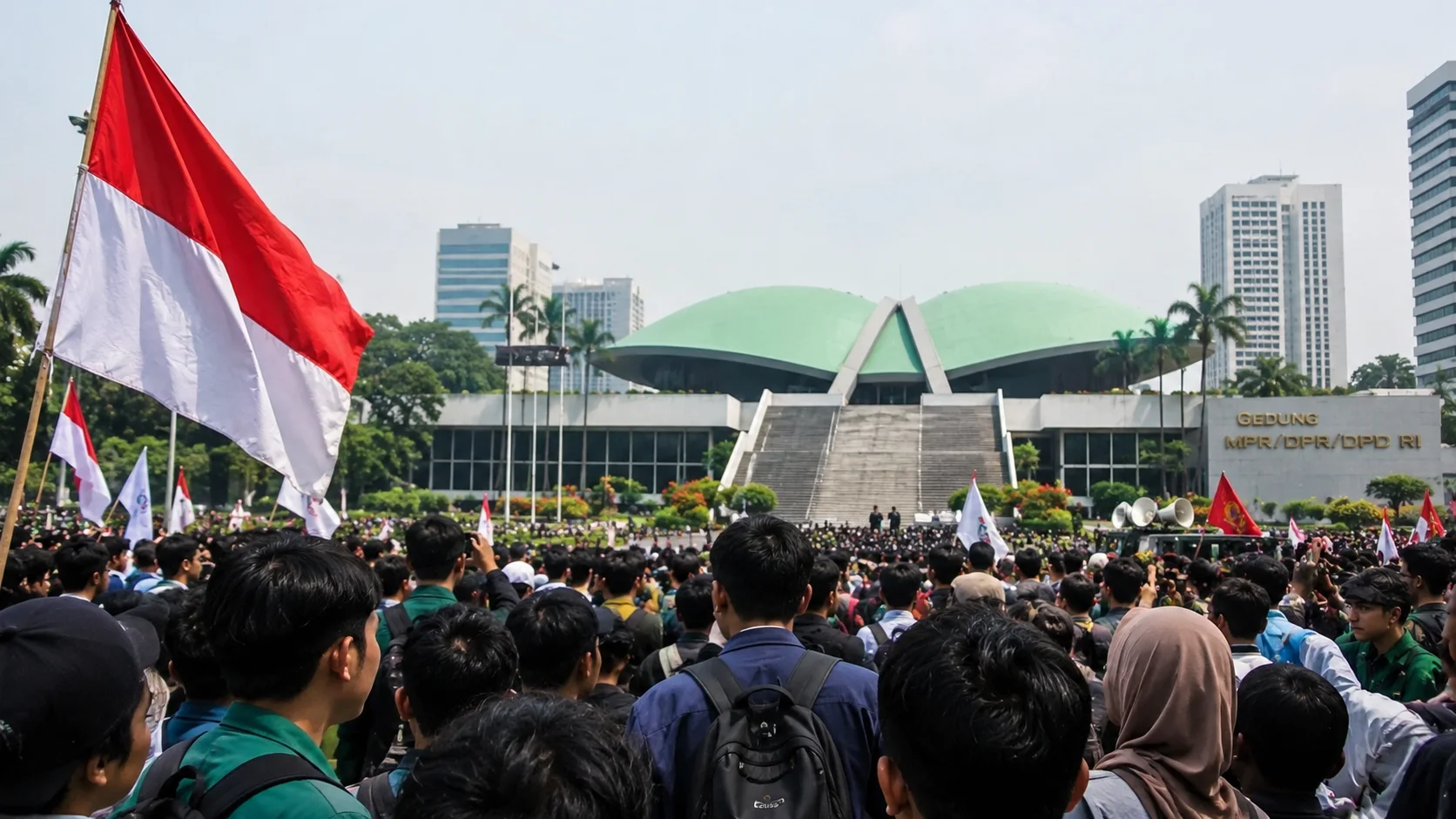
The events of 30 September 1965 reversed the relationship between the state and its citizens. Since 1966, political manifestos have no longer descended from the presidential podium but have instead grown from student movements, intellectual groups, and coalitions of national figures demanding accountability. This corrective pattern has repeated itself through the New Order era and into the Reformasi period of 1998.
Entering the mid-2020s, the challenges facing Indonesian democracy shifted to a much more complex domain. Threats to civil liberties no longer manifest solely as physical repression but through the state's misuse of digital surveillance technology.
The exposure of the illegal wiretapping case targeting President Prabowo Subianto, along with several state officials and civil society elements in November 2026, represents a serious test for Indonesia as a state based on the rule of law.
At this juncture, students—the majority of whom belong to Generation Z—play a strategic role. With their open, pluralistic, creative, and data-driven character, this generation has the potential to produce a digital-era political manifesto to reset state accountability while strengthening Indonesia's position in global competition.
2. Literature Review
2.1. Political Manifestos and Institutional Legitimacy
In political science, a manifesto is understood through two complementary approaches. From the perspective of political communication, any written statement that criticizes public policy and offers an agenda for reform from an organized group can be categorized as a manifesto.
However, constitutional history sets a stricter standard. A movement's demand is only recognized as a national political manifesto if it contains a long-term structural vision, unites various elements of society, is systematically documented, and is proven to drive institutional change.
The public's need to monitor state apparatus directly intersects with the theory of procedural legitimacy developed by Tom R. Tyler (1990) in Why People Obey the Law.
According to Tyler, public compliance with the law does not stem from fear of punishment, but from the belief that law enforcement officials act fairly, transparently, and within constitutional boundaries.
Once officials abuse their authority or surveillance tools for the sake of power, public trust collapses, triggering corrective action from civil society.
2.2. Characteristics of Generation Z Politics in the Digital Space
Contemporary sociological and political research shows a striking difference between the political participation patterns of today's youth and previous generations.
Katz et al. (2021) in Gen Z, Explained: The Art of Living in a Digital Age describe Generation Z as a pragmatic group that values diversity, enjoys collaboration, and demands tangible evidence before trusting a policy.
In the internet ecosystem, Manuel Castells (2012) in Networks of Outrage and Hope notes that horizontal communication allows citizens to organize social movements independently without relying on hierarchical commands.
This view is reinforced by Loader, Vromen, and Xenos (2014) through the concept of the networked young citizen, referring to young citizens who are no longer bound by old political party loyalties but act based on specific issues that touch upon values of justice.
In Indonesia, findings by Andriyadi, Murziqin, and Junaidi (2026) show that social media has become a new space for participation for Generation Z, although it remains shadowed by the risk of fragmented focus due to the overwhelming speed of information flow.
2.3. Regulatory Gaps in Wiretapping and the Threat of State Surveillance
Constitutionally, wiretapping directly intersects with the right to privacy and the freedom of communication protected by Article 28F and Article 28G paragraph (1) of the 1945 Constitution.
Supreme Court Justice Ainal Mardiah (2026) emphasizes that wiretapping regulations in Indonesia are still scattered across various sectoral laws without an integrated mechanism for judicial review and authorization.
This lack of uniform licensing procedures opens loopholes for abuse of authority at the implementation level, a vulnerability also highlighted by digital rights organizations such as ELSAM (2026) and the Centre for Technology and Innovation Studies (2026).
3. Analytical Framework
This paper is structured using a descriptive-analytical qualitative approach through literature review.
Research materials were gathered from Indonesian constitutional history documents post-1965, political science literature on digital generation participation, and national media reports and official state statements regarding the disclosure of the illegal wiretapping case in November 2026.
The analysis was conducted by mapping the timeline of political manifesto changes from 1966 to 2026, then linking them to the strategic capacity of Generation Z in responding to the digital surveillance governance crisis.
4. Results and Discussion
4.1. Timeline of the Evolution of Indonesian Political Manifestos Post-1965
Indonesian political history after the 1965 event records four important milestones of collective statements that became the foundation for national movements and changed the direction of state policy.
The first milestone is the Tri-People's Demand (Tritura) declared on 10 January 1966 by the Indonesian Student Action Union (KAMI) and the Indonesian Youth and Student Action Union (KAPPI).
Through three main demands—the dissolution of the PKI, the purging of the cabinet, and the lowering of basic commodity prices—Tritura became the moral legitimacy for the birth of the New Order, the issuance of the Supersemar, and the transfer of power from President Soekarno to General Soeharto.
Entering the second decade of the New Order, the concentration of power triggered intellectual resistance from within campuses through the White Book of the Student Struggle in January 1978.
Compiled by the Student Council of the Bandung Institute of Technology along with student senate networks from various universities, this document exposed the deviation in development direction, rampant corruption, and reliance on foreign debt.
Although the government silenced campuses through the NKK/BKK policy, the text survived as a reference for student movement thought in the following decade.
Two years later, criticism came from a coalition of national figures through the Petition of 50 on 5 May 1980.
Signed by 50 civil figures and retired officers, including Ali Sadikin, General (Ret.) A.H. Nasution, Mohammad Natsir, Sjafruddin Prawiranegara, and Police General (Ret.) Hoegeng Imam Santoso, this petition protested President Soeharto's speeches in Pekanbaru and Cijantung, which interpreted Pancasila singularly and drew the military into practical politics.
Although the signatories faced restrictions on their civil rights, the Petition of 50 became the moral compass for the opposition throughout the 1980s and 1990s.
The culmination of this correction was realized in the Six Reform Agenda and the Ciganjur Declaration on 1998.
Economic and political crises prompted students to formulate six fundamental demands, ranging from the enforcement of the rule of law, the eradication of corruption, collusion, and nepotism (KKN), the trial of Soeharto, amendments to the 1945 Constitution, the revocation of the ABRI Dual Function, to regional autonomy.
These demands were then consolidated by four central reform figures—Abdurrahman Wahid, Megawati Soekarnoputri, Amien Rais, and Sri Sultan Hamengkubuwono X—in the Ciganjur Declaration on 10 November 1998, which later supported four amendments to the 1945 Constitution during the 1999–2002 period.
Table: Timeline of the Evolution of Indonesian Political Manifestos
| Period | Document/Manifesto | Key Actors | Focus of Political Correction | Constitutional Impact |
|---|---|---|---|---|
| 1966 | Tri-People's Demand (Tritura) | KAMI, KAPPI, TNI-AD support | Economic crisis, political stability, dissolution of PKI | Power transition toward the New Order |
| 1978 | White Book of the Student Struggle | ITB Student Council and campus networks | Centralization of power, corruption, debt dependency | Blueprint for criticism of New Order development policy |
| 1980 | Petition of 50 | Coalition of 50 national figures and retirees | Singular interpretation of Pancasila and military politicization | Moral reference for cross-ideological civil opposition |
| 1998 | Six Reform Agenda and Ciganjur Declaration | 1998 Student Movement and four reform figures | Authoritarianism, KKN, ABRI Dual Function | Four amendments to the 1945 Constitution and decentralization |
| 2026–future | Digital-Era Political Manifesto (Projection) | Gen Z students, civil society, cyber experts | Misuse of surveillance technology and digital governance | Cyber governance reform and global competitiveness |
4.2. Characteristics of Generation Z and National Policy Projections on the Global Stage
During the administration of President Prabowo Subianto (2024–2029), the demographic landscape of students and young voters is dominated by Generation Z.
Unlike the 1966 or 1998 generations that faced closed authoritarian regimes, Generation Z grew up in a connected, borderless digital space. They are accustomed to viewing differences as normal, thinking openly across cultures, creatively packaging visual messages, and being agile in verifying information.
This social and intellectual capital has the potential to shift Indonesia's national policy orientation from mere domestic power struggles toward strengthening global competitiveness.
Connectivity with international standards drives Generation Z to demand clean, meritocratic governance with legal certainty, which are the primary prerequisites for Indonesia to attract high-tech investment and strengthen its foreign diplomacy position.
At the same time, this generation's attention to cross-border issues such as green energy transition, climate crisis, artificial intelligence governance, and data sovereignty will force the state to formulate long-term development policies aligned with the Golden Indonesia 2045 vision.
Public oversight is also moving toward a more data-driven approach, where criticism of regulations or the state budget no longer relies on slogans but on empirical evidence.
4.3. The Case of the Wiretapping of President Prabowo Subianto (2026) as a Foundation for a Digital-Era Manifesto
The idea of the need for a new model of political manifesto found its real momentum in November 2026.
At that time, the public was shocked by the revelation of an illegal wiretapping scandal targeting President Prabowo Subianto along with several regional heads, high-ranking officials, journalists, activists, and students.
In a working meeting with Commission III of the House of Representatives on 12 November 2026, National Police Chief General Suyudi Ario Seto disclosed the results of an investigation that named four high-ranking police officers as suspects.
They included former National Police Chief General Listyo Sigit Prabowo as the order-giver and final recipient of information, as well as three other generals overseeing monitoring functions, information and communication technology, and criminal investigation (detikNews, 12 November 2026; CNBC Indonesia, 15 November 2026).
The fact that monitoring devices such as the Lawful Interception Management System (LIMS) and PenLink PLX could be operated verbally without an official request letter from investigators, and even accompanied by attempts to delete electronic data records, shows how fragile privacy protection is in the face of the abuse of power technology.
The logic is simple: if even the head of state can be illegally wiretapped by law enforcement, then ordinary citizens and critical groups are in a much more vulnerable position.
For Generation Z students, this scandal is not just friction within the security elite, but a historical foundation for formulating a Digital-Era Political Manifesto.
Instead of being trapped in momentary anger on social media, the digital generation can consolidate their movement through four measurable strategic steps.
First, push for comprehensive reform of cyber surveillance governance.
Together with legal academics and digital security experts, students can draft a policy briefpolicy briefthat urges the enactment of an integrated Wiretapping Law.
This new regulation must close the loophole of verbal orders by requiring prior court authorization before interception is conducted, accompanied by periodic forensic audits of all wiretapping devices owned by law enforcement and intelligence agencies.
Second, oversee fact-based law enforcement and data transparency.
The character of Generation Z, which is critical of information flow, can be realized by building a public monitoring channel to oversee the investigation process at the National Police Criminal Investigation Unit and the Attorney General's Office.
Advocacy focus should be directed toward ensuring that the abuse of office in this case is processed with criminal enhancements in accordance with the provisions of the Criminal Code and the ITE Law (Hukumonline, 15 November 2026), while ensuring legal protection for whistleblowers.
Third, build a cross-sectoral coalition to create a Digital Rights Charter.
Because journalists, civil society activists, and students were also targets of wiretapping, there is an open space for broad consolidation between campuses, press organizations, legal aid institutions, and technology communities.
This charter will serve as a shared guide in protecting civil space from illegal surveillance and tightening the implementation of personal data protection.
Fourth, demand the improvement of institutional checks and balances architecture.
A digital-era political manifesto should not stop at punishing perpetrators in court but must touch the root of institutional oversight issues.
Through research-based infographic campaigns, digital petitions, and meaningful participation in hearings with the House of Representatives, Generation Z can push for the formation of an independent cross-institutional oversight commission to control intelligence and law enforcement activities.
This step is crucial to restore public trust while proving to the international community that Indonesia is capable of maintaining the rule of law in the digital era.
5. Conclusion
Indonesian political history post-1965 shows that political manifestos have always been present as a mechanism for citizens to correct power imbalances, from Tritura in 1966 to the Ciganjur Declaration in 1998.
Entering the current administration, the test of democracy is no longer limited to conventional political hegemony but extends to the misuse of surveillance technology, as revealed in the illegal wiretapping case against President Prabowo Subianto in November 2026.
Armed with open-mindedness, pluralistic awareness, communication creativity, and data literacy, Generation Z students are in a strategic position to transform digital critical energy into a Digital-Era Political Manifesto.
If consolidated through evidence-based advocacy, cross-sectoral coalitions, and pressure for wiretapping regulatory reform, this new generation's manifesto will not only strengthen domestic checks and balances but also lay the foundation for modern, accountable, and highly competitive national policies on the global stage.
Bibliography
Andriyadi, F., Murziqin, R., & Junaidi, A. (2026). Transformation of Generation Z Political Participation in the Digital Era: Social Media as a New Arena for Democracy in Strengthening Participatory Democracy in Indonesia. Wathan: Journal of Social Sciences and Humanities, 3(3), 616–631.
Castells, M. (2012). Networks of Outrage and Hope: Social Movements in the Internet Age. Malden: Polity Press.
Centre for Technology and Innovation Studies (CTIS). (2026, 11 November). Wiretapping Must Be Regulated by Law, Government Digital Security Needs Strengthening. Jakarta: CTIS.
CNBC Indonesia. (2026, 15 November). Facts of the Prabowo Wiretapping Case Stem from Orders to Disband WhatsApp Groups. Accessed from https://www.cnbcindonesia.com
detikNews. (2026, 12 November). Role of 4 Suspects in the Prabowo Wiretapping Case: Listyo Sigit Determined Targets & Received Results. Accessed from https://news.detik.com
ELSAM & Seknas FITRA. (2026, 3 November). Police Wiretapping Scandal: Urging Independent Oversight and Transparency of Wiretapping Tools (Joint Press Release). Jakarta: Institute for Policy Research and Advocacy.
Hukumonline. (2026, 15 November). Abuse of Office in Illegal Wiretapping Cases Can Increase Criminal Penalties. Accessed from https://www.hukumonline.com
Katz, R., Ogilvie, S., Shaw, J., & Woodhead, L. (2021). Gen Z, Explained: The Art of Living in a Digital Age. Chicago: University of Chicago Press.
Kompas.com. (2026, 16 November). Four Initial Tests for Police Chief Suyudi. Accessed from https://nasional.kompas.com
Loader, B. D., Vromen, A., & Xenos, M. A. (2014). The Networked Young Citizen: Social Media, Political Participation and Civic Engagement. Information, Communication & Society, 17(2), 143–150.
Mardiah, A. (2026, 9 November). Wiretapping Viewed from Various Regulations in Indonesia. Dandapala, Supreme Court of the Republic of Indonesia.
Tyler, T. R. (1990). Why People Obey the Law. New Haven: Yale University Press.






Comments 0
Write a Comment Share your response