

JurnalPost.com - Have you ever stood in front of a store shelf and found two products with similar prices and functions, but different appearances? One looks more attractive, is comfortable to hold, and has neat packaging, while the other looks simple and fails to stand out.
Without much consideration, your attention will likely be drawn to the first product.
This simple decision shows that consumers do not just buy goods based on their utility, but also consider the experience offered through product design.
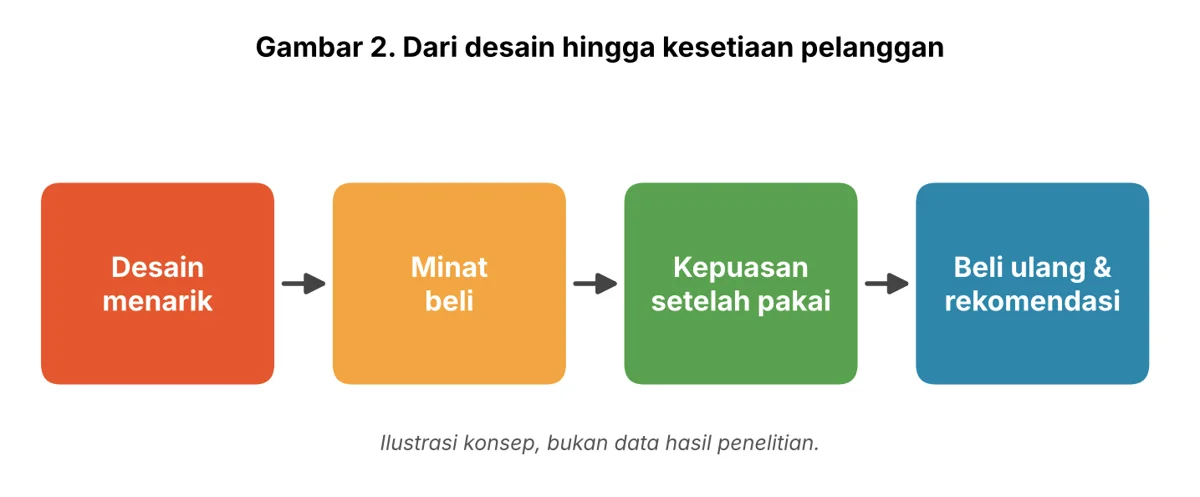
In increasingly tight business competition, design is a factor that can influence purchase intent while determining customer satisfaction after using the product.
Product Design Is More Than Just Color and Shape
So far, product design is often understood only as the outer appearance, such as color, shape, or packaging. In reality, design has a much broader scope.
Product design includes the selection of materials, size, function, ease of use, safety, ease of maintenance, and the consumer's experience when interacting with the product.
In other words, design is a form of communication between the manufacturer and the potential buyer, even before the consumer knows the quality of the product firsthand.
Well-designed products are usually able to make a positive impression at first glance. However, that impression must be supported by functions and quality that meet user expectations.
Therefore, design is not only related to aesthetics but also concerns how a product can meet the needs of its consumers.
Design Attracts Attention and Drives Purchase Intent
Amidst the many product choices available on the market, consumers often determine their initial interest through visual appearance.
A distinctive shape, a suitable color combination, and neatly arranged packaging can make a product easier to recognize and remember.
For example, food products with clean packaging, clear information, and attractive designs tend to give a professional impression. Conversely, packaging that looks poorly maintained can make consumers question the quality of the product inside.
Although appearance is not a guarantee of quality, first impressions still play an important role in the purchasing decision process.
When consumers feel interested, they tend to want to know more about the product, compare options, and eventually consider a purchase.
This shows that design can be a gateway to forming purchase intent.
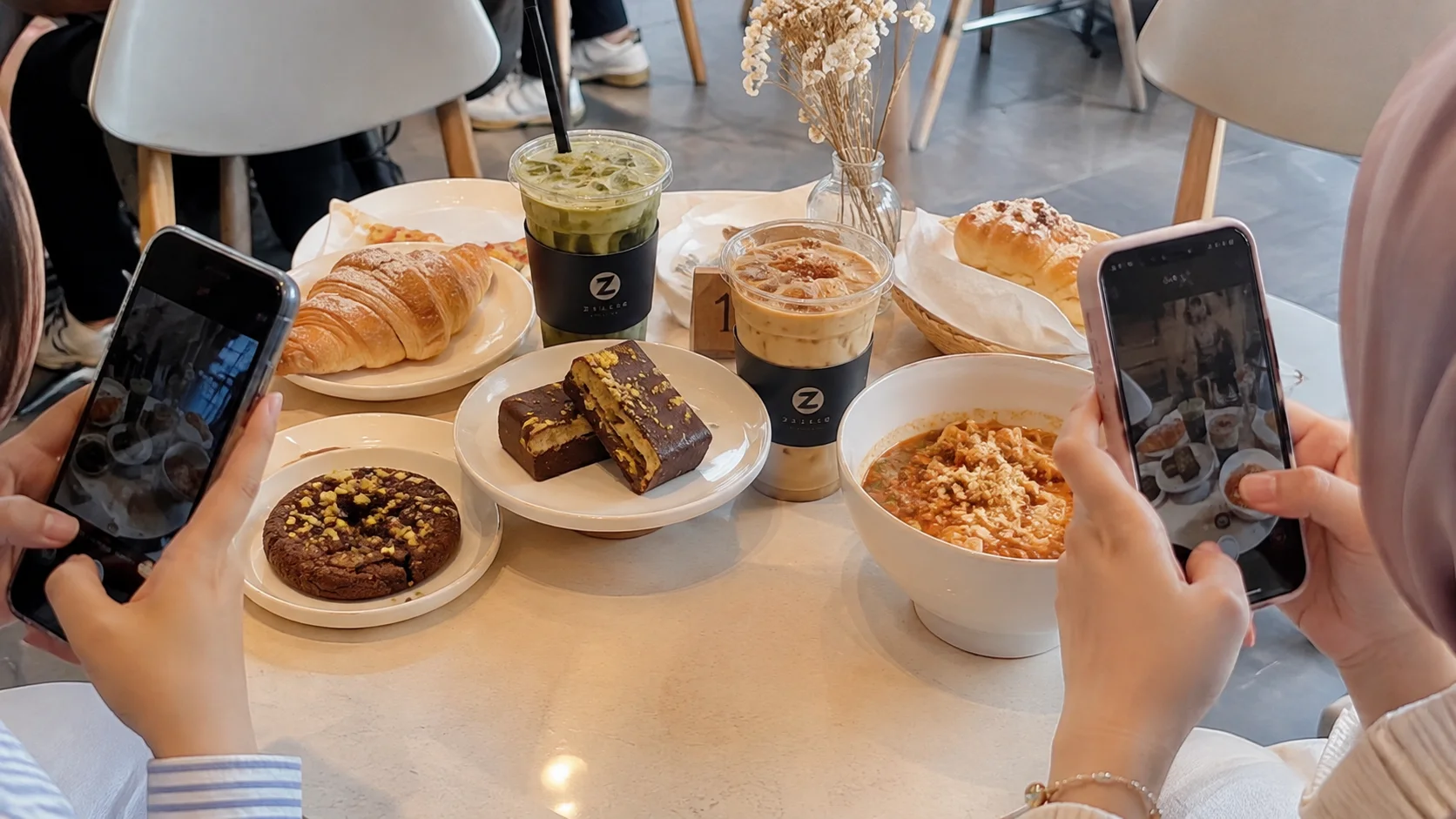
Especially in the era of digital marketing, product appearance plays a crucial role because many consumers first encounter an item through photos or videos on social media and e-commerce platforms.
Attractive Products Do Not Necessarily Satisfy Consumers
Although visual design can attract attention, an attractive appearance alone is not enough to retain customers.
Imagine a water bottle that looks elegant but has a lid that leaks easily, or a bag with a modern design whose straps make your shoulders hurt when used.
Another example is an application with a luxurious interface but confusing navigation for the user.
In such situations, consumers might be interested at first, but a poor usage experience can lead to disappointment.
Customer satisfaction arises when a product is able to meet or even exceed their expectations.
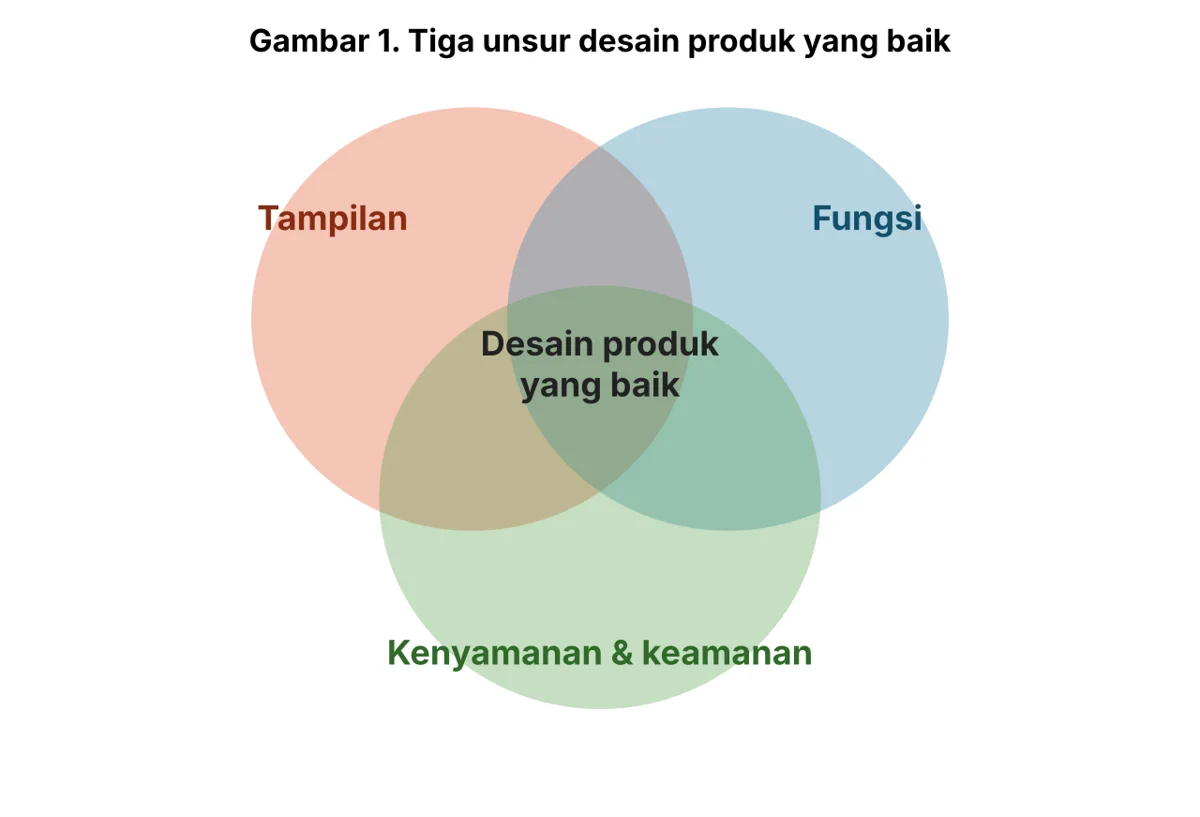
Therefore, product design should pay attention to the balance between appearance, function, comfort, and safety.
Products that are visually attractive and easy to use will have a greater chance of providing a positive experience to consumers.
Consumer Experience Determines Product Evaluation
The influence of product design can actually be found in daily activities.
For example, there are two culinary businesses offering food with relatively similar flavors and prices.
The first business uses strong, tightly sealed, and easy-to-carry packaging, while the second uses thin packaging that risks spilling the food when taken home.
Even though the taste of the food is the same, the experience felt by the customer can certainly be different.
Consumers who receive food in good condition will tend to feel more comfortable. Conversely, customers who experience problems due to improper packaging may feel disappointed even if they like the taste of the food.
This example shows that design has an influence on the quality of the consumer experience.
Good design does not always mean expensive or luxurious; rather, it means being able to provide convenience and solve problems faced by the user.
Customer Satisfaction Can Build Loyalty
When consumers are satisfied with a product, the likelihood of repeat purchases can increase.
Positive experiences can also encourage customers to recommend the product to family, friends, and others.
In the social media era, consumer experience has an increasing influence on product image.
Positive reviews can help strengthen the trust of potential buyers. Conversely, complaints about products that are uncomfortable or do not meet expectations can affect the perception of other consumers.
Therefore, product design should not be viewed as an afterthought at the final stage of production.
Design is part of a business strategy that needs to be considered from the moment the product development process begins.
Strategies for Developing the Right Product Design
For business owners, especially micro, small, and medium enterprises (MSMEs), there are several simple steps that can be taken to produce product designs that are more in line with market needs.
The first step is to recognize consumer characteristics. Business owners need to understand who their product users are, how the product is used, and what problems they want to solve.
Furthermore, testing products before they are marketed is important. Through prototypes or product samples, business owners can obtain feedback regarding comfort, function, and design weaknesses.
In addition, the balance between aesthetics and function must be maintained. Products should not only be attractive to look at but also easy to use and safe for consumers.
Packaging also needs attention because it functions as a protector while building the first impression of the product.
Finally, business owners need to listen to customer criticism and suggestions. Consumer reviews can be used as evaluation material for continuous design development.
Good Design Makes Products More Valuable
Ultimately, product design is not just a matter of beautiful appearance or eye-catching packaging.
More than that, design is part of the consumer experience that can influence purchase intent, satisfaction, and the decision to continue using a product.
For business owners, paying attention to design means understanding that consumers need products that are not only visually attractive but also provide real benefits.
Meanwhile, for consumers, it is important not to judge product quality based solely on its outward appearance.
Because truly good product design does not just make someone interested in buying, but also gives consumers a reason to feel satisfied and choose it again.









Comments 0
Write a Comment Share your response