

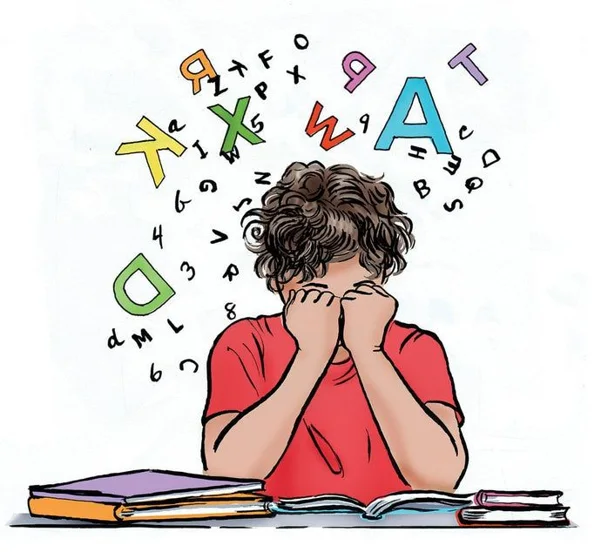
JurnalPost.com - Have you ever noticed a child struggling to read, frequently misspelling words, or taking longer than others to comprehend written text? It is not uncommon for children with these challenges to be labeled as lazy, unmotivated, or even unintelligent.
In reality, reading difficulties are not always linked to a person's cognitive ability or intelligence level. In some cases, these conditions may be signs of dyslexia, a specific learning disorder that affects reading and spelling proficiency.
Unfortunately, many people still lack a proper understanding of dyslexia. As a result, children who struggle with reading often face undue pressure from both their families and schools.
So, what exactly is dyslexia? How can it be identified, and what can parents and teachers do to support children with this condition? Let's explore this together.
What Is Dyslexia?
Dyslexia is a form ofspecific learning disorderprimarily related to reading and spelling abilities.
In the Diagnostic and Statistical Manual of Mental Disorders, Fifth Edition (DSM-5), dyslexia is the term used to describe a pattern of learning difficulties characterized by problems with accurate or fluent word recognition, decoding difficulties, and poor spelling skills.
Children with dyslexia may require more time to recognize letters, associate letters with their sounds, or read sentences fluently.
However, one crucial point to understand is that dyslexia is not a measure of a person's intelligence.
Children with dyslexia still possess the ability to think, understand information, and develop their potential. They simply face specific challenges in the process of learning to read and write.
Myths vs. Facts About Dyslexia
Various misconceptions about dyslexia are still common in daily life. Here are some myths and facts that are important to know.
1. Children Who Frequently Write Letters Backwards Must Have Dyslexia
A myth, though it can be a sign that warrants attention.
Children with dyslexia may struggle to distinguish between letters with similar shapes, such as b, d, and p. However, the habit of writing letters backwards can also occur in children who are in the early stages of learning to read and write.
Therefore, the simple act of writing letters backwards is not enough to conclude that a child has dyslexia.
2. Children with Dyslexia Are Just Lazy and Need to Try Harder
Myth!
Dyslexia is not caused by laziness or a lack of willingness to learn. This condition is related to differences in brain development and language processing.
Children with dyslexia may have already tried very hard to read but still experience difficulties compared to their peers.
Applying pressure or forcing a child to study without an appropriate approach can lead to frustration and diminish their self-confidence.
3. Children with Dyslexia Have Low IQs
Myth!
Dyslexia does not determine a person's intelligence level. Reading difficulties can affect individuals with varying levels of intellectual ability.
This means that a child who struggles with reading does not necessarily have difficulty understanding concepts, solving problems, or developing other skills.
Therefore, it is important not to judge a child's intelligence solely based on their reading and writing fluency.
Signs of Dyslexia to Recognize
Parents and teachers play a vital role in identifying learning difficulties early on.
Based on the discussion of specific learning disorders in the DSM-5 (2013), signs to watch for include difficulty reading words accurately, slow reading speed, spelling difficulties, and obstacles in reading comprehension.
Children may also struggle with writing, require more effort when reading, or show slower literacy development compared to their peers.
In some cases, these difficulties can affect academic performance, learning motivation, and the child's self-esteem.
Early signs may appear during the preschool years, particularly in language development and phonological awareness. However, reading difficulties usually become more apparent once a child begins formal reading instruction.
Keep in mind that not every child who struggles with reading has dyslexia. Identifying this condition requires a comprehensive assessment by competent professionals.
What Causes Dyslexia?
Dyslexia is not a condition caused by a single factor. Various elements can contribute to the development of reading difficulties.
Referring to the DSM-5 (2013) and the discussion by Budiani and Putrayasa (2023), there are several factors associated with dyslexia.
Genetic Factors
Family history is a factor that should be considered.
Children with parents or family members who have a history of dyslexia tend to have a higher risk of experiencing similar reading difficulties.
This indicates that heredity can play a role in the development of literacy skills.
Neurobiological Factors
Dyslexia is also linked to differences in how the brain processes language information, particularly in recognizing the relationship between sounds and letter symbols.
These differences can affect a child's ability to identify words, spell, and read fluently.
However, this condition does not mean the child has lower intelligence or is incapable of learning.
Environmental and Developmental Factors
Environmental factors and learning experiences can also interact with genetic or neurobiological vulnerabilities.
Certain early developmental conditions, including premature birth and very low birth weight, have been studied as factors potentially associated with an increased risk of learning difficulties.
Nevertheless, these factors do not automatically cause dyslexia.
A supportive learning environment and early intervention are crucial to helping a child's reading development.
Tips for Parents and Teachers in Supporting Children with Dyslexia
Children with dyslexia require support, patience, and learning methods tailored to their needs.
The roles of parents and teachers are essential to ensure that children do not feel left behind, lose motivation, or suffer emotional distress due to their learning challenges.
The Role of Parents
According to Pandiangan and Selian (2025), a democratic parenting style that prioritizes open communication, emotional support, and active involvement can help children navigate the challenges of the learning process.
Parents should avoid the habit of comparing their child's reading ability with that of siblings or peers.
Instead, offer appreciation for every small milestone achieved.
Reading books together, practicing sound and letter recognition gradually, and creating a fun learning atmosphere can be effective forms of support at home.
If reading difficulties persist, parents can also consult with a psychologist or a professional qualified in assessing learning difficulties.
The Role of Teachers
Teachers play a vital role in creating an inclusive learning environment for students with dyslexia.
Pandiangan and Selian (2025) discuss the importance of using diverse teaching methods, including audio and multisensory approaches.
A multisensory approach involves more than one sense in the learning process, such as seeing letters, listening to their sounds, saying words aloud, and engaging in writing activities.
Furthermore, Budiani and Putrayasa (2023) outline several support approaches, such as learning interventions, remedial teaching, the use of visual media, and structured reading instruction methods.
Teachers can also provide extra time for reading assignments, deliver instructions clearly, and adjust learning activities based on the student's needs.
Equally important is paying attention to the child's social and emotional well-being.
Children with dyslexia may feel embarrassed when asked to read in front of the class. Therefore, teachers need to build a safe environment where students are not afraid to make mistakes.
Consistent support can help children develop their reading skills while maintaining their self-confidence.
Conclusion: Stop Judging, Start Understanding
Dyslexia is not a sign of laziness or stupidity. It is a specific learning disorder that can affect a person's ability to read and spell.
Children with dyslexia still possess potential, interests, talents, and the opportunity to thrive just like any other child.
Unfortunately, labels such as "lazy," "stupid," or "not trying hard enough" are still frequently applied to children who struggle with learning.
In reality, such words can hurt feelings and diminish the self-confidence of children who are actually working hard to overcome challenges in their learning process.
It is time to change our perspective—from judging to understanding, and from blaming to supporting.
Parents, teachers, and the community must work together to create an environment that accepts the diverse learning abilities of every child.
With proper guidance, equal learning opportunities, and consistent emotional support, children with dyslexia can continue to grow and reach their full potential.
Remember, a child who struggles to read is not lazy or stupid. Every child deserves the opportunity to learn, be understood, and be valued according to their needs.

Comments 0
Write a Comment Share your response