

JurnalPost.com - The rapid development of the industrial world has brought major changes to market competition. It is no longer enough for companies to simply offer products at affordable prices; they are now required to produce goods that are high-quality, durable, safe, and aligned with consumer needs.
This reality makes quality a critical factor in determining a company's success. Products with high quality tend to gain consumer trust more easily, while inconsistent quality risks damaging a company's reputation.
In operations and production management, maintaining quality is not merely the responsibility of the final inspection department. Quality must be a priority from the planning stage, raw material selection, and processing to packaging and final market distribution.
Therefore, companies must implement well-planned production strategies to ensure product quality remains high while simultaneously boosting competitiveness in the modern industrial landscape.
The Importance of Quality Control in the Production Process
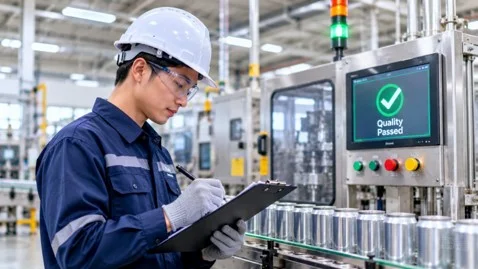
Quality control, or quality control is a series of activities conducted to ensure that the resulting products meet established standards and specifications.
In production activities, small errors can have significant impacts if not addressed immediately. For example, using raw materials that do not meet standards can affect a product's durability, functionality, and safety.
If such errors are only discovered after production is complete, the company risks losses due to increased defect rates, repair costs, and consumer returns.
To avoid these conditions, quality inspections must be carried out in stages, starting from the receipt of raw materials through the production process to the final product inspection.
Consistent quality control helps companies reduce the risk of damage, improve operational efficiency, and maintain consumer trust.
The Role of Human Resources in Maintaining Product Quality
Amidst technological advancements in industry, human resources remain vital to the success of the production process.
Employees are not just responsible for operating machinery; they must also ensure every activity adheres to established procedures and operational standards.
A workforce with the right skills, precision, and understanding of production processes can help reduce work errors while improving the quality of output.
Consequently, companies need to provide periodic training so that employees can keep pace with technological developments, understand equipment usage, and apply more effective work methods.
Beyond technical skills, a safe working environment, open communication, and discipline in following procedures are equally important factors.
Thus, the success of maintaining product quality depends not only on sophisticated machinery but also on the competence and responsibility of the human resources involved in production activities.
Leveraging Technology to Improve Production Effectiveness
Technological progress offers companies opportunities to monitor and control production processes more effectively.
The use of digital systems, automated sensors, and production monitoring devices can help companies detect process deviations early.
For instance, sensors on production machines can monitor temperature, pressure, or operational speed. If a deviation from set limits occurs, the system can trigger an alert, allowing for immediate corrective action.
Beyond supporting oversight, technology allows companies to record production data more systematically.
This data can be utilized to evaluate machine performance, identify the root causes of failures, and determine appropriate corrective steps.
However, implementing technology does not always require the most advanced equipment. Companies must consider production needs, workforce capabilities, investment costs, and the benefits to be gained.
Technology used appropriately can support production efficiency. Conversely, using technology without proper planning and adequate human resources can create new operational problems.
Reducing Defective Products and Production Waste
One of the challenges frequently faced by manufacturing companies is the emergence of defective products or items that fail to meet quality standards.
Such issues not only cause raw material waste but also increase energy consumption, time, and labor costs.
Damaged products sometimes require repair or reprocessing. In certain cases, products may be unusable and become production waste.
To mitigate these issues, companies must evaluate every stage of the production process.
Periodic inspections help identify the causes of errors before they lead to greater losses. Furthermore, companies must identify the source of the problem to prevent the same errors from recurring.
One approach that can be applied is continuous improvement or ongoing refinement.
This approach emphasizes the importance of evaluating and refining work processes continuously by involving those who understand production activities firsthand.
Through continuous improvement, companies focus not only on handling defective products but also on preventing errors from the very beginning of the production process.
Consumer Satisfaction as an Indicator of Quality Success
Product quality is closely linked to consumer satisfaction. Products that meet the needs and expectations of buyers create positive experiences and build trust in the company.
Conversely, inconsistent product quality can lead to complaints and cause consumers to consider products from other companies.
Therefore, it is not enough for companies to rely solely on internal quality standards. Input, criticism, and complaints from consumers must also be considered as part of the evaluation process.
Such information provides insights into product shortcomings, market needs, and aspects that still require development.
For example, consumer complaints regarding product durability can serve as a basis for companies to evaluate the raw materials or production methods used.
By understanding consumer needs, companies can produce goods that not only meet technical standards but also provide benefits and added value to users.
Challenges in Maintaining Quality in the Modern Industrial Era
The development of the modern industry presents various challenges, ranging from technological shifts and market competition to efficiency demands and rising consumer expectations for product quality.
Companies are required to adapt continuously to maintain quality while simultaneously increasing productivity.
One step that can be taken is to update operational standards in accordance with the needs and developments of the production process.
Additionally, improving workforce competence and utilizing appropriate technology must be part of the company's development strategy.
Another challenge is maintaining quality consistency as production volume increases. In such conditions, companies must ensure that every product continues to meet standards even when produced in large quantities.
This demonstrates that quality control cannot be achieved through occasional inspections alone. Quality must be built through a work culture that emphasizes discipline, precision, responsibility, and continuous improvement.
Conclusion
Maintaining product quality is a vital part of successful operations and production management. This effort requires collaboration between human resources, technology, monitoring systems, and ongoing evaluation.
Quality products are not created by chance but through precise planning, control, and production management.
By focusing on quality from the initial stages, companies can reduce waste, improve operational efficiency, maintain consumer satisfaction, and strengthen their competitiveness amidst increasingly tight industrial competition.
Ultimately, quality is not just a measure of whether a product is good or bad. More than that, quality reflects a company's commitment and ability to provide benefits, value, and trust to consumers.
Companies that can maintain quality consistently possess a stronger foundation to survive, grow, and compete in the modern industrial era.










Comments 0
Write a Comment Share your response