

When Orders Arrive, but Raw Materials Do Not
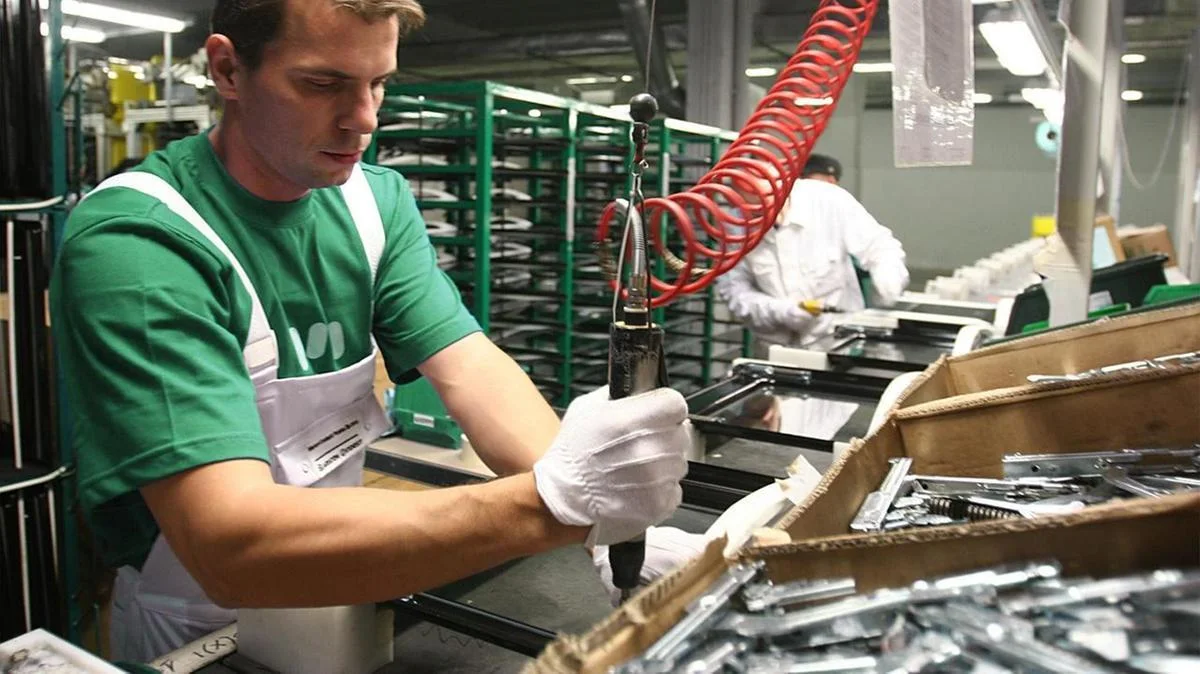
Imagine a factory with a surge in orders, yet raw materials are delayed by weeks. Machines sit idle, production schedules fall into chaos, and customers are left waiting. This scenario is not fiction; throughout 2026, factories across Indonesia faced exactly this reality.
As finance management students, we are accustomed to reading the impact of these events in financial reports. We rarely ask how the factory actually functions.
In this article, I explore how the concepts of operations and production management—ranging from supply chains and production planning to inventory control—explain what happens on the factory floor and why this understanding is essential for aspiring financial analysts.
PMI: A Thermometer for Production Health
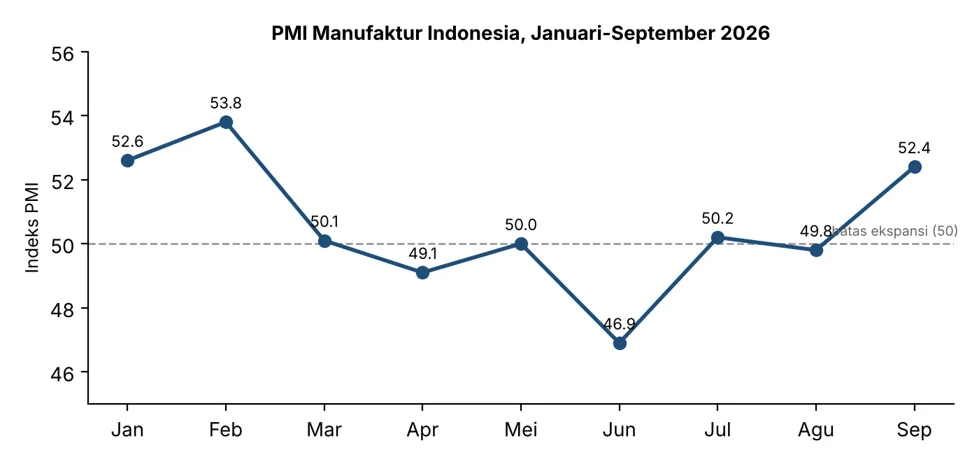
The Purchasing Managers’ Index (PMI) for manufacturing, as reported by S&P Global, is calculated from surveys of factory purchasing managers, with a score above 50 indicating improving conditions. This index captures the core elements of production management: production volume, new orders, supplier delivery times, and employment.
In February 2026, the index reached 53.8, its highest level in nearly two years (Metro TV News, 2026). By March, the index fell to 50.1, with output and new orders declining again due to raw material shortages and rising material costs (Bisnis.com, 2026a).
In April, the index dropped to 49.1, marking the first contraction in nine months (Bisnis.com, 2026b).
Recovery occurred gradually. The index rose to 50.2 in July from 46.9 in June, as production volumes increased and new orders stabilized (Bisnis.com, 2026c).
In September, the index reached 52.4 thanks to exports (Meilina, 2026), and in October, new export orders grew at their fastest rate since the survey began in 2011 (Katadata, 2026).
Supply Chains and Lead Times: One Broken Link Disrupts Production
From an operational perspective, the April contraction was not primarily about weak demand, but rather supply issues. S&P Global noted that supplier deliveries were delayed for seven consecutive months, increasing raw material lead times and disrupting production flow (Bisnis.com, 2026b).
In operations management, we learn that machine capacity and labor are useless if raw materials are not available on time. Factories without alternative suppliers or adequate safety stock feel the impact most acutely.
Production Planning: Production Must Follow Demand
Another problem arises from the opposite direction: producing more than is required.
Putri et al. (2025) studied a snack and pastry producer in Bandung (anonymized as PT XYZ). In typical months, brownie production ranged from 500 to 540 units, but surged to approximately 1,050 to 1,100 units ahead of Lebaran.
Overproduction was recorded at 45 to 95 units per month, peaking in August, while product defects ranged from 20 to 25 units per month.
The researchers identified causes including inaccurate demand forecasting, suboptimal workspace layout, and inconsistent quality control. The consequences included inventory buildup, increased storage costs, and the risk of expiration for short-shelf-life products.
In the concept of lean, overproduction and product defects are considered types ofwastein the production process (Putri et al., 2025).
This means that high production volume is not necessarily good. What matters is producing the right quantity, at the right time, and with the right quality.
Inventory Control: Balancing Too Much and Too Little
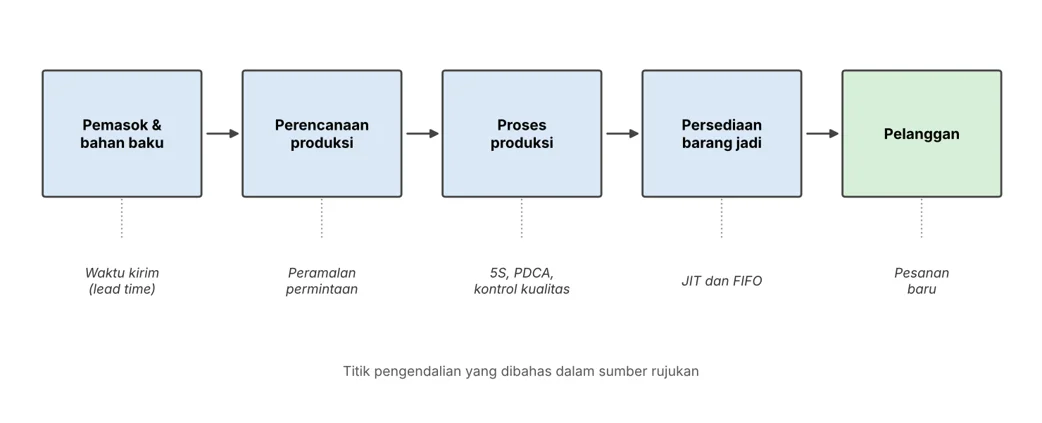
To address this, Putri et al. (2025) suggested implementing just-in-time (JIT) so that production aligns with actual demand, organizing the workplace with 5S, continuous improvement through the PDCA cycle, as well as FIFO systems and inventory control.
The JIT principle itself means materials are received only when needed for production (O’Connell, n.d.).
However, reducing inventory should not be excessive. McKinsey & Company (n.d.) warns that efforts to improve working capital should not compromise quality, order fulfillment, or speed, such as by cutting inventory levels too low.
Labor, Capacity, and Their Relationship to Profit
October data provides an interesting note. Production increased, yet companies added very few workers (Katadata, 2026).
From an operations perspective, this could mean productivity improved or previously idle capacity began to be utilized.
The answer is important because fixed costs like salaries and factory operations do not decrease when demand weakens, causing margins to shrink (Ihsanudin, n.d.).
It is at this point that operations management meets finance. Napilah and Heriyanto (2025) found that for textile and garment companies listed on the Indonesia Stock Exchange (IDX), production costs have a negative and significant effect on net profit.
In other words, every decision on the factory floor, from the amount of materials purchased to machine scheduling, is ultimately reflected in the profit figures.
My Perspective: Analysts Need to Understand the Kitchen, Not Just the Meal
In my view, financial reports are like a finished meal. We can judge the taste, but we may not know why it is too salty or bland if we have never seen the kitchen.
Analysts who know that suppliers are late, demand forecasts were missed, or inventory is piling up will be faster at identifying the root causes of declining profits.
Therefore, for me, operations and production management courses are not just electives, but essential preparation for understanding the factory behind the numbers.
What We Can Do as Students
There are several steps students can take to understand the relationship between operations management, production processes, and corporate financial performance.
Study the PMI components. Pay attention to production, new orders, supplier delivery times, and labor, not just the headline figure.
Recognize the seven wastes (7 waste). Find out how overproduction and product defects appear on the production line.
Understand forecasting and inventory control. Try calculating simple demand estimates from available sales data.
Connect it to financial reports. Observe how rising raw material costs or inventory buildup are reflected in the cost of goods manufactured.
Conclusion: From the Factory Floor to the Analyst's Desk
Profit does not fall from the sky. It is born from raw materials arriving on time, carefully planned production, controlled inventory, and productive labor.
Aspiring financial analysts who understand all of this will be able to explain why numbers change, rather than just reporting that they have changed.
References
Bisnis.com. (2026a, 1 April). Indonesia's manufacturing PMI fell to 50.1 in March 2026.
https://ekonomi.bisnis.com/read/20260401/257/1963524/pmi-manufaktur-indonesia-turun-ke-501-pada-maret-2026
Bisnis.com. (2026b, 4 May). RI manufacturing PMI plummeted to the 49.1 level in April 2026, here is the culprit.
https://ekonomi.bisnis.com/read/20260504/257/1971045/pmi-manufaktur-ri-anjlok-ke-level-491-april-2026-ini-biang-keroknya
Bisnis.com. (2026c, 3 August). RI manufacturing PMI rose to the 50.2 level in July 2026, but recovery is not yet solid.
https://ekonomi.bisnis.com/read/20260803/257/1993065/pmi-manufaktur-ri-naik-ke-level-502-juli-2026-tapi-pemulihan-belum-solid
Ihsanudin, A. (n.d.). Chapter I: Background on the influence of production costs on the profitability of textile companies [Undergraduate Thesis, Universitas Pasundan].
https://repository.unpas.ac.id/82656/3/BAB%20I_Anggi%20Ihsanudin.pdf
Katadata. (2026, 2 November). Indonesia's manufacturing PMI surges, beating Japan, Vietnam, and China.
https://katadata.co.id/amp/berita/industri/6ae882ebe2437/pmi-manufaktur-indonesia-melesat-kalahkan-jepang-vietnam-hingga-cina
McKinsey & Company. (n.d.). Transforming the culture of managing working capital.
https://www.mckinsey.com/capabilities/strategy-and-corporate-finance/our-insights/transforming-the-culture-of-managing-working-capital
Meilina, K. (2026, 1 October). Indonesia's manufacturing PMI rebounded to 52.4 in September, supported by export growth. Katadata.
https://katadata.co.id/berita/industri/6abdbf2130eda/pmi-manufaktur-indonesia-bangkit-ke-524-pada-september-ditopang-laju-ekspor
Metro TV News. (2026). Highest in 2 years, RI manufacturing PMI in February breaks through 53.8.
https://www.metrotvnews.com/read/bw6C2YLy-tertinggi-2-tahun-pmi-manufaktur-ri-februari-tembus-538
Napilah, R., & Heriyanto, H. (2025). The influence of production costs on net profit in manufacturing companies in the textile and garment sub-sector listed on the Indonesia Stock Exchange (IDX) for the period 2020–2023. JEMSI.
https://www.journal.lembagakita.org/jemsi/article/download/4665/3507/18215
O’Connell, R. (n.d.). Working capital management & the cash conversion cycle.
https://ryanoconnellfinance.com/working-capital-management/
Putri, T. R. P., Darmawan, B., & Pratama, P. Y. (2025). Evaluation of waste (7 waste) in the production process of PT XYZ and the implementation of lean manufacturing 5S and PDCA as solutions to reduce waste. Jurnal Riset Rumpun Ilmu Teknik, 4(1), 412–421.
https://prin.or.id/index.php/JURRITEK/article/view/4996









Comments 0
Write a Comment Share your response