

JurnalPost.com - Education does not merely aim to improve students' academic abilities. More importantly, education plays a vital role in shaping character, instilling moral values, and building concern for the environment and community culture.
Amidst rapid technological development and social change, character education has become an unavoidable necessity. However, learning about life values is still often delivered through theory and advice in classrooms, without being directly connected to the students' own experiences.
In fact, the surrounding environment holds a variety of learning resources that can be utilized to instill values of responsibility, togetherness, care, and gratitude.
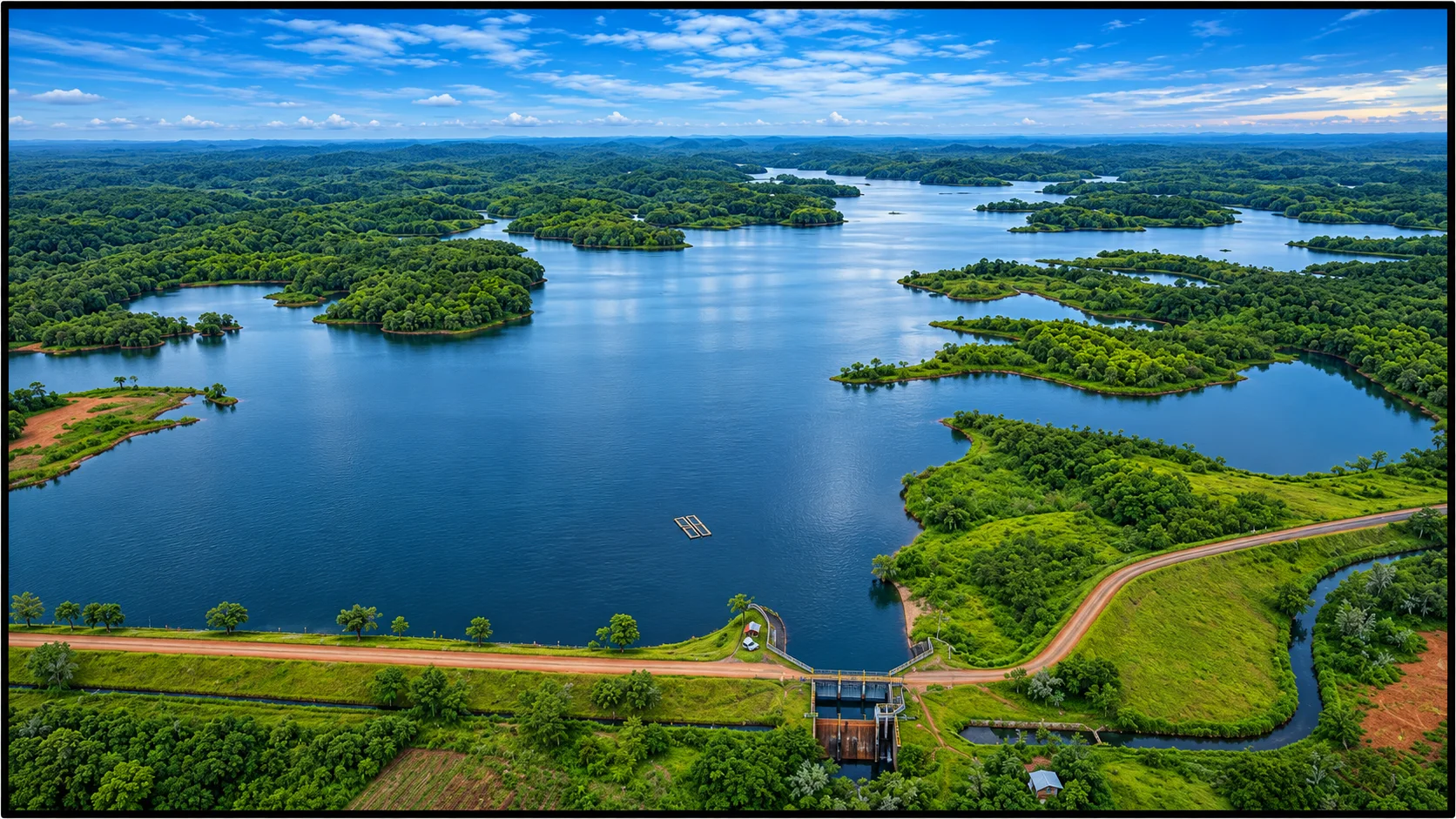
One such example is Danau Gegas or the Air Gegas Dam, located in Sugih Waras Village, Sukakarya District, Musi Rawas Regency, South Sumatra.
This water area not only possesses economic and tourism potential but also holds history and local knowledge that can be integrated into character education.
Through a local wisdom-based approach, students can understand that life values are not only found in textbooks but also grow from the experiences and culture of the surrounding community.
Getting to Know Danau Gegas and Its History
Danau Gegas is an artificial reservoir whose existence is closely linked to agricultural infrastructure development in Musi Rawas Regency.
Based on oral history research compiled by Wiji Rahayu in 2025 through interviews with local residents, the construction of the Air Gegas Dam began in 1976 and was inaugurated in 1987.
Meanwhile, research by Abidin and Apriyanti (2019) as well as Utomo, Aida, and Hidayah (2020) explains that Danau Gegas was formed by damming the Gegas River and covers an area of approximately 500 hectares.
At the beginning of its construction, the dam was designed to support agricultural irrigation needs. However, its utilization faced several obstacles.
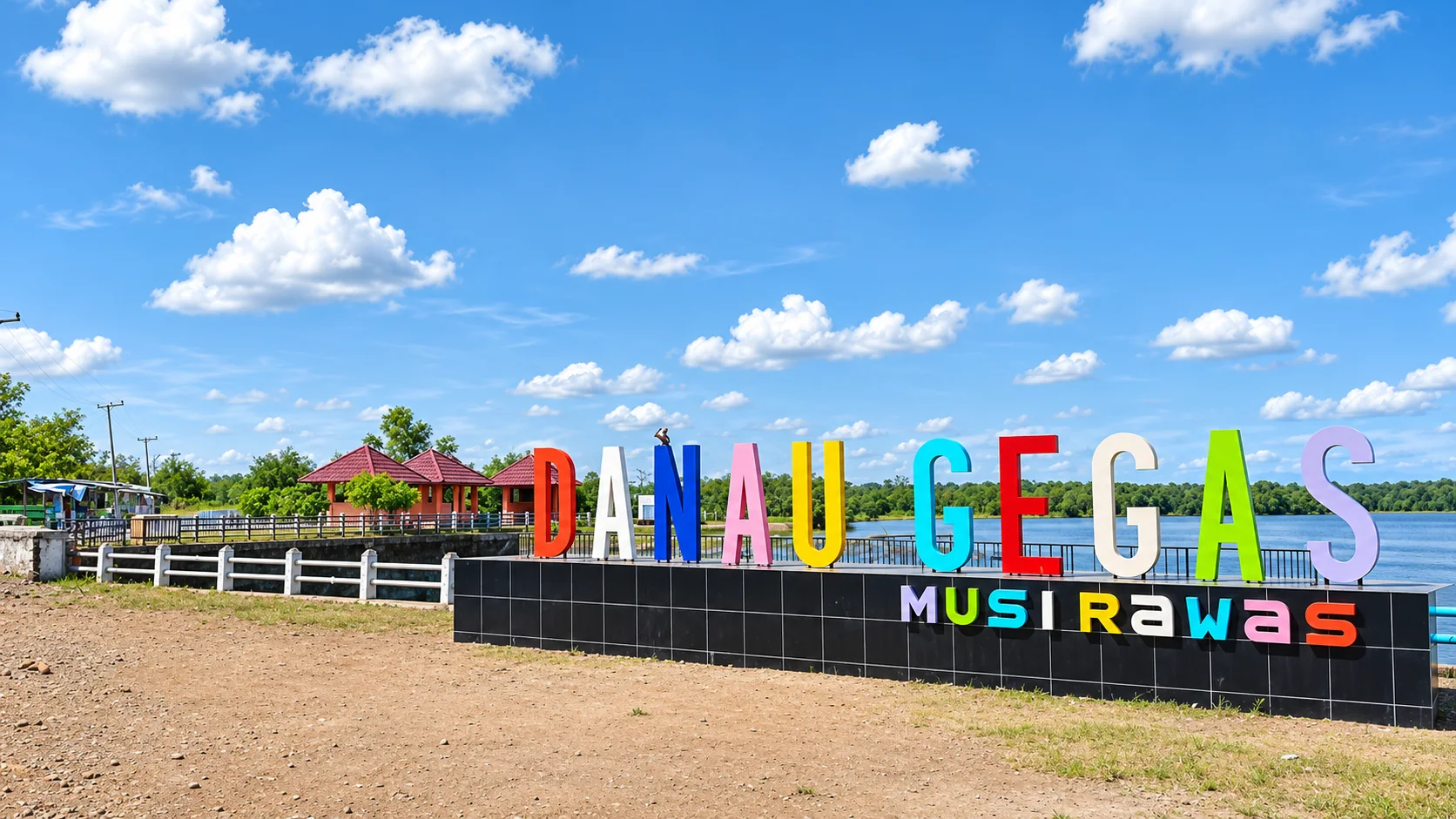
Research by Utomo, Aida, and Hidayah (2020) revealed technical issues, including sluice gates that did not function as intended.
On the other hand, information from the community gathered by Wiji Rahayu mentions the condition of the red soil in Sugih Waras Village as one of the issues related to utilizing the area for agriculture.
Both accounts provide an overview of the challenges faced in utilizing the dam, despite coming from different sources and perspectives.
Over time, the existence of Danau Gegas remains significant to the community. The area is used for fishing activities and has the potential to be developed as a tourist destination.
The journey of Danau Gegas shows that an area can undergo changes in function and meaning according to the needs of the community.
From this history, the younger generation can learn about the importance of natural resource management, adaptability, and the responsibility of maintaining facilities that provide benefits for the common good.
Local Traditions as Learning Resources
In addition to having an interesting construction history, the Danau Gegas area is also linked to the knowledge and traditions of the local community.
One of the traditions mentioned in Wiji Rahayu's interview with local residents is Larung Telaga or Larung Telo.
Based on the informant's statement, the tradition is associated with the month of Suro or 1 Muharram and is interpreted as an expression of gratitude, hope for safety, and the relationship between humans and the environment.
This tradition can serve as learning material to introduce how the community interprets life through culture passed down through generations.
However, the introduction of local traditions must be done carefully. Information regarding the name, timing, and meaning must remain based on community accounts and verifiable documentation.
With this approach, students not only learn about traditions as part of culture but also understand the importance of respecting sources of information and community experience.
Four Character Education Values from Danau Gegas
The utilization of Danau Gegas as a source for character education can be carried out through an ethnopedagogical approach.
Ethnopedagogy is an educational approach that makes local knowledge, experience, and cultural values part of the learning process.
Through this approach, there are four character values that can be developed by utilizing the history, environment, and culture of the community around Danau Gegas.
1. Religiosity and Gratitude
Community accounts regarding the Larung Telaga tradition can be an entry point to discuss the importance of gratitude in life.
Students can be invited to understand how the community expresses hope, gratitude, and appreciation for life through the traditions they know.
This learning can also be directed toward fostering an attitude of humility, respecting the beliefs of others, and understanding that humans have responsibilities toward others and the environment.
In its implementation, teachers need to distinguish between the discussion of cultural meaning according to the community and religious teachings that serve as the students' personal beliefs.
Thus, the introduction of local traditions can take place openly while still respecting diversity.
2. Concern for the Environment
The existence of Danau Gegas provides a concrete example of the relationship between humans and nature.
As a water area utilized for various needs, Danau Gegas demonstrates the importance of maintaining a balance between resource utilization and environmental conservation.
Students can study issues of cleanliness, water management, the utilization of fishery resources, and the importance of infrastructure maintenance.
Learning can be developed through environmental observation activities, group discussions, and the preparation of reports on the condition of the water area.
From these activities, students are expected to understand that protecting the environment is not only the responsibility of the government but also of the entire community.
3. Mutual Cooperation and Togetherness
Environmental management and cultural preservation cannot be carried out by one party alone.
Cooperation is needed between the community, the government, educational institutions, and various other elements so that natural resources and cultural heritage can continue to provide benefits.
The value of mutual cooperation can be applied in learning through group activities.
For example, students work together to compile local history documentation, conduct environmental observations, or create simple projects on efforts to maintain the cleanliness of the water area.
Through these activities, students learn to divide tasks, respect opinions, solve problems together, and take responsibility for the results of their work.
4. Resilience and Pride in Local Culture
The history of Danau Gegas also provides lessons on the community's ability to face change.
Although the initial utilization of the dam faced various obstacles, the area still possesses potential that can be developed for the needs of the community.
This experience can be used to introduce the values of resilience, adaptability, and the importance of seeking solutions when facing problems.
Furthermore, knowledge of the history and traditions of the community can foster students' pride in their own region.
Knowing local culture does not mean rejecting the changing times. Conversely, an understanding of history and culture can help the younger generation face change without losing awareness of their regional identity.
Integrating Local Wisdom into Learning
The local wisdom of Danau Gegas can be integrated into various subjects through a place-based education approach or place-based education.
This approach utilizes the surrounding environment as a learning resource so that students gain experiences that are closer to real life.
In Indonesian language subjects, for example, the history of Danau Gegas can be used as material to compile observation report texts, historical recount texts, or popular articles.
Students can collect information from documents, conduct interviews with the community, and then write articles based on their observations and available sources.
These activities not only train language skills but also build critical thinking skills, especially in distinguishing between facts, opinions, and informant statements.
Meanwhile, in Social Studies (IPS) subjects, Danau Gegas can be used to study the relationship between humans and the environment, the history of infrastructure development, and the utilization of natural resources.
In Pancasila Education, learning can be directed toward the values of mutual cooperation, social responsibility, appreciation for diversity, and concern for the common interest.
Teachers can also develop learning projects that encourage students to document community stories, identify regional potential, and formulate ideas for environmental conservation.
Thus, learning does not stop at theoretical understanding but provides opportunities for students to apply character values in real activities.
Preserving Cultural Heritage, Shaping a Character-Driven Generation
Character education is a continuous process that requires the involvement of schools, families, and the community.
Values of honesty, responsibility, care, and togetherness are more easily understood when students see their application in daily life.
Danau Gegas in Musi Rawas Regency provides an example of how local history, the natural environment, and community experience can be utilized as educational resources.
Its construction history can serve as reflection material regarding the importance of planning and resource management. Its water potential can teach ecological concern, while knowledge of community culture can strengthen appreciation for local heritage.
However, efforts to utilize local wisdom as a learning resource must also be accompanied by a critical attitude.
Historical information needs to be verified, community accounts must be presented according to their sources, and the meaning of traditions must not be separated from the cultural context of the community that owns them.
Schools can take a role through simple research activities, local history writing, cultural documentation, and environment-based learning.
Ultimately, character education does not always have to start from something far from the students' lives. The environment where they live can actually be a learning space rich in experience and life values.
Through the local wisdom of Danau Gegas, the younger generation can learn that protecting nature, respecting culture, building togetherness, and being responsible for life are important parts of the process of becoming a person of character.
About the Author
Siti Nurjanah is a student at the State Islamic University (UIN) Fatmawati Sukarno Bengkulu who has an interest in ethnopedagogical studies, character education based on local wisdom, and oral history documentation. She focuses on utilizing the environment and community culture as meaningful learning resources for students.





Comments 0
Write a Comment Share your response