

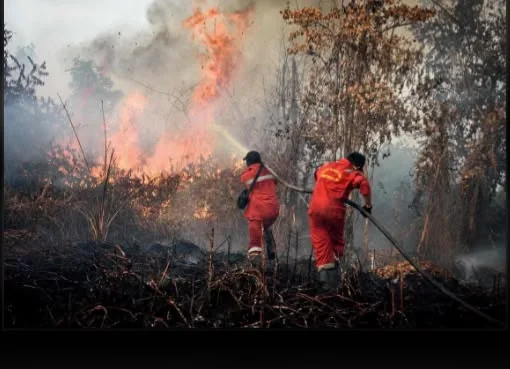
Understanding the causes, impacts, and prevention steps for forest and land fires
JurnalPost.com – Every dry season, the threat of haze returns to haunt several regions in Indonesia. The sky turns gray, visibility drops, air quality deteriorates, and the public is forced to wear masks when outdoors.
This condition is one of the impacts of forest and land fires, an recurring environmental issue that threatens public health, ecosystem sustainability, as well as social and economic life.
Forest and land fires are not merely a natural problem. Human activity plays a significant role in the emergence of fires that can have cross-border impacts.
Why Do Forest and Land Fires Occur?
Prolonged dry seasons cause soil and vegetation to dry out, making them more flammable. This condition is increasingly risky in areas with peatland.
However, natural factors are not the only cause. Most forest and land fires are linked to human activity, ranging from land clearing by burning, careless disposal of cigarette butts, to negligence when burning trash.
Land burning is often considered a practical and cheap method. In reality, uncontrolled fire can spread quickly and cause losses far greater than the benefits obtained.
Even simple habits considered trivial can trigger fires if done in the middle of dry environmental conditions.
Why Are Peatland Fires So Dangerous?
Peatland is an ecosystem with the ability to store large amounts of carbon. When it experiences drought and burns, peat can become a source of carbon emissions while producing haze that endangers health.
Unlike surface fires, fire in peatland can spread beneath the surface. This condition makes the extinguishing process more difficult because the fire can persist for days, or even weeks.
The smoke produced can also persist for a long time and spread to various regions.
Therefore, maintaining peatland moisture, preventing excessive drying, and carrying out ecosystem restoration are important parts of efforts to prevent forest and land fires.
The Impact of Forest and Land Fires Is Far Broader Than It Seems
Forest and land fires do not just scorch trees and vegetation. The impacts can be felt in various aspects of life.
Impact on health
Haze contains fine particles that can increase the risk of respiratory problems, worsen asthma, and have a negative impact on heart and lung health.
Children, the elderly, pregnant women, and individuals with respiratory and cardiovascular diseases are groups that are more vulnerable to air pollution exposure.
Impact on the environment
Forest and land fires cause habitat destruction, reduced biodiversity, and disruption of ecosystem balance.
The release of large amounts of carbon into the atmosphere also contributes to climate change, which can increase the risk of environmental disasters in the future.
Social and economic impact
Haze can disrupt flights, educational activities, transportation, trade activities, and public productivity.
Economic losses do not only come from land damage, but also from the costs of firefighting, healthcare, and environmental restoration.
Cross-border impact
Smoke from forest and land fires can be carried by the wind across national borders. This issue makes forest and land fires a regional environmental challenge that requires cooperation between countries.
Land Burning Has Legal Consequences
Indonesia has legal regulations governing environmental protection and management, including the prohibition of land clearing by burning as stipulated in Law Number 32 of 2009 concerning Environmental Protection and Management and its amendments.
Violations of these provisions can lead to legal consequences, including criminal sanctions and civil liability, in accordance with applicable regulations.
The law also provides for limited exceptions by taking into account local wisdom and certain requirements.
Thus, preventing forest and land fires is not only a form of concern for the environment, but also part of legal and social responsibility.
Simple Steps to Prevent Forest and Land Fires
Prevention is an important step to reduce the risk of forest and land fires. The public can contribute through a number of simple actions, including:
Not burning trash or clearing land by burning.
Ensuring cigarette butts and campfires are completely extinguished.
Monitoring official information regarding hotspots and air quality.
Using appropriate particulate protective masks and limiting outdoor activities when air quality worsens.
Immediately reporting the appearance of fire spots to officers or authorities.
Supporting products and business practices that maintain the sustainability of forests and peatlands.
Public awareness in carrying out these habits can help reduce the risk of fire while protecting environmental health.
The Younger Generation as Drivers of Forest and Land Fire Prevention
The younger generation has a strategic role in building public awareness of the importance of protecting the environment.
The use of social media, community activities, and various educational programs can be a means to disseminate information about the dangers of forest and land fires.
The younger generation can also be directly involved through tree planting activities, ecosystem restoration, environmental education, and campaigns to prevent trash and land burning.
In addition, the ability to filter information is very important. Information regarding fires, hotspots, and air quality should come from official sources so as not to cause misunderstanding or public panic.
Big changes often start from small habits done consistently and together.
Protecting Forests, Protecting the Breath of Future Generations
Forest and land fires are not just an environmental disaster, but a matter of shared responsibility. The government, companies, and the community need to collaborate in enforcing rules, maintaining ecosystems, and building a culture of fire prevention.
Sustainable forests are an important part of maintaining environmental balance and the continuity of human life.
Efforts to protect forests can start from oneself by not burning trash, not throwing cigarette butts carelessly, and inviting people around to be more concerned about the environment.
Because every fire we ignite without responsibility can threaten the air we breathe together. Protecting forests today means protecting the breath of future generations.








Comments 0
Write a Comment Share your response