

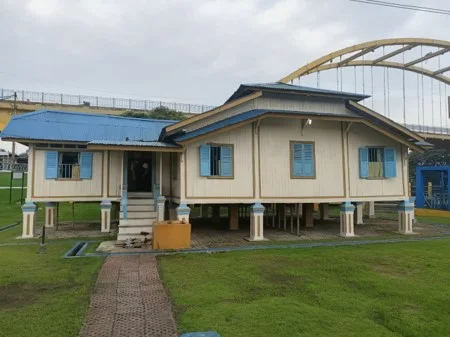
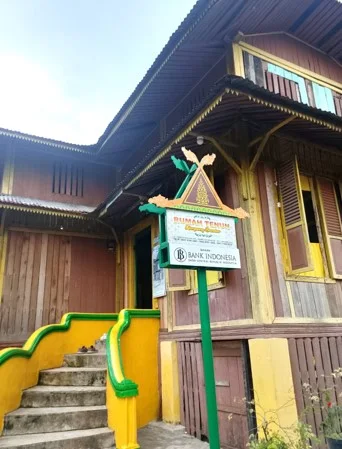
PEKANBARU, JurnalPost.com — Amidst the rapid development of Pekanbaru as a hub for trade and economic activity in Riau Province, a historic building remains that preserves the legacy of the Siak Sultanate era. Known as the Tuan Kadi Guest House, this heritage site reflects the historical ties between religious figures, the Siak Sultanate administration, and the early growth of Pekanbaru.
The building, estimated to have been established around 1895, is located in Kampung Bandar, Senapelan District, Pekanbaru, situated near the banks of the Siak River beneath the Siak III Bridge.
This area is recognized as one of the starting points for the development of Pekanbaru. In the past, Senapelan flourished as a bustling trade center before becoming a vital part of the city's expansion.
Consequently, the existence of the Tuan Kadi Guest House is inseparable from the historical journey of the area and the cultural heritage of the Siak Sultanate.
The History of the Tuan Kadi Guest House
Based on an interview with Syarifudin, S.S., the Tuan Kadi Guest House was established in 1895 by Haji Nurdin Putih, a wealthy merchant who was also the father-in-law of the Tuan Kadi.
The house later became the residence of Haji Zakaria bin Abdul Muthalib, an Islamic scholar of Malay Deli descent from North Sumatra, who was bestowed the title 'Tuan Kadi' by the Sultan of Siak.
This title was granted to Haji Zakaria due to his position as an Islamic religious judge or mufti, responsible for overseeing Islamic legal affairs and serving as an advisor to the Sultan of Siak.
"So, 'Tuan Kadi' is not a name, but a title given by the Sultan to him as an Islamic judge at that time. His real name was Haji Zakaria bin Abdul Muthalib, and he hailed from North Sumatra, from the Malay Deli community," explained Syarifudin, S.S.
This position established a close relationship between Haji Zakaria and the Siak Sultanate administration.
According to Syarifudin, the Sultan of Siak would often stop at the house when visiting the Senapelan area. Haji Zakaria himself frequently used the building as a resting place while traveling between Senapelan and Siak.
This historical connection is the reason behind the name 'Tuan Kadi Guest House' and reinforces the building's historical significance to Pekanbaru.
Architectural Uniqueness Reflecting Social Status
Beyond its historical value, the Tuan Kadi Guest House possesses unique traditional architectural features.
One of the building's hallmarks is the use of wooden planks arranged vertically on the walls.
According to Syarifudin, this wall arrangement was not merely a construction technique but also reflected the economic condition and social standing of the owner at the time.
"The Tuan Kadi Guest House is unique because of its vertically arranged walls. In the past, only the wealthy or the nobility could afford such walls because they required a large amount of wood," explained Syarifudin, S.S.
This explanation demonstrates that traditional architecture served not only as a dwelling but also as a representation of the economic conditions and social status of the era.
The presence of this wooden structure allows visitors to understand the relationship between architecture, culture, and the social life of the Malay community in the past.
Every part of the building holds historical and cultural value that is important to preserve.
Changes to the Building Over Time
The history of the Tuan Kadi Guest House has not always been marked by well-maintained conditions.
According to the source, the house was once occupied by heirs, rented out to others, and eventually left vacant for some time.
Changes also occurred in the physical form of the building. The house was reportedly two stories high originally. However, photographic documentation from the 1960s shows a different appearance compared to the condition of the building visible to visitors today.
These changes illustrate the challenges in maintaining historic buildings, especially wooden structures that are susceptible to damage from age and environmental factors.
Maintenance efforts are crucial to ensure that the architectural character and remaining historical value are not lost as time passes.
A Destination for Historical Tourism and Education
Today, the Tuan Kadi Guest House serves as a cultural heritage site and a historical tourism destination in Pekanbaru.
According to the source, the building is managed by the local government through the Pekanbaru City Culture and Tourism Office, involving relevant agencies in heritage preservation efforts.
Maintenance is carried out periodically, including special treatments to prevent damage to the building's wooden structure.
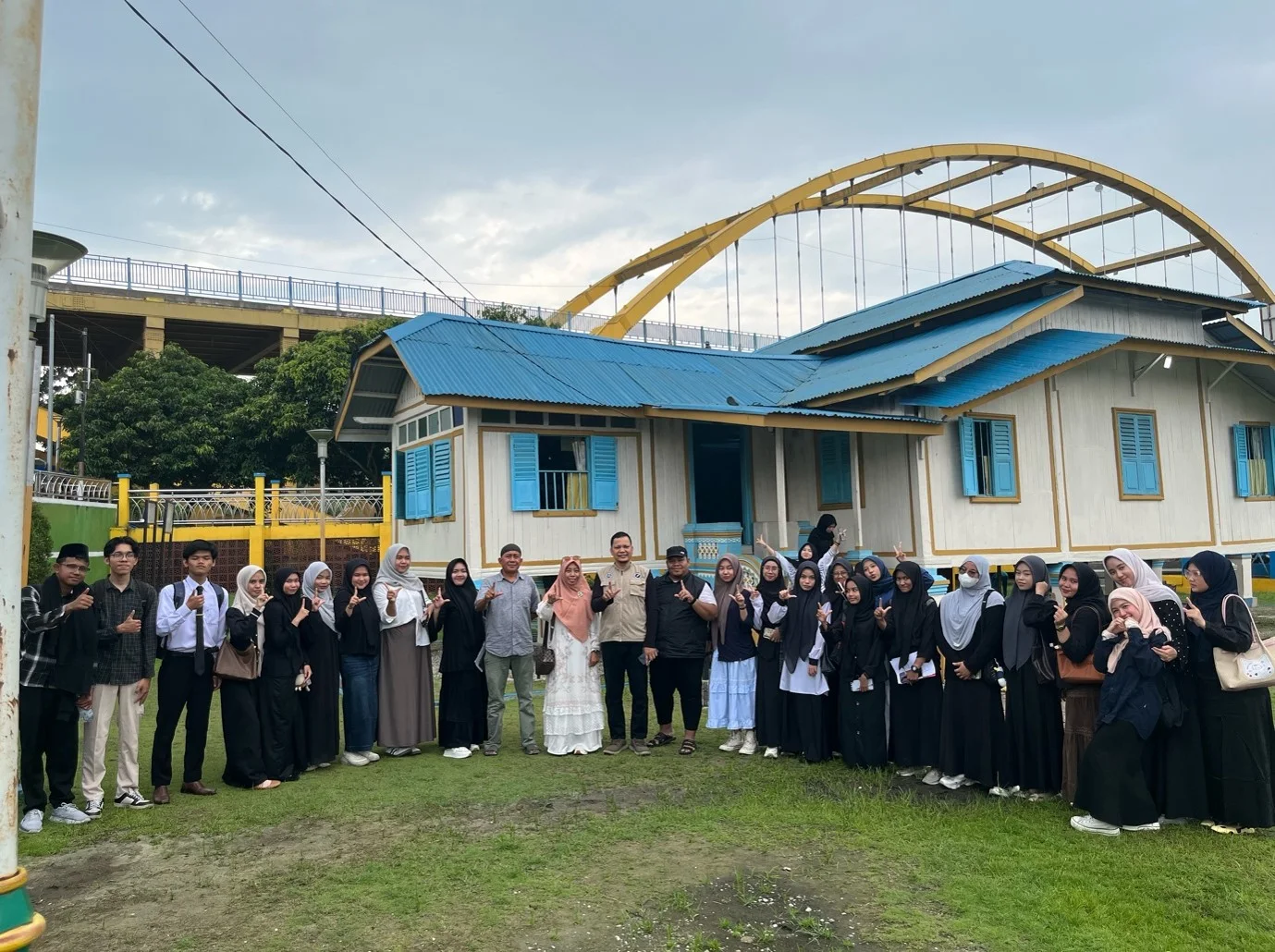
Beyond being a tourist destination, the Tuan Kadi Guest House is utilized as an educational resource for students, researchers, and tourists who wish to learn more about the history of Pekanbaru and the Siak Sultanate.
Its location near the banks of the Siak River allows visitors to experience the atmosphere of the Senapelan area, which played a vital role in the economic and social life of the people of Pekanbaru in the past.
Through historical tourism, the Tuan Kadi Guest House serves as a means to introduce local cultural heritage while increasing public awareness of the importance of preserving historic buildings.
Maintaining the Historical Identity of Pekanbaru
The existence of the Tuan Kadi Guest House should not be viewed merely as a tourist attraction or an old building from the past.
More importantly, the building is a vital part of Pekanbaru's historical identity, reflecting the intersection of religious life, governance, trade, and social activity during the Siak Sultanate era.
The history of a city is not only stored in books and written documents but can also be found through buildings, environments, traditions, and various historical relics that still survive today.
Therefore, the preservation of the Tuan Kadi Guest House requires ongoing attention and collaboration between the government and the community.
Introducing historical values to the younger generation is also a crucial step in fostering awareness and concern for regional cultural heritage.
Amidst the modernization of Pekanbaru, the Tuan Kadi Guest House remains a tangible reminder of the historical journey and cultural heritage that helped shape the city's identity.
Preserving the Tuan Kadi Guest House means caring for the collective memory of the people of Pekanbaru while ensuring that future generations do not lose the historical traces of their own city.







Comments 0
Write a Comment Share your response