

TANGERANG, JurnalPost.com – Posyandu volunteers play a vital role in delivering community-level health services. Beyond assisting with Posyandu activities, these volunteers are responsible for weighing and measuring children, recording monitoring results, providing health education, and directing community members to professional health services when necessary.
This role positions volunteers as a key link between healthcare professionals and families in supporting maternal and child health.
To support these services, the Maternal and Child Health (KIA) book serves as a crucial tool. The KIA book contains recording tables and growth charts that help document and monitor a child's development.
Consistent table entries and a solid understanding of growth charts are essential for ensuring that child health information is accurately recorded and effectively used for both growth monitoring and parental education.
Optimizing the use of the KIA book requires adequate understanding and skills. Volunteers must not only know which sections to fill out but also understand how to record measurement results and explain that information to families.
This is a primary focus in efforts to strengthen the capabilities of Posyandu volunteers.
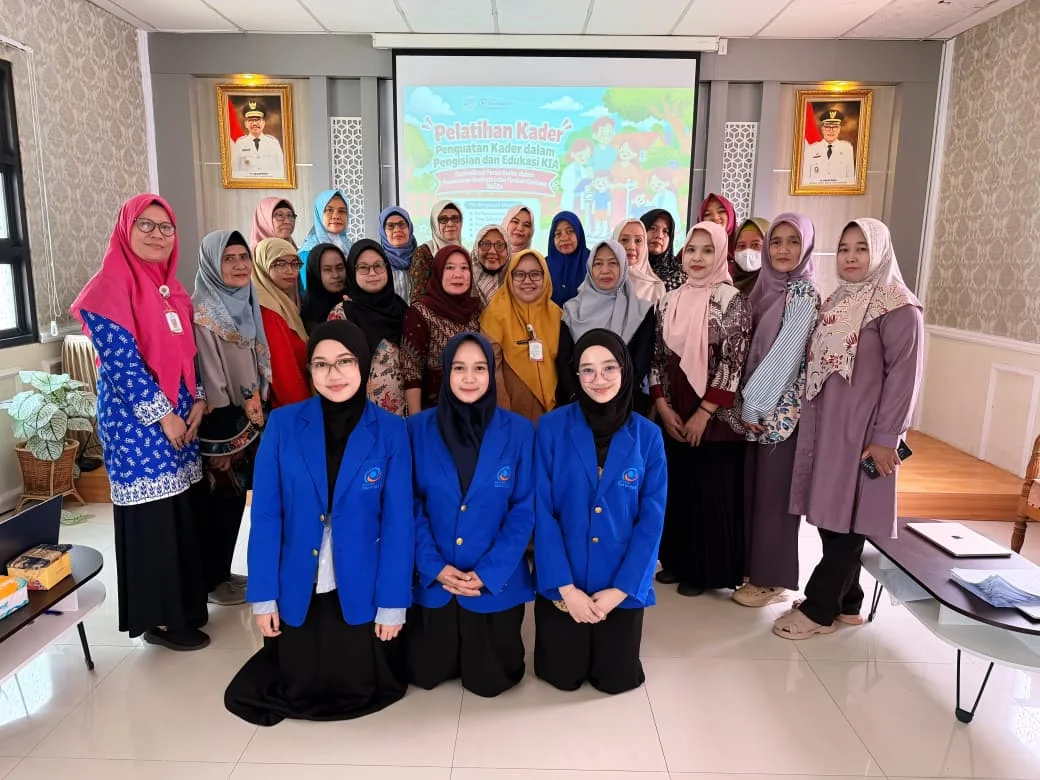
To support this capacity building, the Pabuaran Tumpeng Health Center, in collaboration with students from the Universitas Esa Unggul Dietitian Professional Education Program, held a workshop titled “Strengthening Volunteers in KIA Documentation and Education” on 2–3 November 2026.
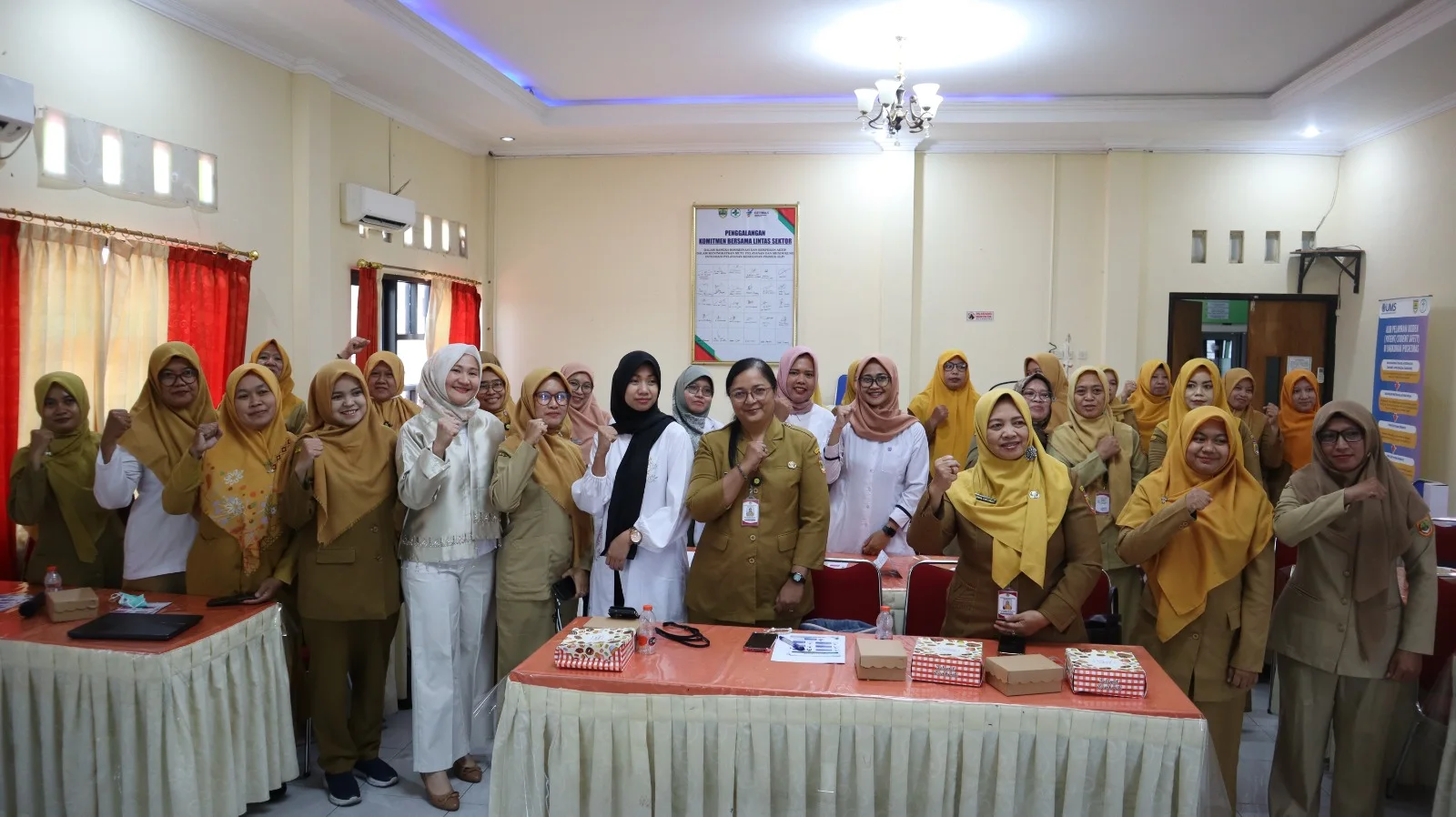
The event, held at the Pabuaran Tumpeng Health Center Hall, was attended by 41 Posyandu volunteers.
The training was conducted through a combination of theoretical instruction and hands-on practice to reinforce volunteers' skills in filling out KIA books, performing anthropometric measurements, and providing maternal and child health education.
Strengthening Volunteer Understanding in KIA Book Utilization
The session began with an overview of Posyandu service workflows, anthropometric measurement techniques, KIA book documentation, and its use as a tool for family education.
Understanding this material is critical because consistent record-keeping helps both volunteers and parents track a child's growth progress over time.
Furthermore, the ability to interpret information on growth charts is necessary to ensure monitoring results are understood, especially when conditions arise that require follow-up from healthcare professionals.
Through this training, volunteers are expected to not only identify the sections within the KIA book but also grasp the function of every piece of information recorded.
Consequently, the KIA book can be utilized more optimally, both as a recording medium and as an educational resource for families.
Hands-on Practice to Improve Volunteer Skills
Following the theoretical briefing, the activity continued with practical sessions on anthropometric measurements, including mid-upper arm circumference (MUAC), head circumference, and abdominal circumference.
In this session, volunteers had the opportunity to practice measurement steps while understanding the importance of precision in every process.
Volunteers were also given the chance to directly experience the process of recording measurement results and utilizing tables and growth charts through case studies.
This practice is a vital component in ensuring volunteers become accustomed to accurate record-keeping and understand how child growth information is documented in the KIA book.
Measurement and recording skills are two interconnected aspects of health monitoring. Measurement results must be recorded properly to serve as reliable information for tracking health conditions.
By combining theoretical delivery with hands-on practice, this training is intended to provide a more applicable learning experience for the volunteers.
In this way, the skills acquired are not only understood during the event but can also be applied when volunteers return to their duties at the Posyandu.
Encouraging the Role of Volunteers in Maternal and Child Health Education
Beyond their skills in measurement and recording, Posyandu volunteers also play a role in conveying health information to the community.
The close relationship between volunteers and mothers or families is an opportunity to improve public understanding regarding the importance of monitoring child growth and development.
The ability to understand the contents of the KIA book is expected to help volunteers explain the information within it using language that is easier for parents to grasp.
Thus, the use of the KIA book is not limited to Posyandu activities but can also encourage families to pay closer attention to their child's health development at home.
As supplementary learning material, volunteers also received an e-book that they can study independently.
This material is expected to serve as an additional reference for volunteers to recall and apply the knowledge and skills gained during the training.
Supporting Child Growth Monitoring Together with Volunteers
This training demonstrates positive progress in the skills of volunteers as they carry out their duties at the Posyandu.
After completing the series of sessions and hands-on practice, volunteers showed improved proficiency in filling out the KIA book, particularly in recording growth monitoring results and updating child growth charts.
This improvement is evident in the volunteers' enhanced ability to understand the recording steps and interpret information on the growth charts.
These skills serve as an important foundation for volunteers to perform more accurate record-keeping while helping parents understand their child's growth progress.
Through this collaborative effort between the Pabuaran Tumpeng Health Center and students from the Universitas Esa Unggul Dietitian Professional Education Program, volunteers are expected to apply the skills they have acquired in their daily Posyandu services.
With more optimal use of the KIA book, volunteers are expected to contribute to continuous child growth monitoring and improve the quality of maternal and child health services at the community level.





Comments 0
Write a Comment Share your response