

Referral Is More Than Just Moving Patients
In maternal and neonatal emergencies, a delay of a few minutes can determine the life or death of a mother and her baby. The issue is not merely about medical intervention capabilities, but the entire chain of events from the moment danger signs are recognized until the patient receives definitive treatment. Therefore, reducing maternal and infant mortality requires a system that integrates primary care facilities with referral hospitals.
In this system, PONEK (Comprehensive Emergency Obstetric and Neonatal Care) hospitals must not only act as recipients of referrals but also help build the capacity of facilities within their network (Ministry of Health, 2025). The success of a referral is determined not only by how quickly a patient arrives, but also by how their condition is maintained during the process.
The Three Delays: A Systemic Problem, Not Just One Facility
Maternal mortality is not solely the result of medical complications, but also of social, economic, cultural, and healthcare system factors. The Three Delays framework explains three types of delays: 1 deciding to seek care, due to a lack of knowledge regarding danger signs, costs, and cultural influences; 2 reaching a health facility, due to distance and transportation; and 3 receiving adequate treatment, due to shortages of staff, medicine, equipment, blood, hospital beds, and weak coordination.
In cases of postpartum hemorrhage, delays in recognizing bleeding and suboptimal initial treatment increase the risk of hemorrhagic shock. Therefore, the success of a referral is not measured by the number of patients sent, but by the accuracy of treatment from the first facility to the referral hospital.
Network Development: Building Collective Readiness
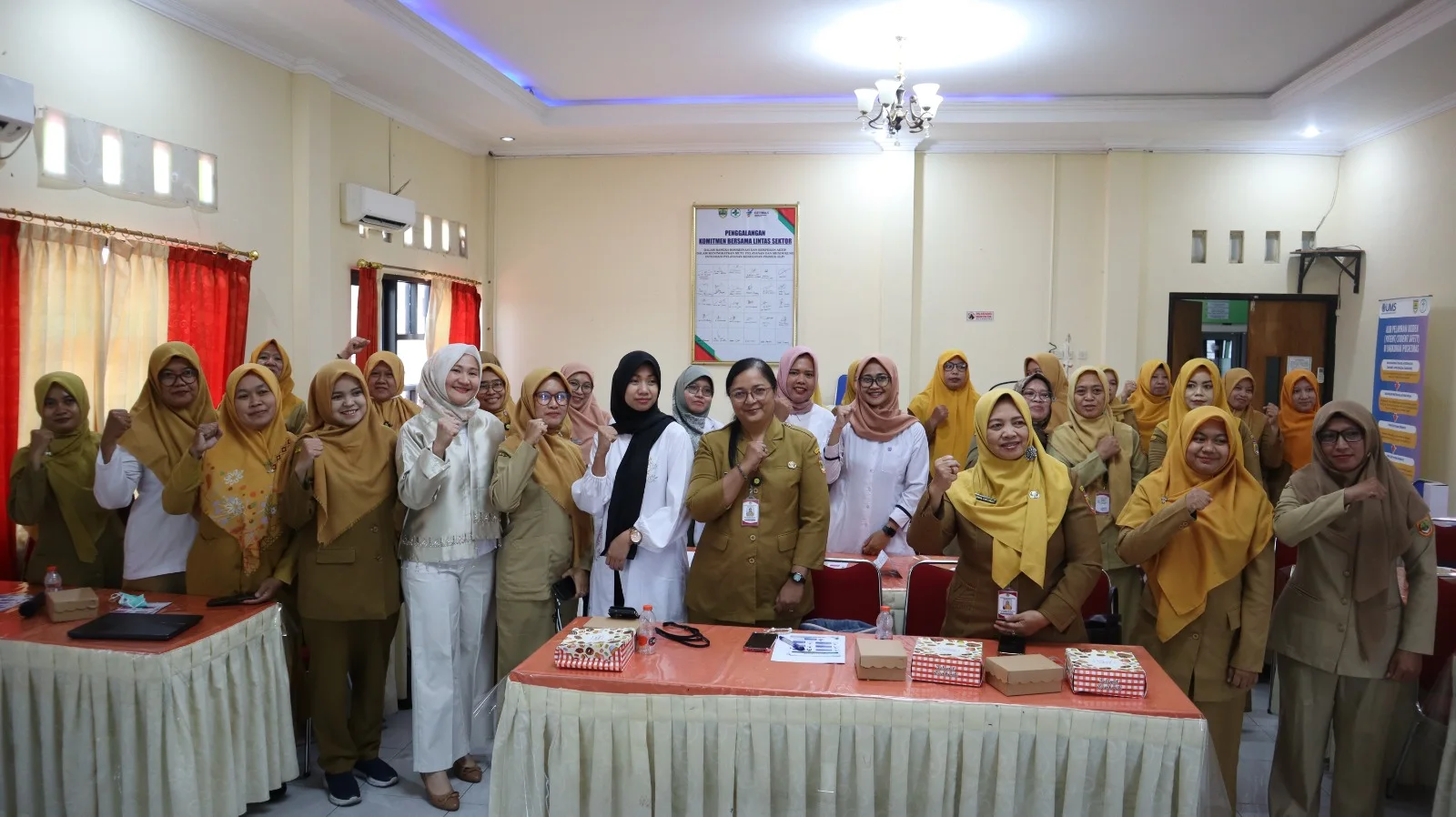
Development is often understood as merely socialization or coordination. However, its meaning is broader: building collective capacity, standardizing procedures, and improving working relationships between facilities. An example is the PONEK referral network development conducted by the PONEK Team at Universitas Sebelas Maret Hospital (RS UNS) in collaboration with the Gatak Community Health Center, Sukoharjo Regency, on 28 September 2026, with 26 participants from the PONEK team, community health centers, doctors, and village midwives.
The training focused on postpartum hemorrhage (PPH) and severe preeclampsia (PEB), including the use of Magnesium Sulfate (MgSO4), strengthening referral pathways using the BAKSOKUDA principle, and pre-referral communication. Notably, this activity also included practice and simulations, as theory does not always guarantee readiness in critical situations. Follow-ups include refresher sessions and simulations every six months, as well as evaluations of the referral pathways between the Gatak Community Health Center and RS UNS.
However, the measure of success for this development is a change in practice: are healthcare workers better prepared to stabilize patients, and are patients treated more quickly and accurately?
Stabilization: An Unbreakable Chain
Attention to referrals is often focused more on patient transfer than on the quality of care before and during the journey. Yet, patients require initial treatment to maintain vital functions. For PPH, healthcare workers must assess hemodynamics, recognize shock, establish intravenous access, perform resuscitation, and control bleeding according to protocols (WHO, 2025). For PEB, it is necessary to control clinical conditions, administer MgSO4 according to indications, and monitor for signs of toxicity.
Stabilization does not mean waiting for the patient to be normal before referring them. Initial lifesaving measures, communication with the receiving hospital, and transport preparation must occur in parallel. During the journey, the patient is monitored by an accompanying health worker, while the receiving hospital prepares the PONEK team based on clinical information received in advance.
Socio-Cultural Factors: The Role of the Family
The decision to seek help is not always in the mother's hands; husbands, parents, and in-laws often have significant influence. Some families do not yet realize that postpartum hemorrhage, seizures, severe headaches, vision disturbances, or loss of consciousness are danger signs. Therefore, education through village midwives, community health volunteers, and community health center staff must be strengthened so that facility readiness and community awareness go hand in hand.
From Administrative to Responsive: SISRUTE and Referral WhatsApp Groups
A successful referral is not one that merely meets administrative requirements. Referral letters, the Integrated Referral System (SISRUTE), and inter-facility communication must lead to one goal: the patient receiving timely help. Minister of Health Regulation Number 16 of 2024 emphasizes that the referral system must be supported by integrated information technology. However, SISRUTE does not automatically guarantee that communication and patient admission will be effective.
To bridge this gap, RS UNS provides a referral WhatsApp group as a fast channel between the sending facility and the PONEK team: to convey clinical conditions, consult directly, and confirm the readiness of patient admission. Similar approaches have been reported as feasible and accepted in Ghana and Liberia (Owen et al., 2022; Reynolds et al., 2023). To be effective, there must be clarity on who receives the information, how confirmation is performed, when cases are escalated, and how patient data confidentiality is maintained.
Limitations in hospital beds, intensive care units, blood supplies, and neonatal care can also affect patient admission, so safe alternative services must be available.
Time to Measure Development by Its Impact
For development to impact the safety of mothers and infants, five steps need to be strengthened. First, development based on facility needs mapping. Second, stabilization as a priority competency through regular simulations of PPH, PEB, eclampsia, and neonatal emergency cases. Third, strong pre-referral communication through SISRUTE, telephone, and WhatsApp groups. Fourth, evaluation with measurable indicators: compliance with stabilization, completeness of information, and response time. Fifth, collaborative evaluation between hospitals, community health centers, and the health office, including through Maternal and Perinatal Audits.
Conclusion: Saving Patients Starts Before Arriving at the Hospital
Developing a referral network is an investment in building a system that provides help quickly, accurately, and safely. PONEK hospitals cannot work alone, and community health centers should not bear the burden alone; both must become a single, mutually supportive system.
The success of the network is measured not by the number of activities or the number of patients referred, but by the ability to prevent delays, ensure stabilization, and guarantee definitive treatment. Referral is not just about moving patients, but a series of efforts to save lives.
References
Ministry of Health of the Republic of Indonesia. (2024). Minister of Health Regulation of the Republic of Indonesia Number 16 of 2024 concerning the Individual Health Service Referral System. Ministry of Health RI.
Ministry of Health of the Republic of Indonesia. (2025). Decree of the Minister of Health of the Republic of Indonesia Number HK.01.07/MENKES/560/2025 concerning Guidelines for the Implementation of Comprehensive Emergency Obstetric and Neonatal Care in Hospitals. Ministry of Health RI.
Owen, M. D., Ismail, H. M., Goodman, D., Batakji, M., Kim, S. M., Olufolabi, A., & Srofenyoh, E. K. (2022). Use of WhatsApp messaging technology to strengthen obstetric referrals in the Greater Accra Region, Ghana: Findings from a feasibility study. PLoS ONE, 17(4), e0266932. https://doi.org/10.1371/journal.pone.0266932
Reynolds, C. W., Horton, M., Lee, H., Harmon, W.-M., Sieka, J., Lockhart, N., & Lori, J. R. (2023). Acceptability of a WhatsApp triage, referral, and transfer system for obstetric patients in rural Liberia. Annals of Global Health, 89(1), 34. https://doi.org/10.5334/aogh.4030
PONEK Team of Universitas Sebelas Maret Hospital. (2026). Activity report on the development of the PONEK referral network of Universitas Sebelas Maret Hospital at Gatak Community Health Center. Internal document.
World Health Organization. (2025). Consolidated guidelines for the prevention, diagnosis and treatment of postpartum haemorrhage. World Health Organization.


Comments 0
Write a Comment Share your response