

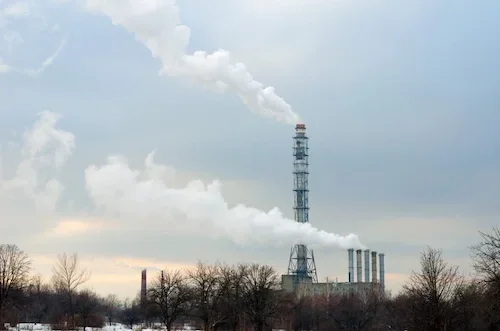
JurnalPost.com – When hearing the term global warming, most people immediately think of carbon dioxide (CO₂). However, there is another greenhouse gas that is equally important in influencing Earth's temperature: methane.
Amidst the United Nations Climate Change Conference (COP31) in Antalya, Turkey, from 9–20 November 2026, methane has returned to the global spotlight.
On 12 November 2026, a leaders' meeting on the sidelines of the conference announced a new philanthropic funding commitment worth more than 480 million US dollars to accelerate the reduction of methane emissions and other potent pollutants.
Why is this gas so important in efforts to address climate change?
Short Lifespan, Long-Lasting Impact
Methane (CH₄) is a greenhouse gas consisting of one carbon atom and four hydrogen atoms. This gas persists for about 12 years in the atmosphere. However, over a 20-year period, its warming potential is about 80 times greater than that of carbon dioxide for the same mass of emissions.
Methane is like a fire that burns intensely for a relatively short time, whereas carbon dioxide is like embers that last much longer. That is why cutting methane emissions can help slow the rate of global warming in the short term.
The United Nations Environment Programme (UNEP) states that methane is responsible for about one-third of the global warming currently being experienced.
Nevertheless, reducing methane emissions cannot replace the need to reduce carbon dioxide emissions. Both must be addressed simultaneously to achieve climate change control goals.
Where Does Methane Come From?
Efforts to reduce methane emissions discussed at COP31 focus on three main sectors: energy, agriculture, and waste management.
In the energy sector, methane can escape through leaks in oil and gas production and distribution facilities. Coal mining activities are also a source of these emissions.
In the agricultural sector, methane is produced, among other things, through the digestive processes of ruminant livestock and the decomposition of organic matter in waterlogged rice fields.
Meanwhile, in the waste sector, organic waste that decomposes without oxygen in landfills can produce significant amounts of methane.
These three sectors demonstrate that methane emissions are closely linked to various human activities, ranging from energy use and food production to daily waste management.
Solutions Already Within Reach
The good news is that reducing methane emissions does not require waiting for the discovery of new technologies.
In the Global Methane Tracker 2026 report, the International Energy Agency (IEA) estimates that about 70 percent of methane emissions from the fossil fuel sector can be reduced using currently available technology.
Some of these measures can even be implemented at no net cost because the captured gas has economic value and can be reused.
UN Climate Change Executive Secretary Simon Stiell also emphasized the importance of reducing methane emissions in his speech at COP31.
“This is one of the fastest, cheapest, and most effective ways to curb global warming in the short term,” said Simon Stiell during the COP31 meeting in Antalya, Turkey, on Thursday (12/11/2026), as translated from his official speech.
Emission reduction measures can be carried out through the detection and repair of gas leaks, improvements in industrial equipment efficiency, livestock waste management, and the utilization of methane as an energy source.
What Does This Mean for Indonesia?
Indonesia is actively participating in COP31. During the conference, the Indonesia Pavilion hosted 62 dialogue sessions involving 370 speakers from various countries.
This participation is part of efforts to strengthen climate diplomacy, promote sustainable development, and expand international cooperation in controlling greenhouse gas emissions.
However, the responsibility for addressing climate change does not lie solely with the government and industry players. The public can also play a role through various simple habits.
One such way is by sorting organic and inorganic waste at home. Organic waste, such as food scraps, fruit peels, and leaves, can be processed into compost with proper management, thereby reducing the amount of waste that ends up in landfills.
Reducing food waste is also an important step. The less food that is wasted, the smaller the potential for methane formation from the decomposition of organic waste.
Ultimately, methane reminds us that something invisible is not necessarily harmless. This gas with a simple molecular structure has a major influence on the balance of Earth's climate.
Controlling methane emissions is not just an international conference agenda, but a shared responsibility that can start from our immediate surroundings.
Because protecting Earth's temperature does not always have to start with major steps. Small habits practiced consistently can also bring about meaningful change.






Comments 0
Write a Comment Share your response