

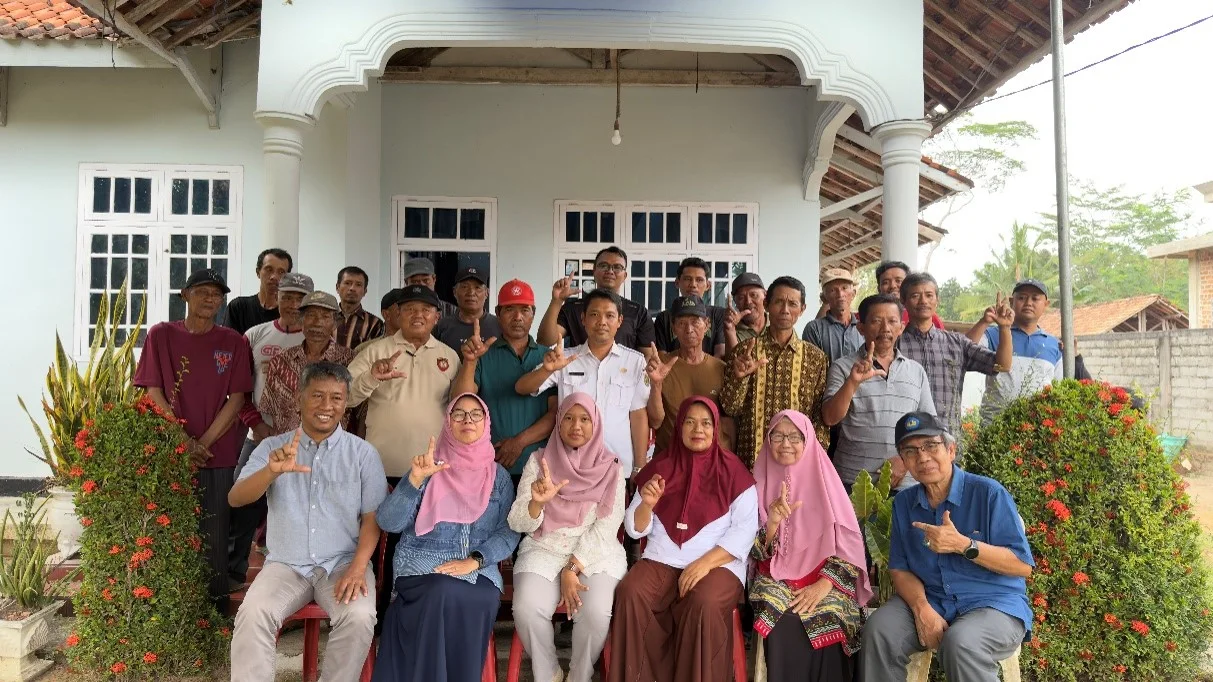
LAMPUNG TENGAH, JurnalPost.com – The University of Lampung (Unila), through a team of lecturers from the Department of Plant Protection, Faculty of Agriculture, is assisting farmers in Rukti Endah Village, Seputih Raman District, Central Lampung Regency, in developing methods for controlling rice pests and diseases based on local biological resources.
This assistance is being carried out through the Village Development Community Service (PkM-DB) program, which aims to increase farmers' capacity to apply Integrated Pest Management (IPM) principles while reducing dependence on synthetic pesticides.
Under the theme "Assisting Farmers in the Exploration and Utilization of Local Biological Resources for Rice Pest and Disease Management in Rukti Endah Village," the activity involves the Amanah Farmer Group as the primary partner.
The program runs for five months, from June to November 2026, with funding support from the University of Lampung's DIPA BLU for the 2026 fiscal year.
Reducing Farmer Dependence on Synthetic Pesticides
This community service program was initiated due to the continued high reliance of farmers on synthetic pesticides to control plant-disturbing organisms (OPT).
In reality, the agricultural ecosystem holds various potential biological resources that can be utilized to support more environmentally friendly pest and disease control.
These potentials include antagonistic microorganisms, predators, and parasitoids that play a role in maintaining the balance of the agricultural ecosystem.
The Head of the University of Lampung Community Service Team, Dr. Ivayani, S.P., M.Si., explained that this activity does not only focus on delivering material but also encourages farmers to recognize and utilize the biological potential available in their surrounding environment.
“Farmers need to understand that managing plant pests and diseases does not always have to depend on synthetic pesticides. The potential of local biological resources, including microorganisms and natural enemies, can be an important part of an integrated pest and disease control strategy. Through this activity, we want to equip farmers with both knowledge and practical skills that can be developed independently,” explained Ivayani.
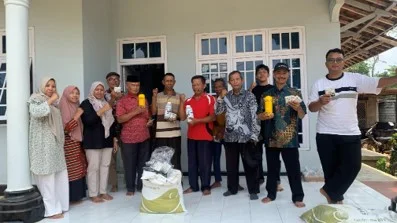
Farmers Trained to Utilize Trichoderma Biological Agents
The program implementation includes various activities, ranging from socialization, interactive discussions, and field visits to training and hands-on practice with farmers.
The material provided includes the identification of major rice pests and diseases, the recognition of natural enemies, the utilization of biological agents, the application of IPM principles, and the wise and safe use of pesticides.
One of the main activities in the program is the practice of propagating Trichoderma, a group of fungi that has the potential to be used as a biological agent in managing plant diseases.
Farmers were introduced to techniques for propagating Trichoderma using simple media that are easily obtained, such as broken rice.
Through this practice, farmers gained direct experience regarding the stages of media preparation and the propagation of microorganisms that have the potential to support plant disease control.
The use of materials available in the surrounding environment is expected to help farmers develop alternative plant disease control methods independently while maintaining procedural accuracy and the quality of the biological agents.
Identifying Rice Plant Problems in Farmers' Fields
In addition to providing training, the Unila community service team conducted direct visits to the agricultural land owned by members of the Amanah Farmer Group.
These visits provided an opportunity for lecturers and farmers to identify various cultivation problems encountered in the field.
The team observed the condition of the crops and discussed alternative management of plant-disturbing organisms suitable for the land conditions.
During the activity, farmers also reported disturbances in rice plants known locally as 'asem-aseman' or 'ambles'.
This issue became a topic of discussion to improve farmers' understanding of the importance of identifying the causes of plant disturbances before determining treatment steps.
This approach is expected to encourage farmers to make crop management decisions based on actual field conditions, rather than solely relying on the use of pesticides.
Promoting Farmer Independence and Sustainable Agriculture
The extension approach, combined with discussions and hands-on practice, helps farmers understand the importance of managing plant pests and diseases more wisely.
According to Ivayani, increasing knowledge is the first step in encouraging a change in mindset and agricultural cultivation practices.
However, the application of biological-based control technology still requires continuous assistance so that farmers become more skilled in exploring, propagating, and utilizing biological agents appropriately.
The development of biological-based control methods is also expected to support farming efficiency, maintain ecosystem balance, and reduce the risks of excessive synthetic pesticide use.
Through this Village Development program, the University of Lampung strengthens the role of higher education in applying science and technology to address real problems faced by the community.
Collaboration between universities, farmer groups, village governments, and agricultural extension workers is expected to be the foundation for the development of a productive, efficient, environmentally friendly, and sustainable agricultural sector in Lampung Province.




Comments 0
Write a Comment Share your response