


JurnalPost.com – In the world of education, grades are often a primary focus for students, teachers, and even parents. From the moment they enter school, students are accustomed to seeing numbers as a key metric of academic success.
High grades are often perceived as a sign of strong academic ability, while low grades are sometimes immediately attributed to a lack of effort or an inability to grasp the material.
However, upon closer inspection, educational success is not as simple as looking at the numbers written on a report card.
This phenomenon remains prevalent in learning activities. Many students are more concerned with achieving high grades than with truly understanding the material being taught.
Some students study diligently only when an exam is approaching. Once the exam is over, the material is quickly forgotten because the primary goal was merely to obtain a satisfactory result.
This situation serves as a reflection for the world of education. Learning should not just be about obtaining numbers, but about building knowledge and skills that can be applied in daily life.
Restoring the True Meaning of Education
From a philosophical standpoint, the fundamental goal of learning is to develop the human being as a whole.
Education does not focus solely on the ability to recall information, but also on shaping a person's way of thinking, attitude, skills, and sense of responsibility.
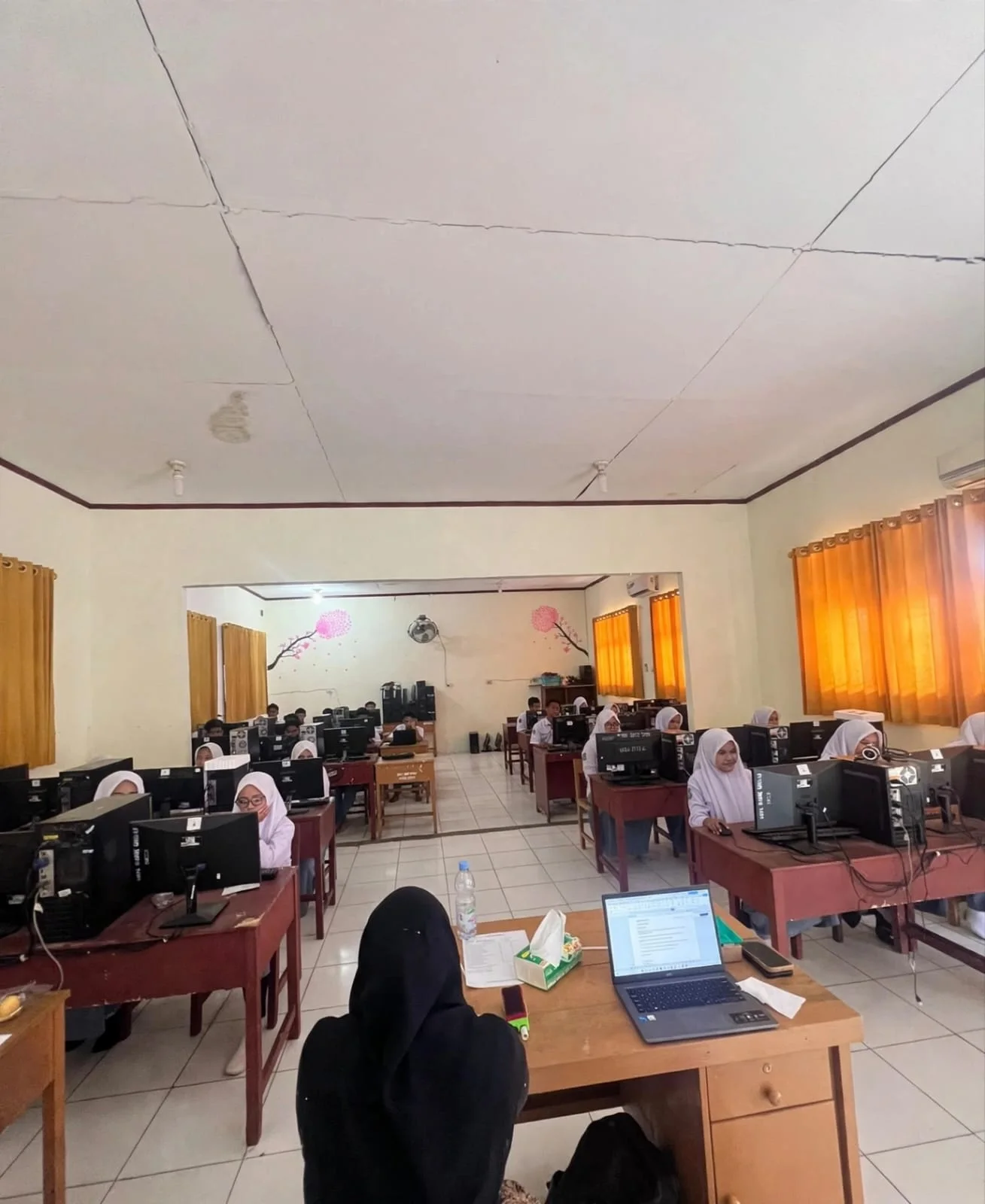
Ki Hadjar Dewantara’s philosophy of education as a process of guiding a child's potential reminds us that every student has unique abilities and developmental paths.
Therefore, learning success should not be determined solely by comparing numerical scores between students.
Education needs to provide every learner with the opportunity to develop according to their potential and needs. Academic grades are one indicator of achievement, but they cannot fully capture an individual's capabilities.
The Pressure of Grades and Its Psychological Impact on Students
The issue of grade orientation can also be viewed from a psychological perspective. When students are constantly pressured to achieve high grades, learning can become a burden.
Some students may fear making mistakes, feel embarrassed to ask questions, or worry about receiving results that do not meet expectations.
As a result, they may prefer to memorize answers rather than attempt to understand concepts deeply. In reality, making mistakes is a natural part of the learning process.
Through mistakes, students can identify their weaknesses, improve their understanding, and discover more effective ways to solve problems.
Furthermore, every student has different characteristics, experiences, and learning needs. Some students grasp material through verbal explanations, while others require concrete examples, hands-on practice, or additional time.
These differences should be considered by teachers when conducting lessons and providing assessments.
If all student abilities are measured using a single method without considering their individual developmental processes, the potential of each learner may not be fully realized.
The Teacher's Role in Building Meaningful Assessment
Teachers play a vital role in restoring the meaning of assessment as an integral part of the learning process.
Assessment should not only be conducted at the end of a lesson through written exams, but should also account for student progress throughout the learning journey.
Teachers can utilize various forms of assessment, ranging from evaluating discussion skills and the ability to express opinions to assessing group projects and practical skills.
This approach can help teachers gain a more comprehensive picture of each student's abilities.
Formative assessment can also be used to identify learning difficulties and provide feedback that helps students improve their understanding.
In this way, assessment does not merely produce a number, but becomes a tool to support the continuous development of student capabilities.
Experience-Based and Skills-Based Learning
Implementing varied learning methods can be a step toward reducing reliance on grade-based assessment.
Project-based learning, group discussions, hands-on practice, and problem-solving provide students with opportunities to demonstrate their abilities from various perspectives.
For example, in Informatics, it is not enough for students to simply memorize the definition of an algorithm or the function of a computer component.
They also need to be given the opportunity to outline problem-solving steps, create simple designs, and practice the material they have learned.
Through such activities, a student's understanding can be observed through both the process and the final result.
Direct learning experiences also provide students with the opportunity to develop creativity, logical thinking, independence, and problem-solving skills.
These competencies play an important role in daily life and serve as a foundation for students to face various future challenges.
Parents and Schools Need to Change Their Perspective
Changing the perspective on assessment is not solely the responsibility of teachers. Parents also play an equally important role.
In daily life, there is still a prevailing assumption that a child who achieves high grades is more successful than one who achieves average results.
In reality, every child has different strengths and potential.
Family support should not be given only when a child achieves an accolade, but also when they are experiencing difficulties in learning.
By doing so, children can understand that the process of growth is more important than simply meeting the expectations of others.
Furthermore, schools need to build a learning environment that provides space for students to ask questions, experiment, and develop their abilities without fear of making mistakes.
Assessment remains necessary as a tool to determine learning achievements. However, it must be used appropriately.
Grades should serve as information for teachers, students, and parents to identify areas that have been mastered and those that still need improvement.
Thus, assessment results can be used as a basis for determining the next steps in learning, rather than merely comparing abilities between students.
Grades Are Not the Only Measure of Educational Success
Ultimately, education must not lose its primary purpose by becoming overly oriented toward numbers.
Grades are indeed important, but they are not the only measure of a student's success. Critical thinking skills, the courage to express opinions, creativity, discipline, and a sense of responsibility are also essential parts of educational outcomes.
It is time for learning activities to be directed not only toward chasing high grades, but also toward providing experiences that are truly meaningful for learners.
Because good education does not just produce students who can answer exam questions, but individuals who can understand problems, make decisions, and apply their knowledge in life.
Grades should be a reflection of the learning journey, not an end goal that obscures the very meaning of education.
About the Author
Diah Nurul Cahyani, A.Md.Kom., is the author who compiled this article as part of a study development project for the Educational Foundations course.
This article discusses the importance of viewing assessment as part of the educational process that is not only oriented toward academic results, but also pays attention to the development of student abilities and potential.
This manuscript was prepared to fulfill a course assignment under the guidance of lecturer Muchamad Arif, S.Pd., M.Pd.







Comments 0
Write a Comment Share your response