

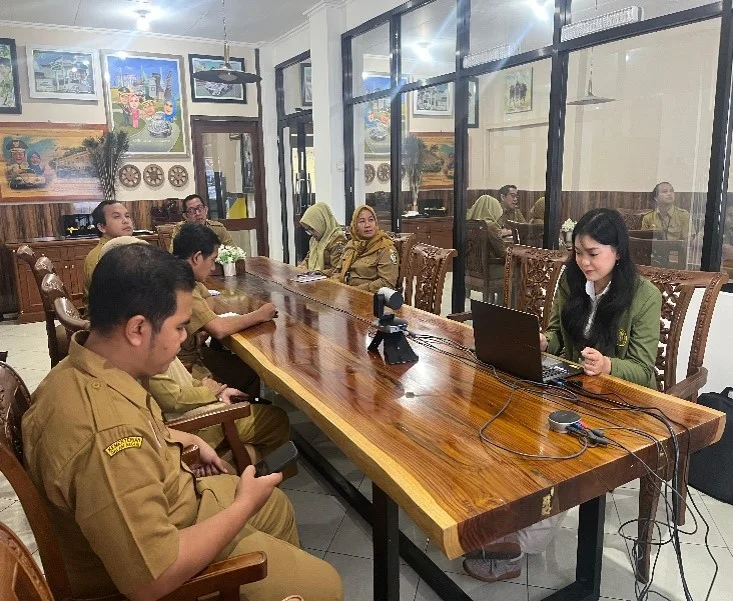
JurnalPost.com - Interning at the East Java Province National Unity and Politics Agency (Bakesbangpol) provides a unique opportunity to gain insight into the various issues prioritized by the regional government. One such avenue is the coordination meeting held every Monday with Bakesbangpol offices from regencies and cities across East Java. This activity serves as a platform for sharing information, monitoring situational developments, and coordinating efforts to anticipate regional challenges.
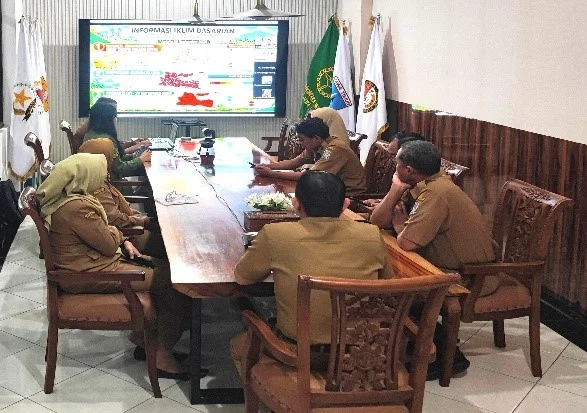
On Monday, 5 October 2026, the coordination meeting was conducted via Zoom from 09.00 to 10.20 WIB. During the session, I served as an operator, assisting with participant attendance, recording the proceedings, and drafting reports for the Head of the East Java Bakesbangpol. This involvement allowed me to understand firsthand how information from various regencies and cities is gathered and addressed through inter-agency coordination.
A key topic of discussion was the prolonged dry season and its impact on food security in East Java. According to the data presented, most regions in East Java are experiencing a 'No Rain Day' (HTH) status categorized as extreme drought, lasting more than 60 days. Areas potentially affected by drought include Bojonegoro, Lamongan, Bangkalan, Sampang, Sumenep, Pamekasan, Pacitan, and Trenggalek.
This situation is concerning as East Java is a major contributor to national food production. Although the East Java Food Security Index (IKP) showed an increase from 71.04 in 2024 to 72.67 in 2025 and 73.43 in 2026, the sustainability of agricultural production must be maintained. Efforts include land optimization, water resource management, the use of agricultural technology, and adjusting planting patterns to match climate conditions.
The dry season also correlates with an increased risk of forest and land fires (karhutla). During the meeting, several areas of concern were highlighted, including the Bromo Tengger Semeru National Park in the Malang, Lumajang, and Probolinggo regions; the Ijen Crater area in Banyuwangi and Bondowoso; and the Mount Arjuno-Welirang area in Pasuruan Regency.
The impact of these fires threatens not only environmental conservation but also disrupts community activities. For instance, fires in the Mount Bromo area led to the suspension of tourism activities on 12 September 2026, only reopening on 19 September 2026. A total of 3,062 tourists were affected by this policy. Meanwhile, in the Ijen Crater area, fires have threatened plantation activities and potentially disrupted local coffee production.
During the meeting, Bakesbangpol representatives from affected regions were asked to provide updates on their fire management efforts. This underscores the importance of field monitoring and ongoing coordination to ensure that local developments are identified and addressed promptly.
Beyond environmental and economic impacts, the dry season is also a public health concern. The coordination meeting addressed the rise in Acute Respiratory Infection (ARI) cases in East Java. The average number of cases, which previously reached 117 thousand cases per month in 2025, has increased to 147 thousand cases per month in 2026. In August 2026, the number of cases reached 211 thousand.
Surabaya recorded the highest number of cases, followed by Sidoarjo, Lamongan, Malang Regency, and Malang City. Air quality, which may deteriorate due to pollution and smoke from fires, is a significant concern. The public is advised to wear masks, practice proper cough etiquette, maintain their immune systems, and avoid exposure to cigarette smoke and pollution.
These three topics demonstrate that regional issues are interconnected. The dry season affects not only water availability and food production but also increases fire risks and impacts public health. Therefore, monitoring and coordination involving various stakeholders within their respective authorities are essential.
For me, participating in these coordination meetings has been more than just an administrative task. Through managing the meetings, recording discussions, and drafting reports, I have gained an understanding of how regional information is collected and presented to leadership. This experience has also highlighted the importance of precision in managing information, especially when it concerns situational developments and potential community issues.
This activity has been a valuable part of my internship at the East Java Province Bakesbangpol. Through these routine Monday coordination meetings, I have learned that maintaining regional stability and preparedness is not only about responding to problems as they arise but also about monitoring, information exchange, and early anticipatory measures.






Comments 0
Write a Comment Share your response