

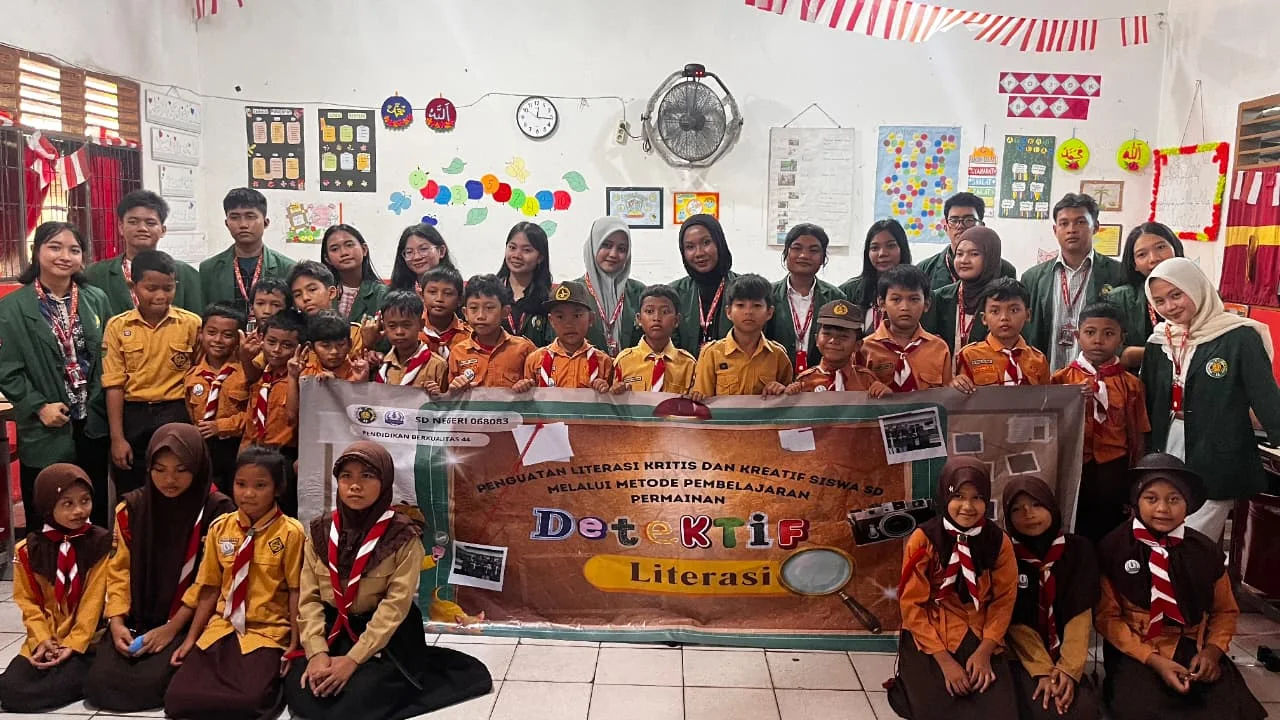
JurnalPost.com - Students from the University of Sumatera Utara (USU) Group 44 for the Quality Education Compulsory Curriculum Course (MKWK) project conducted a workshop titled “Strengthening Critical and Creative Literacy for Elementary Students Through the ‘Literacy Detective’ Game-Based Learning Method” at SD Negeri 068083, located on Jl. Kemuning, Tanjung Rejo, Medan Sunggal District, Medan City, North Sumatra. This activity aims to assess the critical and creative literacy skills of students at SDN 068083 and enhance their understanding of the importance of these skills in their daily lives.
This socialization program was carried out by 20 students from various majors and faculties at the University of Sumatera Utara, guided by Dr. Gustianingsih, M.Hum. as the facilitator lecturer, and mentored by Cahyu Maheska Nainggolan.
In implementing the Literacy Detective project, the students conducted a series of educational and interactive activities, beginning with a presentation on the importance of critical and creative literacy for elementary school children. The session continued with the Literacy Detective game, which encouraged students to think critically, analyze information, and develop creativity through various assigned missions. Additionally, a Q&A session was held to measure and reinforce the students' understanding of the material. The atmosphere was further enlivened by ice-breaking sessions and interactive activities that encouraged active student participation.
Through this series of activities, we hope to foster student awareness regarding the importance of critical and creative literacy skills, especially amidst the rapid development of the era and the overwhelming flow of information that requires them to be more sensitive, careful, and capable of processing information effectively.
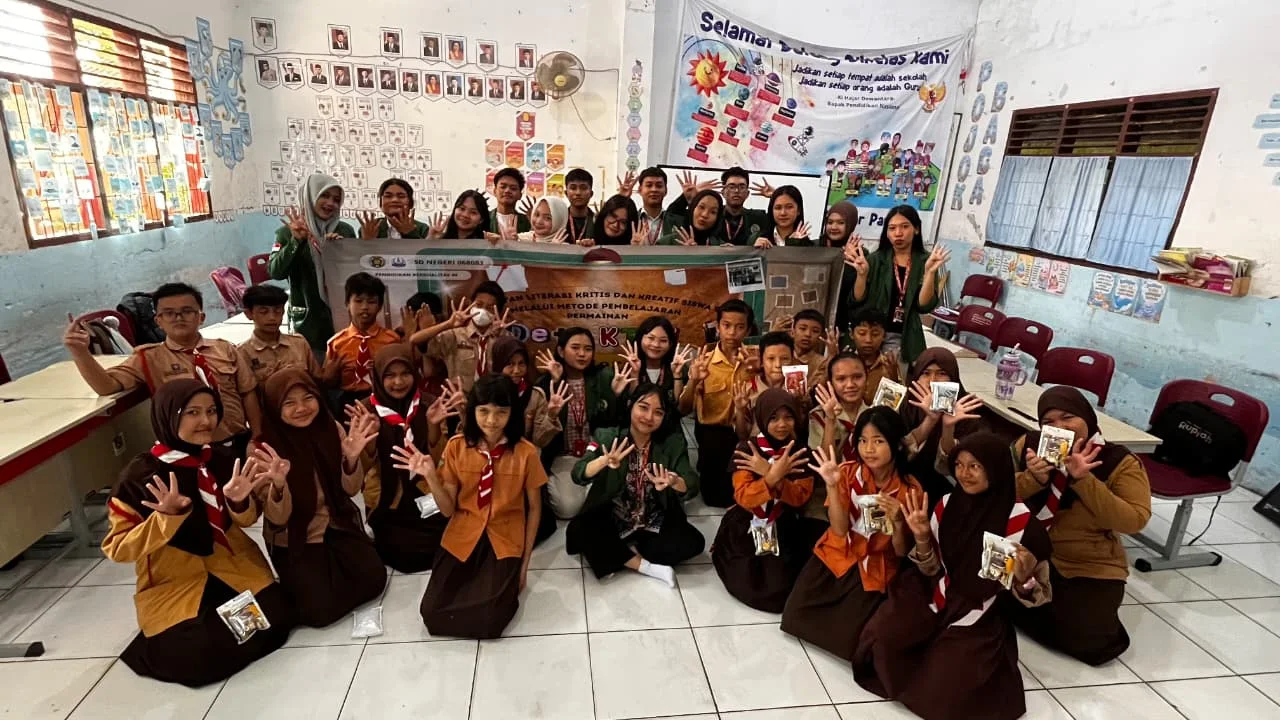
The Literacy Detective activity was met with enthusiasm by the students of SDN 068083. Throughout the event, the students were actively attentive to the material and engaged in the various activities provided by the university students. The learning environment was designed to be relaxed and enjoyable to ensure students could easily grasp the concepts. The university students also invited the children to participate directly through games and simple discussions, ensuring the activity focused not only on delivering material but also on providing opportunities for students to practice and develop their skills.
In executing the activity, the students collaborated with SDN 068083 as the primary partner. The school provided full support by offering classroom space and necessary equipment such as projectors, teacher assistance, and the opportunity for university students to present the material. Meanwhile, academic support was provided by the USU Institute for Innovation and Academic Competitiveness (LIDA), as well as the relevant faculties and study programs, which facilitated the students in planning a project beneficial to the wider community.
The group leader, 44, Gilbert Geraldho H., stated that the Literacy Detective activity is a form of student contribution toward improving the quality of education, particularly in fostering a culture of literacy from an early age. “We hope this activity is not only a fun learning experience for the students but also helps them develop critical and creative thinking skills. Through this simple activity, we want to show that learning and understanding literacy can be done in an engaging and interactive way,” he expressed.
During the activity, students were invited to participate in the Literacy Detective game, which consisted of two main missions. In the first mission, students were asked to read a simple text about a social issue, then answer questions based on the content and identify implied messages. This activity aimed to train students to not only read but also understand and reflect on the information they receive. In the second mission, students were given an unfinished story and asked to complete it according to their own ideas and creativity. Students were free to express their thoughts through writing or drawing. Both missions provided opportunities for students to learn how to process information while developing their imagination.
One of the students who participated in the activity revealed that the Literacy Detective program was enjoyable because they could learn through games with their friends. Beyond listening to the material, students were given the chance to answer questions, discuss, and create stories based on their own ideas. This made the learning process more interesting as students were directly involved in every game provided by the university students.
Through the implementation of the Literacy Detective activity at SDN 068083, Group 44 of the Quality Education MKWK at the University of Sumatera Utara hopes to contribute to improving the critical and creative literacy skills of elementary school students. This activity serves as an effort by students to introduce the importance of literacy from an early age in a way that is more engaging and accessible to students. Through the delivery of material, games, discussions, and various missions, students are encouraged not only to read and receive information but also to understand the content, analyze problems, find implied messages, and have the courage to express their opinions and develop their own ideas.
The implementation of this activity also demonstrates that learning does not always have to be conducted through lectures but can be packaged through games that involve students directly. With a fun learning atmosphere, students have the opportunity to be more active, courageous in trying new things, and capable of developing their thinking skills. In addition to providing new experiences for the students, this activity serves as a valuable experience for the university students in applying the knowledge they have learned and interacting directly with the school environment and the community. It is hoped that such activities will not stop at the socialization phase but will also encourage students to make a habit of reading, thinking critically before accepting information, and continuously developing creativity in their daily lives. Thus, strengthening critical and creative literacy can be a step toward supporting the creation of a younger generation that is more active, creative, and capable of facing various challenges in the modern era.
This article is a publication of the Quality Education Compulsory Curriculum Course (MKWK) project by Group 44, with Facilitator Lecturer Dr. Gustianingsih, M.Hum. and Activity Mentor Cahyu Maheska Nainggolan.






Comments 0
Write a Comment Share your response