

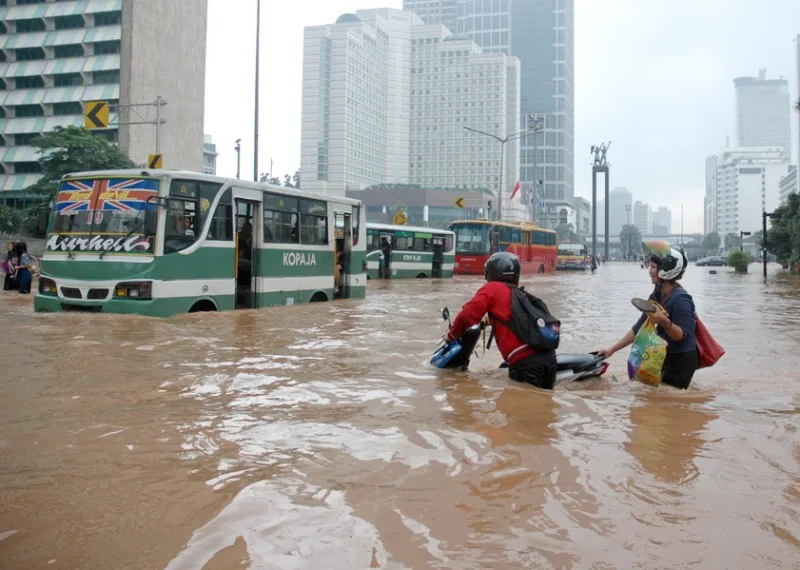
JurnalPost.com - Floods are often viewed merely as a matter of physical damage. Homes are submerged, public facilities are ruined, and community activities come to a halt. However, there is another impact that often escapes attention: the fear and anxiety that linger long after the disaster. For young people growing up amidst the threat of disasters and climate change, flooding is not just about losing a home today, but also about the uncertainty of the future they will face.
This condition is related to the term eco-anxiety, an emotional response characterized by worry, fear, and psychological distress linked to the threat of environmental and climate change. This feeling is not merely a fear of an ongoing disaster, but also anxiety regarding the possibility of environmental conditions worsening in the future. In the context of flooding, anxiety can arise when individuals repeatedly face the threat of losing their homes, environmental degradation, and the uncertainty of whether similar conditions will recur.
Indonesia and the Philippines are two examples of countries highly vulnerable to climate-related disasters, including floods. In Indonesia, UNICEF, through its report "Taking Climate Action for Children in Indonesia," explains that climate-related disasters affected more than 50,000 schools during the period of 2009–2018. Floods also have the potential to damage water sources, sanitation facilities, and the living environments of children. This condition demonstrates that the impacts of climate change are not only related to physical safety but also to the sustainability of education and the well-being of young people.
A similar situation is found in the Philippines. The intensity of typhoons and monsoon rains can trigger floods and landslides, resulting in damage to homes, schools, and public service facilities. UNICEF Philippines, in 2025, explained that schools used as evacuation centers or those damaged by disasters can hinder the learning process and educational recovery. This means that flooding is not just an environmental issue, but also a threat to the continuity of education and the sense of security of the younger generation.
The anxiety of the younger generation regarding environmental change is not merely an assumption. A study by Reyes et al. in 2023 involving 433 Filipino Gen Z respondents aged 18–26 years found a correlation between climate change anxiety and mental health. This climate change anxiety accounted for 13.5 percent of the variation in the respondents' mental health index. These findings show that climate change issues are linked to the psychological well-being of the younger generation.
Meanwhile, a study by Kaligis et al. in 2025 involving 1,108 respondents aged 10–24 years in Indonesia found a positive correlation between eco-anxiety and general anxiety levels. The study also found that the adolescent age group and being a student were factors associated with higher levels of eco-anxiety. Although both studies did not specifically measure anxiety resulting from flood experiences, the results provide an overview that concern over the environmental crisis is a psychological issue that requires attention.
This issue cannot be blamed solely on the individual. Crandon et al. in 2022 placed climate anxiety in children and adolescents within a social-ecological perspective. This means that anxiety should not be understood only through individual characteristics, but must also consider the influence of family, friends, schools, communities, the government, and the broader social environment.
Therefore, flood management should not focus solely on infrastructure restoration and physical damage. The government also needs to pay attention to the psychological condition of the community, especially young people living amidst the threat of recurring disasters. While houses can be rebuilt and public facilities repaired, the lost sense of security may not necessarily recover in the same timeframe.
The government can begin integrating mental health and psychosocial support into disaster management, especially in areas with high flood risk. Schools and communities also need to become safe spaces for children and adolescents to express their concerns about environmental conditions. This approach is important because eco-anxiety does not emerge in a vacuum but is related to the environmental and social conditions faced by the younger generation.
In addition to providing support after a disaster, the government also needs to involve young people in efforts to face climate change and disaster risk reduction. The younger generation should not just be a group that receives impacts and policies. They also need to be given space to voice their concerns, be involved in decision-making processes, and be part of efforts to build a safer environment.
Eco-anxiety should not be viewed as a sign of weakness in the younger generation. Concern for the environment actually shows that they are aware of the threats they face and are questioning what kind of future they will live in. However, this awareness should not leave them to face their fears alone.
When floods continue to recur and environmental uncertainty grows, rebuilding homes and public facilities is not enough. The government and all parties involved in disaster management also need to ensure that the younger generation has space to recover, be heard, and be involved in preparing for a safer future. Because when floods take away homes and security today, what is also at stake is how young people view their future.
References
Crandon, T. J., Scott, J. G., Charlson, F. J., Thomas, H. J., & Newnham, E. A. (2022). A social–ecological perspective on climate anxiety in children and adolescents. Nature Climate Change, 12, 123–131. https://doi.org/10.1038/s41558-021-01251-y
Kaligis, F., Pramatirta, B., Darmawan, M. D., & Adnyani, C. I. A. D. (2025). Eco-anxiety in Indonesian adolescents and young adults and its influencing factors. International Journal of Adolescence and Youth, 30(1), 2553733. https://doi.org/10.1080/02673843.2025.2553733
Reyes, M. E. S., Carmen, B. P. B., Luminarias, M. E. P., Mangulabnan, S. A. N. B., & Ogunbode, C. A. (2023). An investigation into the relationship between climate change anxiety and mental health among Gen Z Filipinos. Current Psychology, 42(9), 7448–7456. https://doi.org/10.1007/s12144-021-02099-3
UNICEF Philippines. (2025, July 23). Children’s vulnerability to climate crisis. UNICEF Philippines.
UNICEF. (2025). Taking climate action for children in Indonesia. UNICEF Indonesia.


Comments 0
Write a Comment Share your response