

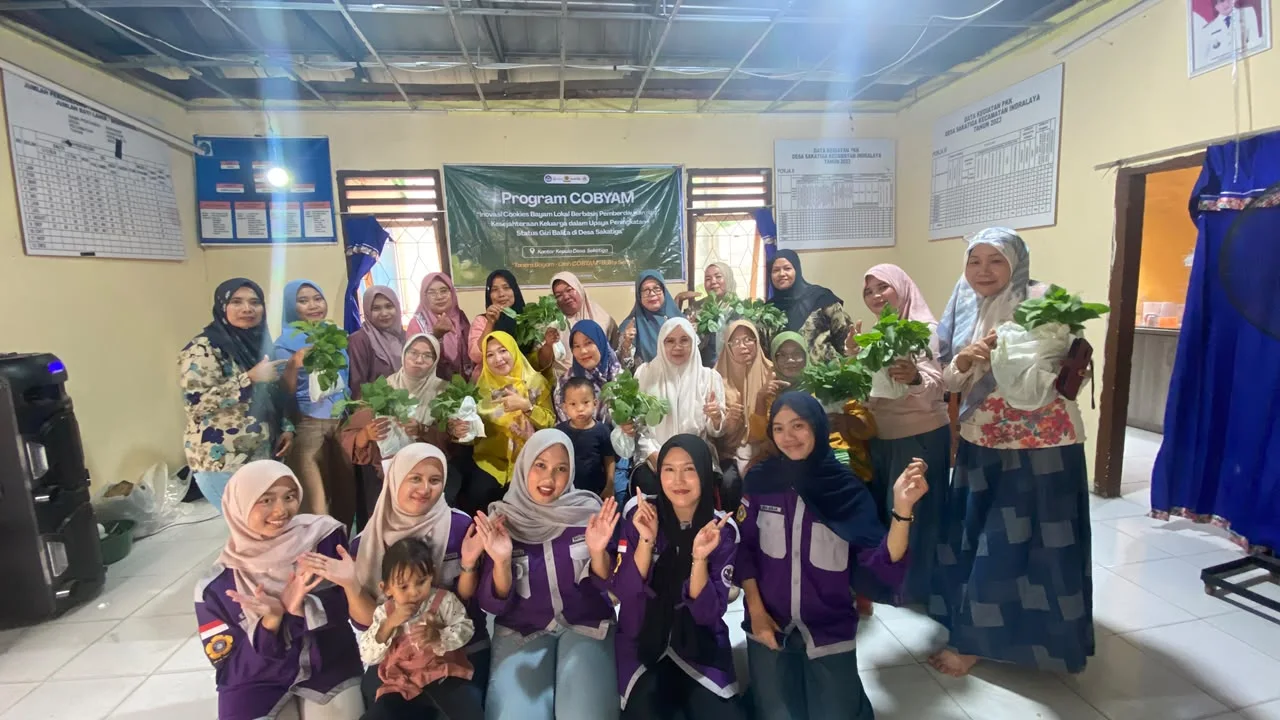
Sakatiga, Ogan Ilir, JurnalPost.com — Students from Sriwijaya University, through the Sriwijaya Young Innovators Program (SYIP) 2026 Community Empowerment (PM) scheme, developed Local Spinach Cookies (COBYAM) in collaboration with the PKK women of Sakatiga Village, Indralaya District, Ogan Ilir Regency, from July to October 2026. This activity highlights the potential of local spinach by introducing it as an alternative snack for toddlers, while simultaneously enhancing the community's knowledge and skills in processing local food ingredients.
The program originated from survey results and coordination with the village government and the head of the PKK on 13 July 2026. The team learned that local spinach cultivation, which had previously been practiced by the community, ceased following floods several years ago. Meanwhile, the use of spinach in food processing remained limited. These conditions formed the basis for the team to reintroduce the potential of spinach through planting and training on how to process it into cookies.
Following the initial survey, the team began developing the product through several rounds oftrial and errorto achieve the appropriate COBYAM formulation. This process also involved consultations with nutrition faculty members, including calculating estimated nutritional content based on the ingredients used. This preparatory stage ensured that the product introduced to the community had undergone prior development and planning.
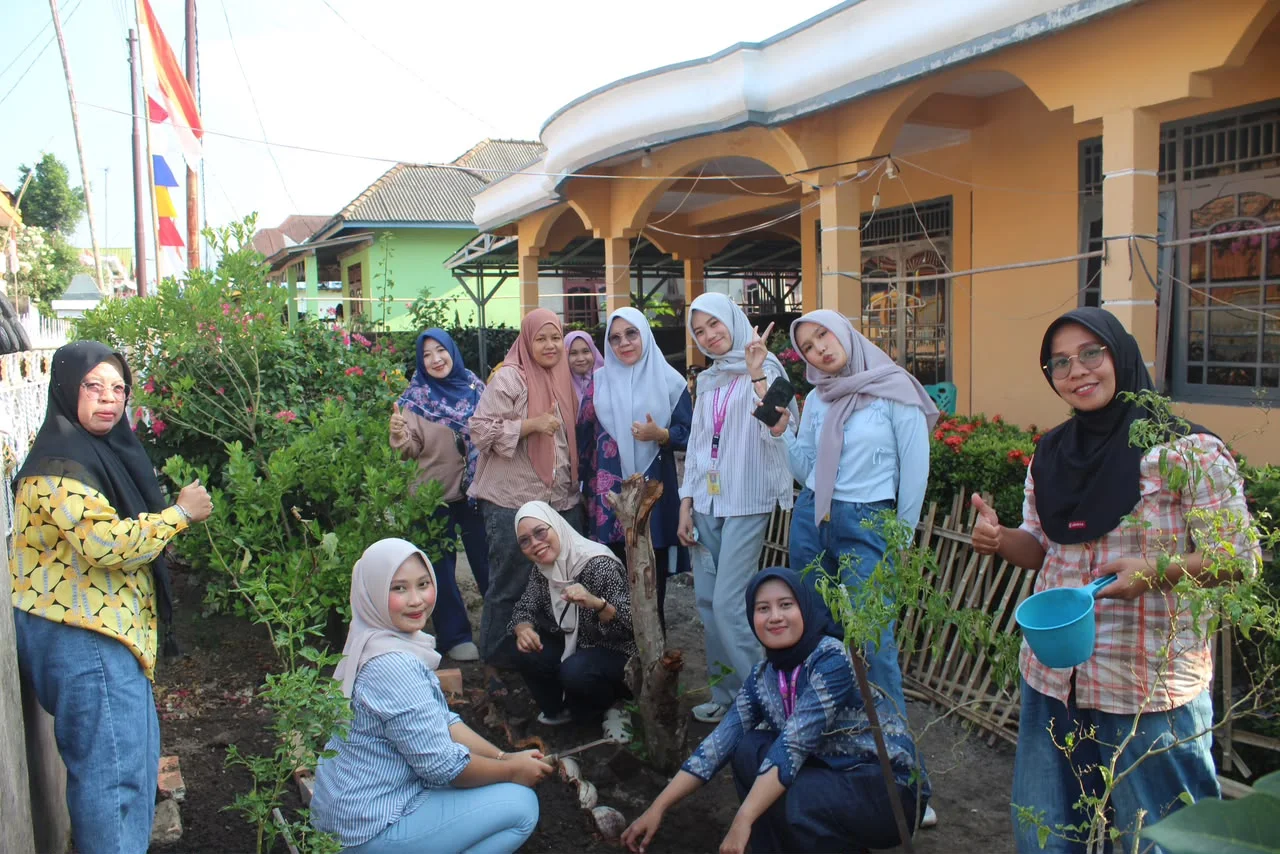
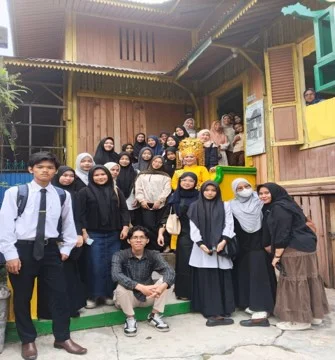
The series of activities began with a COBYAM socialization session on 8 August 2026, attended by 17 PKK members. Participants received education on the potential of spinach as a local food source and its application in food processing. The session included discussions, a Q&A, and pre- and post-tests. On the same day, the team and the PKK members planted spinach in the yard of one of the PKK members.
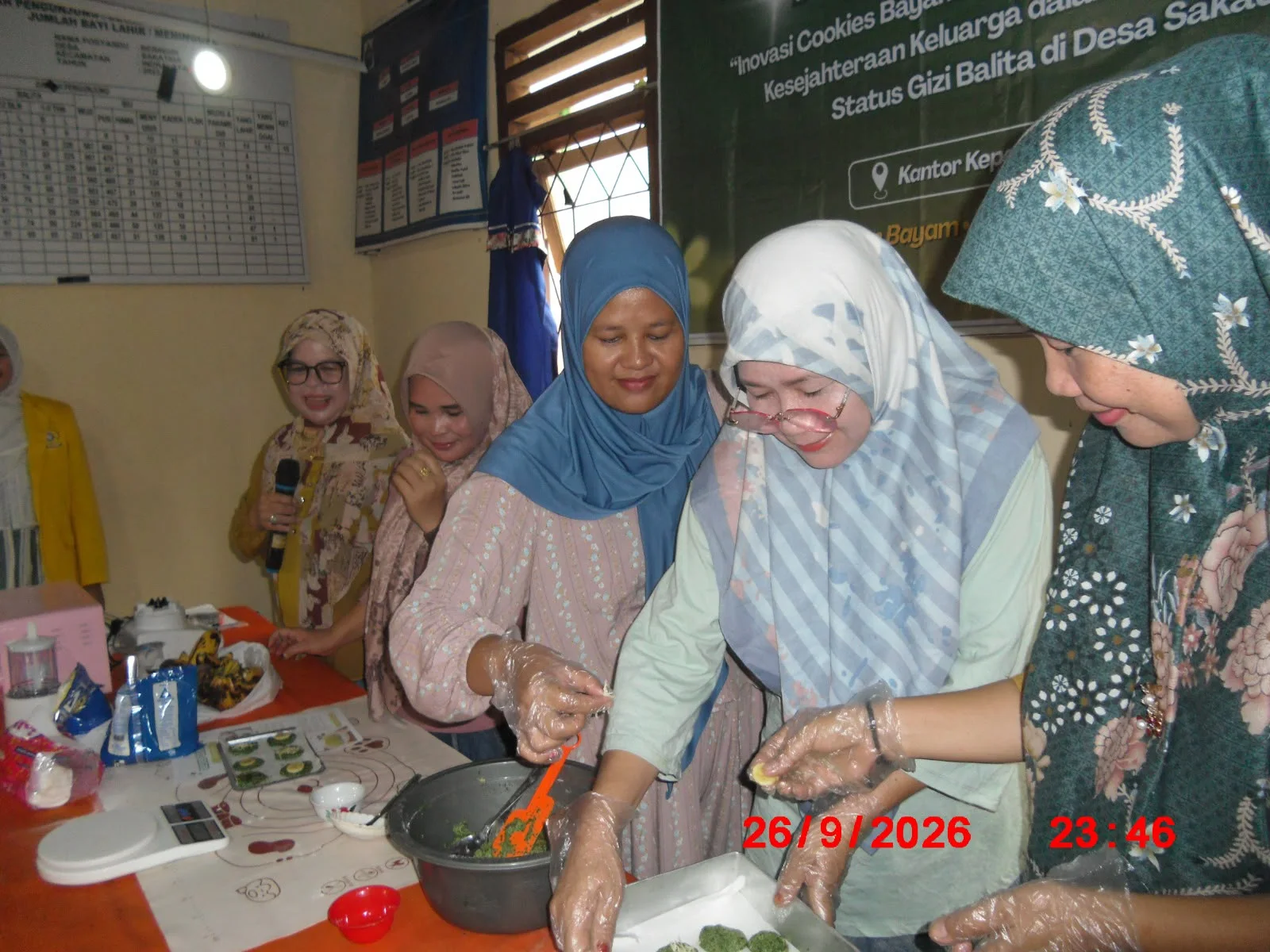
Subsequently, the COBYAM production training was held on 16 September 2026 and attended by 18 PKK members. Participants practiced the stages of spinach processing, ingredient preparation and measurement, dough mixing, cookie shaping, and baking. The team also introduced the use of ovens and non-stick pans as alternative cooking tools so that the recipe could be replicated using equipment available at home. On 27 September 2026, these skills were passed on by the PKK members to Posyandu cadres through a joint practice session. Thus, the activity not only focused on initial training but also encouraged the sharing of skills with other community groups.
Evaluation of the socialization showed that the average participant score increased from 82.35 in the pre-test to 90.59 in the post-test. Additionally, the team observed the responses of eight toddlers who tasted COBYAM on 27 September 2026. All observed toddlers were willing to accept, try, and eat the cookies provided. However, their responses regarding the taste and desire to consume them again varied.
The program also featured a 'COBYAM Home Challenge' to encourage PKK members to try making the cookies independently at home. Communication and monitoring were conducted via a WhatsApp group. During the training, participants were directly involved in the processing. During the implementation, participants noted that COBYAM tasted delicious, crunchy, and unique, providing new ideas for processing spinach, which was previously mostly used only for clear vegetable soup or chips.
The Head of the SYIP-PM Implementation Team at Sriwijaya University, Rizki Alfira Amelia, stated that this innovation was introduced to present an alternative food processing method that is more appealing to children.
“So far, spinach is often processed in the usual way. Through COBYAM, we want mothers to get new ideas for serving vegetables as nutritious snacks that are attractive and liked by toddlers,” she said.
The Head of the Sakatiga Village PKK, Ibu Amna, also mentioned that the training was beneficial because the COBYAM recipe could be practiced using available household appliances.
“The taste turned out to be delicious and unique. At first, we thought spinach could only be made into soup or chips, but after being turned into cookies, children will definitely be more enthusiastic about eating vegetables,” she said.
Through the SYIP 2026 program, the team hopes that the skills for making COBYAM can continue to be applied independently by the community and developed through PKK and Posyandu activities. The collaboration between students, PKK members, Posyandu cadres, and the village government is expected to strengthen the utilization of local food potential in Sakatiga Village. COBYAM is introduced as an alternative snack for toddlers, not as a product proven to prevent or reduce stunting.



Comments 0
Write a Comment Share your response