

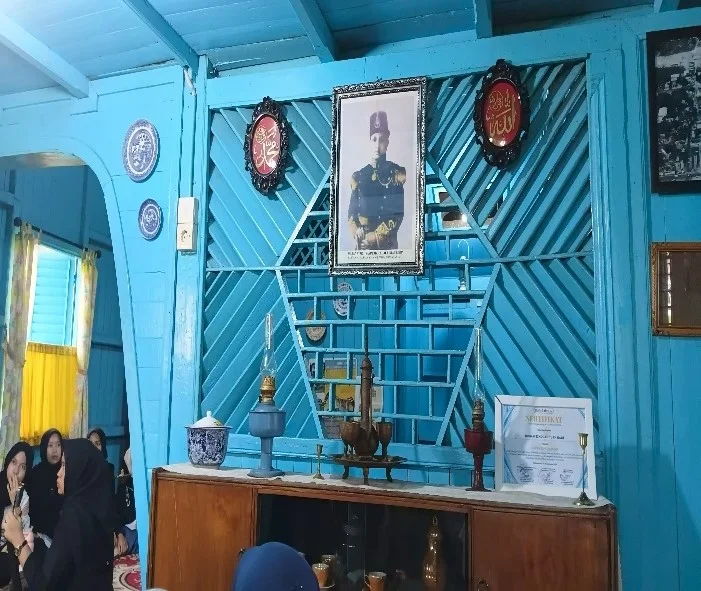
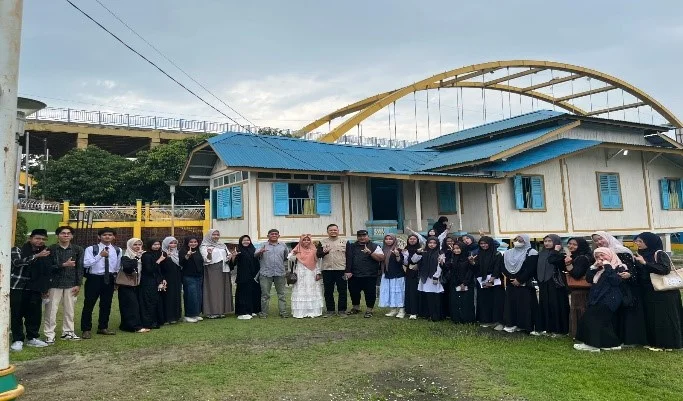
PEKANBARU, JurnalPost.com – A total of 30 students from the English Education Study Program at the Faculty of Teacher Training and Education (FKIP), Islamic University of Riau (UIR), visited the Tuan Kadi Guest House in Pekanbaru on Friday (20/11/2026).
The visit was part of the coursework for News Writing and Reporting taught by Fitri Wulandari, S.Pd., M.Pd. During the visit, students learned about Malay history and culture, including a unique tradition for women in the past centered around a room known as the 'kamar pingit' (seclusion room).
The 'kamar pingit' is one of the most intriguing features of the Tuan Kadi Guest House, located on the second floor. Syarifuddin, a tour guide and observer of Malay literature and culture from Lancang Kuning, explained that the room was once used by women to discreetly observe potential suitors during the 'taaruf' (introduction) process before marriage.
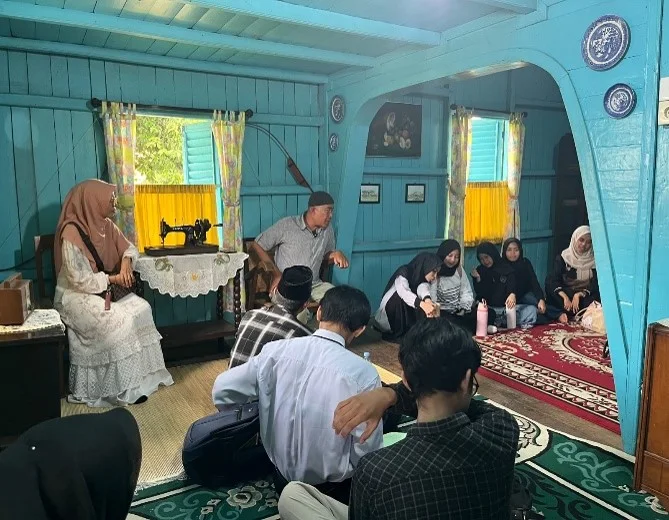
Through this room, women could view their prospective husbands without having to meet them face-to-face. This tradition reflects the social life of the Malay community in the past, particularly regarding the process of getting to know a future partner before marriage.
Beyond the story of the 'kamar pingit', the house is historically linked to the figure of Tuan Kadi. The title 'Tuan Kadi' was bestowed by the Sultan upon an individual serving as a judge. He also held an important position as an advisor to the Sultan of Siak.
The Tuan Kadi Guest House is also connected to the history of Pekanbaru's development. According to Syarifuddin, Pekanbaru originally consisted of only four regions. Sultan Muhammad Ali Abdul Jalil is also recognized as a founding figure of Pekanbaru.
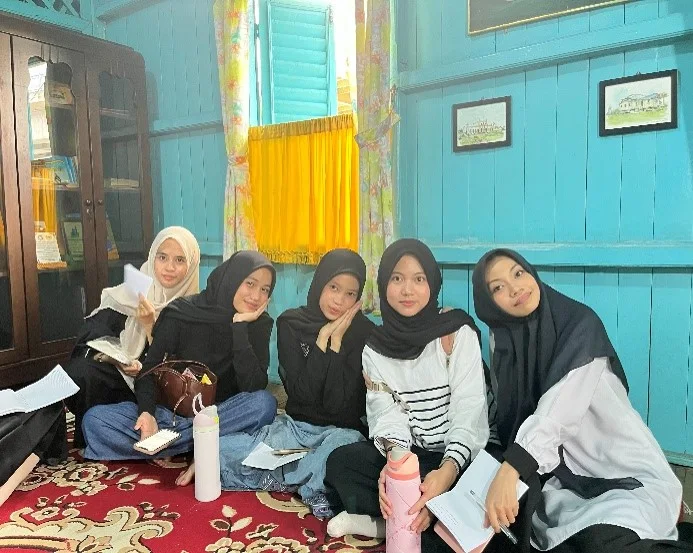
In terms of architecture, the house features distinct Malay characteristics, such as the 'limas pancung' roof and vertically arranged wooden walls. Syarifuddin noted that the vertical arrangement of the wood required more material, reflecting the economic status of the owner, who was a wealthy merchant.
Another unique feature is the five steps at the front of the house, which symbolize the five pillars of Islam. There is also a water basin that was once used for washing feet and performing ablution as a gesture of respect toward guests.
To preserve its historical value, the Tuan Kadi Guest House receives attention from the Department of Culture and Tourism and relevant agencies dedicated to cultural heritage conservation. Maintenance is carried out periodically, particularly on wooden sections that have begun to decay.
Syarifuddin also explained that the house itself is an original structure, while some of the furniture and items on display are replicas provided with support from Bank Indonesia.
Through this visit, students not only gained information about the history of the building but also understood the importance of maintaining and preserving local cultural heritage.
Syarifuddin encouraged the younger generation to continue studying and promoting Malay culture, including by integrating local culture into classroom learning activities.
The existence of the Tuan Kadi Guest House reminds visitors that history is not only stored in old buildings but also in the traditions and daily lives of people in the past.
The story of the 'kamar pingit' serves as an example of how the house preserves the unique traces of Malay women's lives as they navigated traditions before marriage.






Comments 0
Write a Comment Share your response