

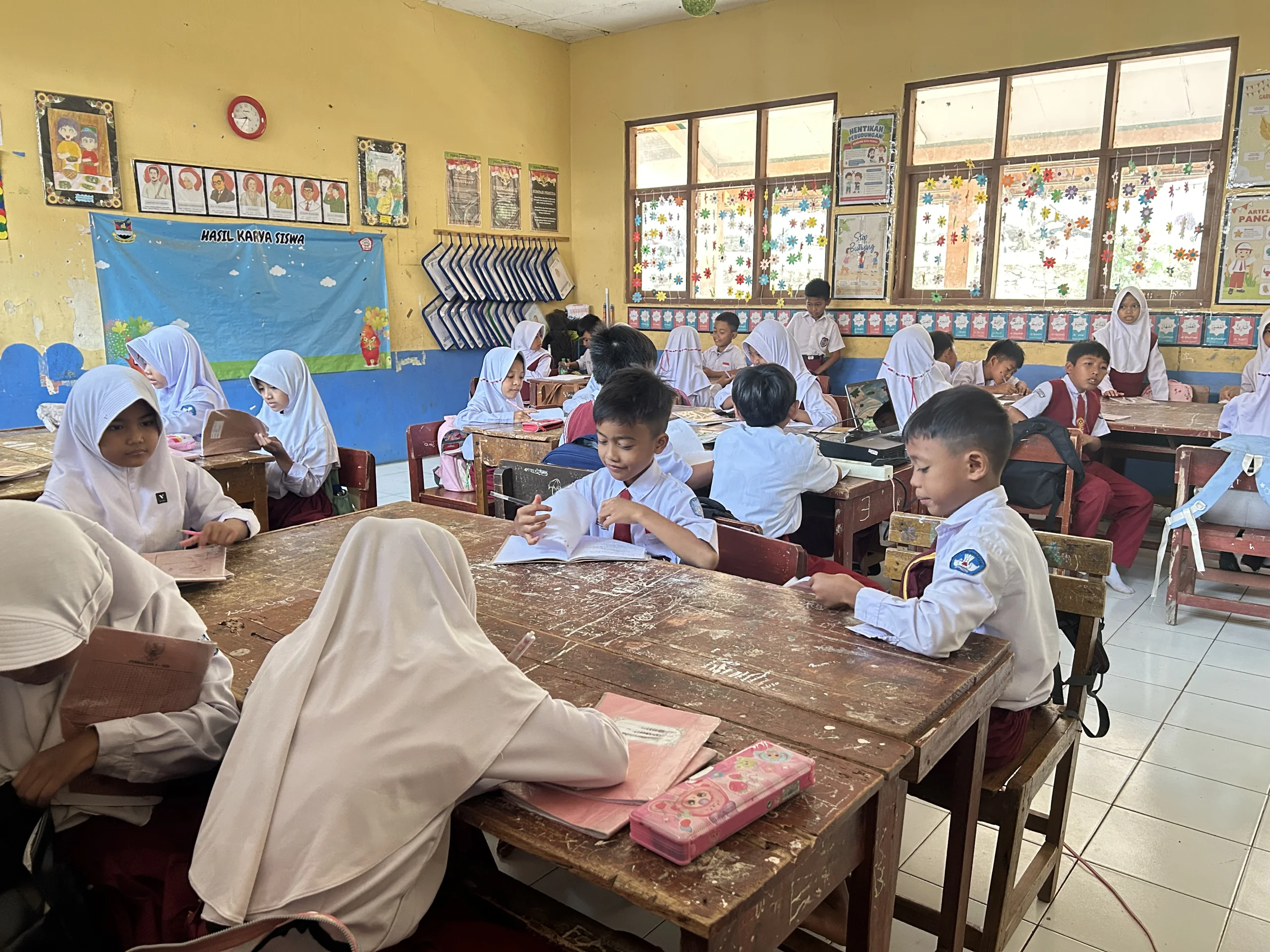
“Wilujeung sumping, Teteh Mahasiswa!”
This Sundanese greeting, meaning “Welcome, Miss Student,” marked the beginning of an unforgettable experience as I entered the fourth-grade classroom at SDN Ciptaharja. The children welcomed me with warmth, already aware that a university student would be observing their learning activities that day.
I arrived with a simple goal: to witness firsthand how the learning process unfolds in an elementary school. However, from that first greeting, I began to realize that the classroom holds far more stories than just reading, writing, and arithmetic.
Behind the blackboard and the textbooks, there is a teacher who strives every day to understand children with varying abilities, characters, and needs.
Some students grasp explanations quickly. Others need more time. Some only understand a lesson once the teacher connects it to something familiar in their daily lives.
These differences are part of the daily routine for Neti Fitriyani, S.Pd., affectionately known as Bu Neti, the fourth-grade homeroom teacher at SDN Ciptaharja.
Through my interview with her, I learned another side of the teaching profession. Teaching is not just about preparing material and presenting it in front of the class. More than that, it requires patience, creativity, and the ability to understand each child, which is tested day after day.
One Classroom, Diverse Ways of Learning
For Bu Neti, there is no single teaching method that works for every student.
Each child arrives with different abilities. Some can immediately grasp an explanation, while others require repetition or more intensive guidance.
This reality forces her to adapt her teaching approach so that every student has the opportunity to understand the material.
Before starting a lesson, Bu Neti conducts an initial diagnostic assessment to identify the students' capabilities. The results inform her learning activities, including how she divides groups based on ability or creates heterogeneous groupings.
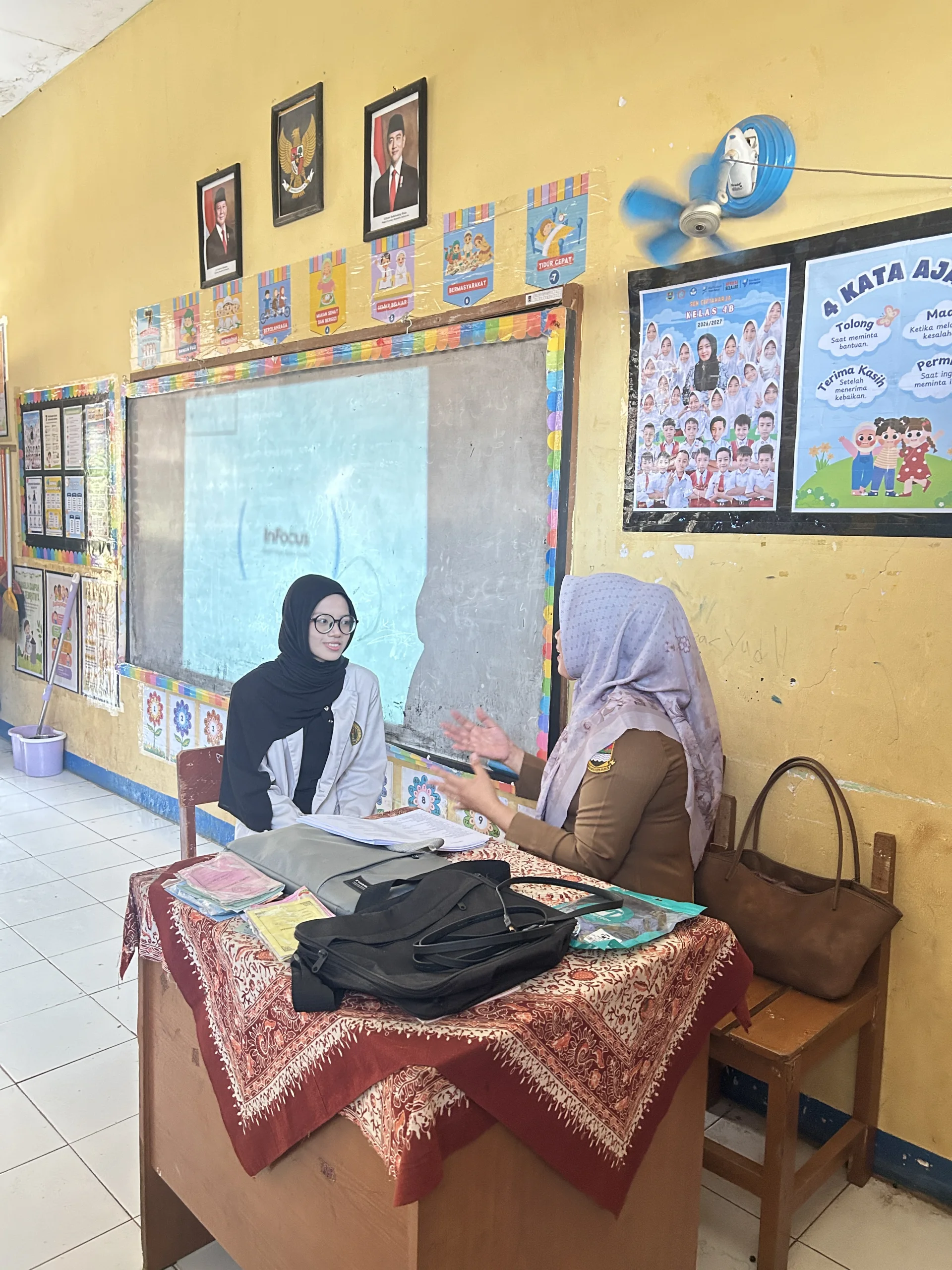
The material delivered is aligned with the Learning Outcomes (CP) and Learning Objectives (TP), along with the necessary tools and media.
However, the plans prepared cannot always be applied exactly as intended.
While lesson planning is prepared through annual and semester devices, the students' needs in the classroom often demand adjustments, including in the preparation of Student Worksheets (LKPD) and assessments.
Bu Neti also strives to implement a deep learning approach, deep learning, which encourages students to be more involved in the learning process and to understand the material meaningfully.
From her explanation, I realized that being a teacher is not just about following a pre-made lesson plan. A teacher must also be able to read the situation, recognize student difficulties, and determine the right steps to keep the learning process moving.
Because not everything that happens in a classroom can be predicted.
Some Are Brave at Math, but Shy to Recite Poetry
One interesting story shared by Bu Neti relates to the students' confidence in participating in lessons.
According to her, some children are more confident when asked to come to the front of the class to solve math problems. However, that same courage does not necessarily appear when they are asked to recite poetry or traditional rhymes.
To me, this story reveals an interesting side of the world of children. A student who appears confident in one activity may not feel the same way when facing another.
This is where a teacher's sensitivity is needed.
Bu Neti uses various teaching methods, ranging from discussions and Q&A sessions to assignments. Her goal is not only to help students understand the lesson but also to train their courage to express opinions.
She also tries to make the material feel relevant to the children's lives.
When teaching Indonesian, for example, Bu Neti uses example sentences related to daily activities. Occasionally, she incorporates the students' names into those examples.
This seemingly simple method makes the learning feel more personal. The children are no longer just facing strings of sentences in a book, but are finding themselves within the material being studied.
Although most students are quite active in asking and answering questions, the learning process does not always run smoothly.
There are times when students lose focus. There are also those who still struggle to understand the explanation even after the material has been presented.
When the learning atmosphere begins to feel stagnant, Bu Neti tries to restore the students' enthusiasm through ice breakingactivities.
If there are still those who do not understand the material, she provides further explanation.
Bu Neti makes it a habit to ask if the children understand. When the answer is no, she tries to find another way to make the material easier to grasp.
From this habit, I discovered something important. Children need a space to say they do not understand, without feeling ashamed or afraid of being considered left behind.
When Teacher Creativity Meets Limitations
Amidst technological developments, Bu Neti continues to seek ways to ensure learning activities do not feel monotonous.
Textbooks remain the primary learning resource. However, she also utilizes additional references, including artificial intelligence or artificial intelligence (AI), to help find alternative ways to present material.
Occasionally, quizzes are used to make students more interested in following the lesson.
The desire to provide a more engaging learning experience is quite strong. One way is through the use of digital television as a learning medium.
Unfortunately, the available facilities do not always support these needs.
The location of the classroom, which is quite far from the school office, is one of the obstacles in using learning media. The available equipment must also be used in turns.
The same applies to the projector, which cannot always be used whenever it is needed.
These limitations show that a teacher's creativity must sometimes walk hand-in-hand with less-than-ideal facility conditions.
Technology indeed offers many new possibilities in education. However, not all schools have the same opportunity to utilize it optimally.
In such circumstances, teachers are still required to present learning that is engaging, easy to understand, and capable of reaching all students.
To me, this issue shows that the quality of education is not determined solely by a teacher's ability. Support in terms of facilities and infrastructure also plays an important role in creating a better learning experience.
Patience That Is Not Always Visible
When discussing the challenges of teaching, Bu Neti returned to the topic of varying student abilities.
For her, dealing with children with diverse levels of understanding is a job that requires immense patience.
In one class, a teacher must ensure that students who grasp the lesson quickly remain challenged. At the same time, those who experience difficulties also need attention and guidance.
Both must happen simultaneously.
Not to mention the challenge of maintaining student motivation, adapting learning to the times, and dealing with limited facilities.
All of this is part of a teacher's work that is not always visible to others.
Often, the success of learning is judged by assignment results, exam scores, or a student's ability to answer questions. Yet, behind these achievements lies a long process that cannot always be measured by numbers.
There are explanations that must be repeated. There is courage that needs to be built slowly. There are also children who need extra attention to remain confident that they are capable of learning.
Bu Neti also reminded me of the importance of parental involvement in education.
According to her, the learning process cannot be fully burdened on the school. Children need family support so that the knowledge, habits, and values learned in class can continue to develop at home.
Education, therefore, is a collaborative effort between teachers, parents, and the environment in which the child grows.
Lessons I Actually Learned from the Classroom
I came to SDN Ciptaharja to conduct an observation. The initial goal was to understand the implementation of the curriculum, learning strategies, and the various challenges faced by teachers.
However, the experience provided a broader understanding.
I realized that a teacher's success should not only be seen from how much material was successfully delivered in one session.
Success can also be seen when a child starts to have the courage to raise their hand to ask a question, tries to answer even when unsure, or finally understands something that previously felt difficult.
Small things like that may not always be recorded in learning reports, but they have significant meaning for a child's development.
From Bu Neti, I learned that teaching requires the ability to understand humans, not just master the material.
From the fourth-grade children at SDN Ciptaharja, I learned that every student has their own way of growing.
The greeting “Wilujeung sumping, Teteh Mahasiswa” that I received at the beginning of my visit now has a deeper meaning. That welcome was not just a form of hospitality, but also an entry point for me to see the world of education from a different perspective.
In that classroom, I understood that education is not about making all children move at the same speed.
Some step faster. Some need more time. Others must occasionally stop before trying again.
A teacher's task is not to force all children to arrive at the same time, but to ensure that no one loses the opportunity to keep learning.
Behind the blackboard at SDN Ciptaharja, that struggle takes place through simple things: the willingness to listen, to repeat explanations, to provide encouragement, and to try to understand every child.
Because sometimes, the most valuable lesson in school is not just what is written on the blackboard, but the care of a teacher who does not give up when their student does not yet understand something.
And perhaps, that is the true meaning of education: not just making children smart, but ensuring every child feels understood, valued, and has the opportunity to develop.
Author Identity and Observation
Author: Adiba Zahratul Uyun
Observation Location: SDN Ciptaharja
Interviewee: Neti Fitriyani, S.Pd.
Position: Fourth-Grade Homeroom Teacher
Source: Results of direct observation and interviews.





Comments 0
Write a Comment Share your response