

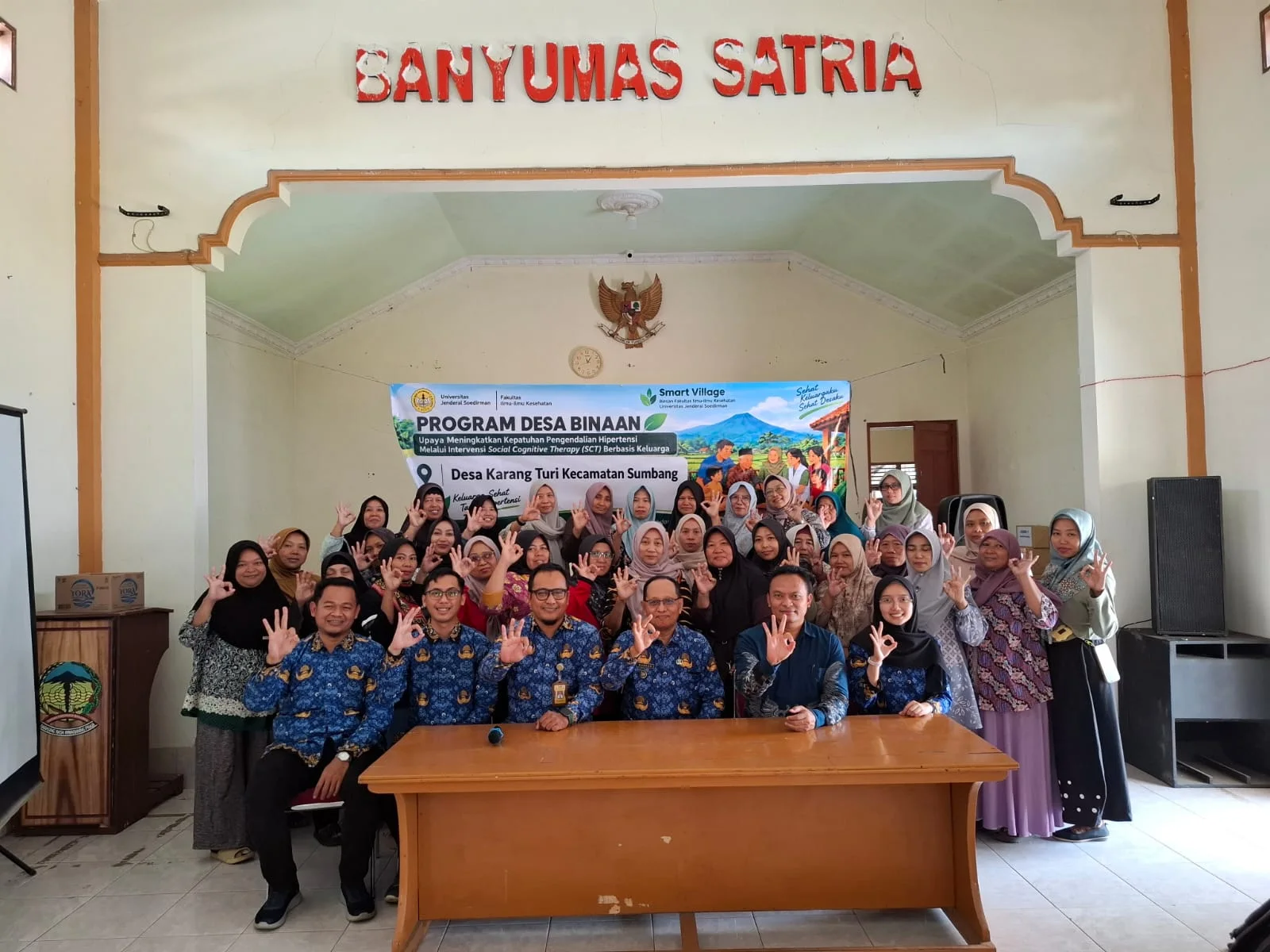
JurnalPost.com A community service team from Universitas Jenderal Soedirman conducted family-based behavioral change training in Karangturi Village, Kembaran District, Banyumas Regency, in September 2026. The activity involved 30 heads or members of households who were prepared to become 'family champions'—individuals capable of supporting and reinforcing hypertension control behaviors at home. This training is part of a service program focused on improving adherence to hypertension management through a family-based Social Cognitive Therapy approach.
The initiative was launched because hypertension management cannot rely solely on visits to healthcare facilities. At the household level, successful blood pressure control is heavily influenced by habits such as regular blood pressure monitoring, physical activity, low-salt diet management, medication adherence for those diagnosed, and family support. These habits are also linked to the accessibility of healthcare services and the social norms within the community. Therefore, families are positioned not just as companions, but as the primary environment that can help ensure consistent behavioral change.
During the training, participants learned the principles of behavioral change through the Social Cognitive Therapy approach, which is based on Social Cognitive Theory. The material was delivered operationally through self-efficacy reinforcement, realistic goal setting, behavioral monitoring, modeling, positive reinforcement, obstacle resolution, and progress evaluation. Participants were also introduced to the role of the 'family champion' in helping family members set behavioral targets, reminding them to check blood pressure and take medication, supporting physical activity, and building healthier eating habits. This approach was packaged into the SCT-Family 7M framework: Recognizing problems, Setting targets, Modeling behavior, Monitoring, Motivating, Managing obstacles, and Measuring progress.
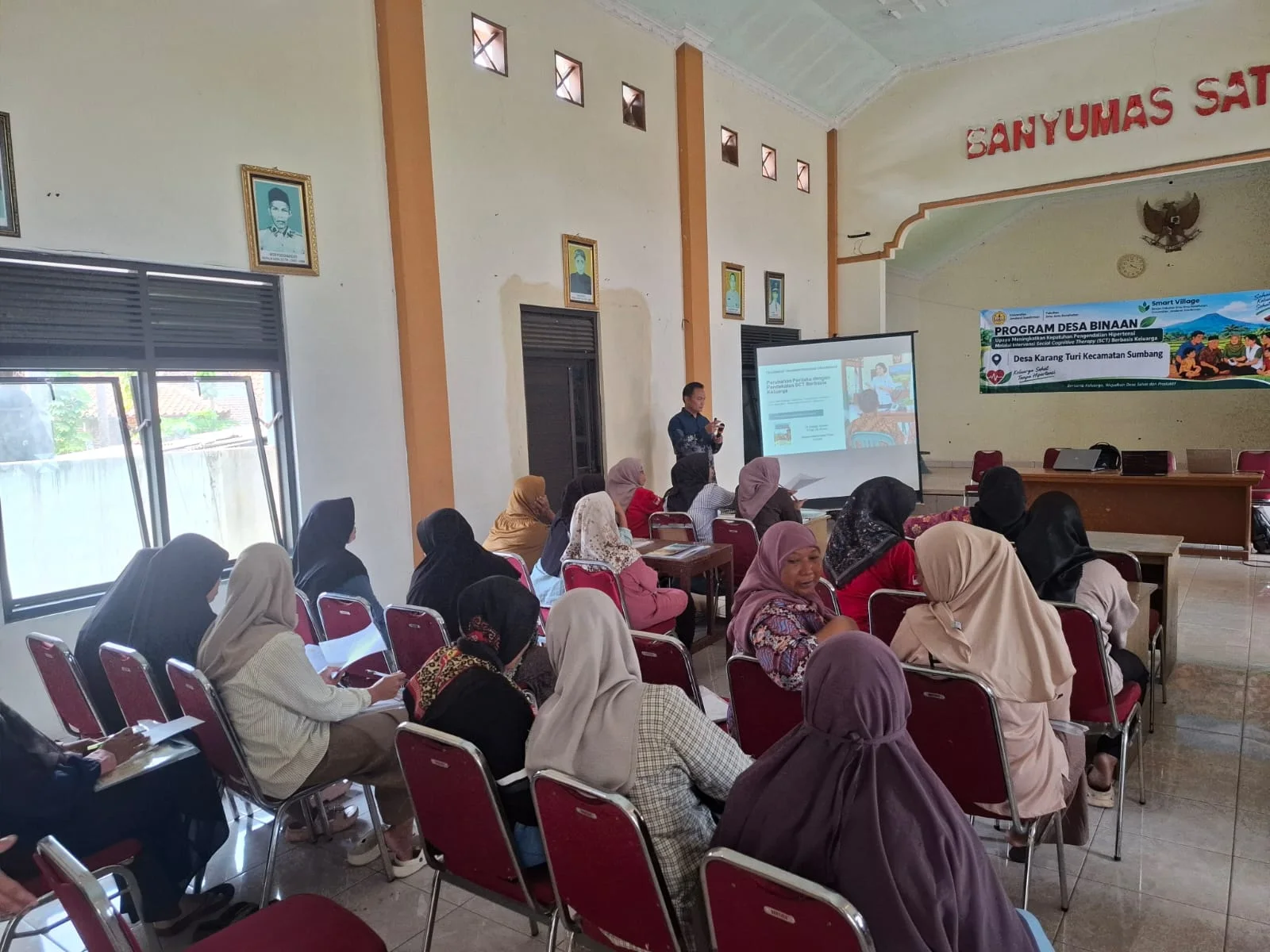
Evaluation of the activity showed an increase in participant understanding. Of the 30 participants who attended the training, the average pretest score of 67 increased to 85 in the posttest. This represents an increase of 18 points, or approximately 26.9 percent compared to the initial score. These results indicate that after the training, participants had a better understanding of SCT-based behavioral change and the role of the family in supporting hypertension management. The service team emphasized that this achievement is an indicator of initial family readiness. The impact on behavioral consistency and blood pressure will still require monitoring during the follow-up phase at home.
"Our goal is not just to increase family knowledge, but to help families become drivers of change at home. Family champions are expected to be able to assist family members in checking blood pressure, managing diets, staying active, and consistently adhering to medication," said Endang Triyanto, head of the service team. According to him, family involvement is crucial because most decisions and habits regarding hypertension control occur in daily life, not just when someone visits a healthcare facility.
Following the training, the program will continue with the implementation of a family action plan, home-based behavioral monitoring, home visits, and periodic reinforcement for families. The team has also prepared an SCT-Family 7M appropriate technology manual, along with logs for blood pressure monitoring, medication adherence, physical activity, low-salt diets, and family champion evaluation tools. Through these stages, the program is expected to establish a simple, practical, and replicable model for family-based hypertension control that can be applied to other community empowerment activities.





Comments 0
Write a Comment Share your response