

JurnalPost.com – Have we ever walked through a neighborhood without truly knowing the stories hidden within it? Perhaps we only see rows of houses, small alleys, or old buildings that have become part of our daily scenery. Yet, places that appear ordinary can hold the long journey of a nation's history.
Getting to know Indonesia does not always have to start with reading history books or visiting museums. Sometimes, it is enough to pause for a moment and recognize the environment we have been passing by all this time.
A Neighborhood Holding Historical Footprints
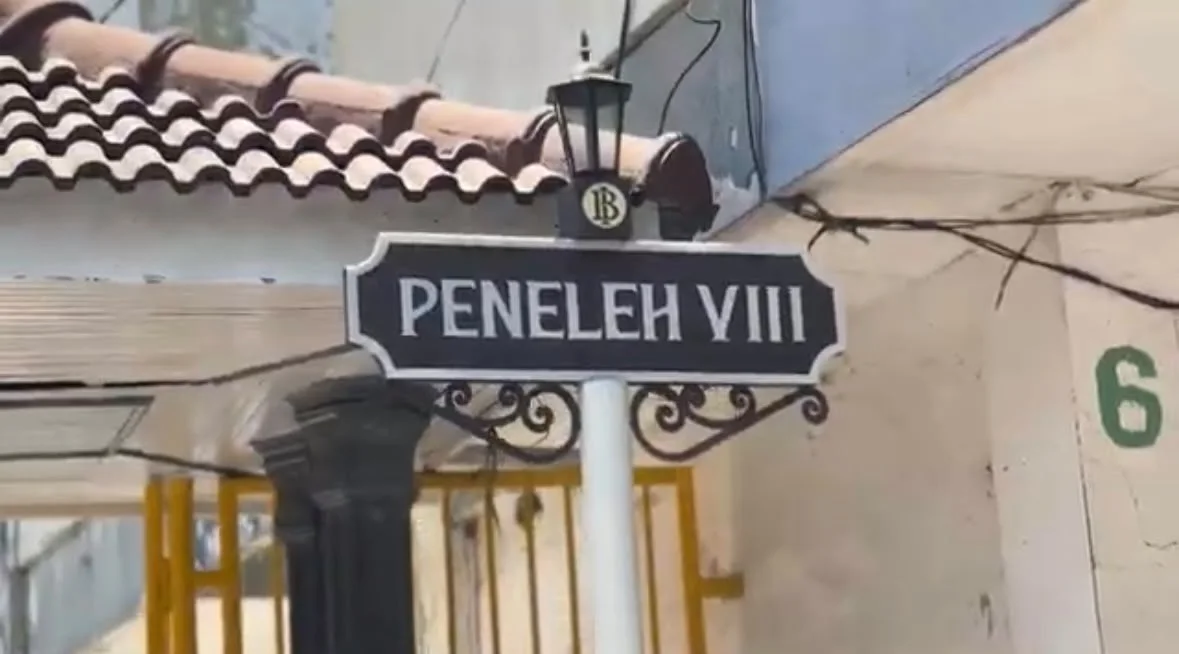
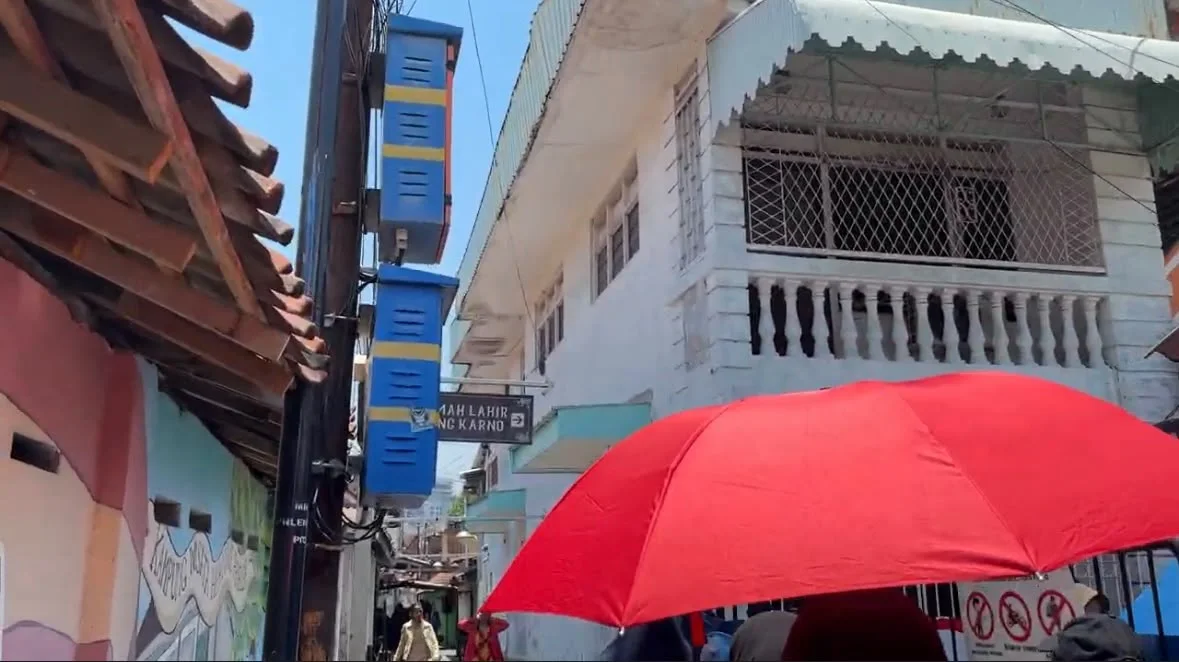
This image can be found in Kampung Peneleh, Surabaya. This neighborhood is not just a residential area, but an environment that holds various historical relics and stories.
During a field visit on 22 October 2026, one of the places that caught attention was the house of H.O.S. Tjokroaminoto, where Sukarno once lived as a young man and which served as a space for exchanging ideas among movement figures.
In the same area, there are also the Jobong Well, the Langgar Dukur Kayu, and a Dutch cemetery complex. The existence of these sites shows that history is not only stored in books but also becomes part of the life of a neighborhood.
What is interesting about Kampung Peneleh is not only the abundance of historical relics but also the community's concern for maintaining their environment. Residents still strive to look after the neighborhood, including repainting walls to keep them looking well-maintained.
However, based on an interview with one of the managers of the Peneleh Tourism Village, concerns have arisen regarding the declining interest of the younger generation. Youth activities, including those of the Karang Taruna (youth organization), are said to be dwindling.
The issue of youth involvement in cultural heritage management is also a concern in the study by Zhang et al. (2024b), which emphasizes the importance of understanding the motivations, positions, and spaces for participation of the younger generation in cultural heritage management.
The sustainability of historical heritage, therefore, depends not only on the community's efforts to care for its relics but also on the interest of the younger generation to know and appreciate the stories behind them.
Technology as a Bridge to Knowing History
One reason young people might be less interested in studying history is the assumption that history is synonymous with rote memorization and boring theories.
In fact, getting to know history can be done in more enjoyable ways, such as exploring historical areas, listening to residents' stories, or creating educational content on social media.
Soemiratmadja and Fatmawati (2024) discuss the potential of TikTok as a means of preserving cultural heritage information for Generation Z. In line with this, Zhang et al. (2024a) developed a framework for digital participation of the younger generation in cultural heritage management.
Thus, technology that is close to the lives of the younger generation can be utilized to introduce Indonesian history and culture to a wider audience.
Caring for History, Preparing for the Future
Concern for history is also an important part of welcoming Golden Indonesia 2045. The progress of a nation is not only measured by economic and technological development but also by a generation that understands its identity and appreciates its nation's journey.
Research on the Old Lasem City area and the Sendang Beji Cultural Heritage Site shows that community involvement is an important part of cultural heritage preservation efforts (Pamungkas et al., 2022; Pasaribu et al., 2022).
The younger generation needs to be able to keep up with the times without losing their connection to their own history and culture. That way, technology does not just become a means to get to know foreign cultures, but also a space to introduce Indonesia's wealth to the world.
Starting from What is Close
There is no need to wait for a big opportunity to participate in protecting history. Simple steps can start by finding out the story behind the historical buildings we pass by often or inviting friends to explore historical areas.
Even a visit that initially only aims for entertainment and taking photos can be an opportunity to learn. Interest in history does not always grow from something serious. Sometimes, it all starts from simple curiosity.
In the end, history is not something far from our lives. It is present in the middle of the neighborhood, attached to buildings, growing in the stories of the community, and becoming part of the environment that sometimes escapes our attention.
We just need to take the time to get to know it. Because, before talking about protecting the nation's history, it is better to start by recognizing the history that exists in our own surroundings.
References
Pamungkas, S. T. F., Cahyono, H., & Utami, P. S. (2022). Analysis of community participation in the preservation of the Sendang Beji Cultural Heritage Site, Karangpatihan Village, Ponorogo Regency. Pro Patria: Journal of Education, Citizenship, Law, Social, and Politics, 5(1), 42–54. DOI: 10.47080/propatria.v5i1.1443.
Pasaribu, Y. A., Malagina, A., Purwestri, N., Latief, F., & Kurniawan, H. (2022). Community participation of Old Lasem City in the determination of national-level cultural heritage areas. AMERTA, 40(1), 57–72. DOI: 10.55981/amt.2022.20.
Soemiratmadja, L. H., & Fatmawati, E. (2024). Effectiveness of using TikTok as an effort to preserve cultural heritage archives in the Generation Z era. Information Science and Library, 4(2), 59–73. DOI: 10.26623/jisl.v4i2.8333.
Zhang, Y., Ikiz Kaya, D., & van Wesemael, P. J. V. (2024a). An assessment framework for digital participatory practices engaging youth in cultural heritage management. Journal of Cultural Heritage, 70, 408–421. DOI: 10.1016/j.culher.2024.10.014.
Zhang, Y., Ikiz Kaya, D., van Wesemael, P., & Colenbrander, B. J. (2024b). Youth participation in cultural heritage management: A conceptual framework. International Journal of Heritage Studies, 30(1), 56–80. DOI: 10.1080/13527258.2023.2275261.


Comments 0
Write a Comment Share your response