

Abstract
Clean and Healthy Living Behavior (PHBS) consists of practices adopted through personal awareness, enabling individuals and families to manage their own health and actively contribute to a healthy environment.
The Community Service Program (KKN) of Group NR 08 aimed to promote PHBS to residents of Sub-RW 07 through visual-based presentations. The material covered personal hygiene, healthy eating, physical activity, adequate rest, environmental cleanliness, daily healthy habits, and strategies to avoid unhealthy behaviors, concluding with a healthy living challenge for self-reflection.
The activity was carried out by four students using interactive lectures, demonstrations, and discussions. This article outlines the theoretical foundation, activity design, and the material presented. The socialization is expected to encourage shifts in knowledge, attitudes, and practices toward sustainable clean and healthy living habits.
Keywords: PHBS, health socialization, health promotion, KKN, healthy behavior, environmental cleanliness.
1. Introduction
Health is a fundamental asset for individuals to learn, work, and contribute to society. Maintaining health does not rely solely on medical services but is heavily influenced by daily behaviors, such as personal hygiene, food choices, physical activity, rest, and environmental care. These behaviors are encapsulated in the concept of Clean and Healthy Living Behavior (PHBS).
In Indonesia, PHBS is a primary health promotion strategy regulated under Minister of Health Regulation Number 2269/MENKES/PER/XI/2011 regarding Guidelines for Fostering Clean and Healthy Living Behavior. PHBS development is implemented across various settings, including households, educational institutions, workplaces, public spaces, and health facilities.
The household and residential environment are critical targets because these are where fundamental habits are first formed.
Simple habits, such as washing hands, choosing clean and diverse foods, or disposing of trash properly, are often overlooked in daily life.
This is not necessarily due to a lack of concern, but rather because the benefits of these habits are not always understood, they have not become routine, or they lack reinforcement from the surrounding environment.
Therefore, education delivered in simple language with engaging visuals and examples relevant to residents' lives is a highly effective approach.
The Community Service Program (KKN) serves as a platform for students to apply their knowledge and contribute directly to the community. The KKN NR 08 group, serving in Sub-RW 07 with four student members, chose PHBS socialization as a core program due to its fundamental nature, ease of implementation, and benefits for all age groups.
Based on this, this article aims to:
Explain the theoretical foundation of PHBS.
Present the design and implementation of PHBS socialization in Sub-RW 07.
Discuss the material presented and its implications for changing resident behavior.
2. Literature Review
2.1 The Concept of PHBS
PHBS refers to all health-related behaviors practiced out of awareness, allowing family members or the community to manage their own health and play an active role in achieving public health (Ministry of Health RI, 2011).
Thus, PHBS emphasizes active individual participation rather than mere compliance with recommendations. Healthy behaviors rooted in awareness tend to be more sustainable than those performed under pressure.
2.2 Health Behavior and Health Promotion
According to Notoatmodjo (2012), health behavior is influenced by knowledge, attitudes, and practices. Knowledge serves as the initial foundation, attitudes indicate readiness to act, and practice is the concrete manifestation of behavior.
Health promotion seeks to influence these three aspects through education, empowerment, and environmental support.
The PHBS socialization in this KKN program focuses on strengthening knowledge and shaping attitudes, with the hope that residents will be encouraged to put them into practice.
2.3 Personal Hygiene and Handwashing
Washing hands with soap and running water is one of the simplest actions to reduce disease transmission, particularly digestive and respiratory illnesses.
The World Health Organization (WHO, 2009) identifies hand hygiene as a fundamental step in infection prevention. In addition to handwashing, bathing regularly and changing out of dirty or sweaty clothes helps maintain skin hygiene and physical comfort.
2.4 Balanced Nutrition and Hydration
The Balanced Nutrition Guidelines (Ministry of Health RI, 2014) recommend consuming a diverse diet—staple foods, side dishes, vegetables, and fruits—in amounts appropriate to individual needs, accompanied by clean living habits, physical activity, and weight monitoring.
Adequate fluid intake is also essential to support daily bodily functions. Food safety, ensuring food is clean and safe to consume, is an inseparable requirement for good nutrition.
2.5 Physical Activity and Rest
Regular physical activity is linked to physical fitness and a reduced risk of various non-communicable diseases.
WHO (2020) recommends that children and adolescents engage in moderate to vigorous physical activity for at least 60 minutes per day, while adults are advised to perform moderate-intensity physical activity for 150 to 300 minutes per week.
On the other hand, sufficient and regular sleep allows the body to recover energy and maintain alertness and concentration.
2.6 Environmental Cleanliness
An individual's health cannot be separated from their environment. Proper waste management, clean homes and study spaces, and plant care contribute to a comfortable environment and reduce breeding grounds for disease vectors.
The Community-Based Total Sanitation (STBM) approach in Minister of Health Regulation Number 3 of 2014 emphasizes that changes in hygienic and sanitary behavior must be built through community empowerment.
3. Implementation Method
3.1 Location, Time, and Target
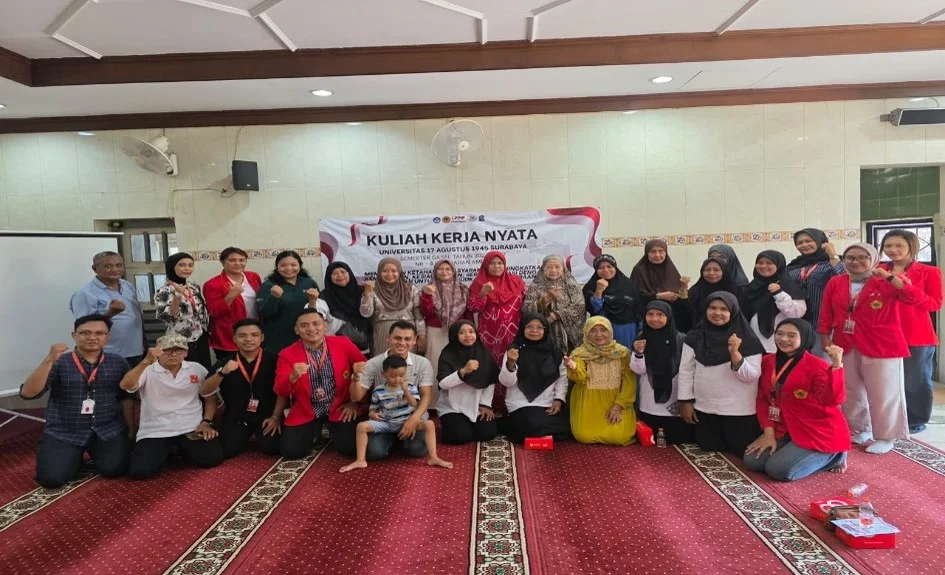
The activity was held in Sub-RW 07 on Saturday, 7 November 2026, at the RW 07 prayer room. The target audience consisted of 20 parents and KSH cadres.
3.2 Implementers
The activity was managed by four students from KKN NR Group 08 assigned to Sub-RW 07. Roles included moderator, speaker, discussion facilitator, and documentation.
3.3 Activity Stages
The activity was conducted in three stages:
Preparation. Development of materials and presentation media titled Clean and Healthy Living Behavior, coordination with RW and KSH officials, and scheduling.
Implementation. The speaker delivered the material through an interactive lecture supported by visual presentations, followed by simple demonstrations, a Q&A session, and a Healthy Living Challenge session that encouraged participants to evaluate their habits for that day.
Evaluation. Observation of participant enthusiasm and engagement, as well as the distribution of questionnaires to assess participant understanding.
3.4 Media and Materials
The primary medium was a digital presentation consisting of ten slides, designed with simple language, illustrations, and numbered steps to ensure accessibility for participants of all ages.
4. Results and Discussion
4.1 Overview of Socialization Material
The material was divided into seven complementary topics, ranging from personal hygiene to daily routine habits. A summary of the material is presented in Table 1.
| No. | Topic | Core Message |
|---|---|---|
| 1 | Maintaining personal hygiene | Bathing regularly, washing hands, and changing into clean clothes. |
| 2 | Healthy food | Diverse, clean, safe food and adequate water intake. |
| 3 | Physical activity | Walking, playing, exercising, and stretching. |
| 4 | Adequate rest | Sleeping regularly and avoiding staying up late. |
| 5 | Clean environment | Disposing of trash properly, cleaning rooms, caring for plants, and reducing waste. |
| 6 | Daily healthy habits | Sequential routines from waking up to resting. |
| 7 | Avoiding bad habits | Replacing unhealthy habits with health-supporting ones. |
Table 1. Summary of PHBS socialization material.
4.2 Personal Hygiene
In this section, participants were introduced to three basic habits: bathing regularly after activities, washing hands before eating and after activities, and changing clothes after use or sweating.
These were chosen because they are accessible to everyone without significant cost. This message aligns with WHO recommendations (2009) regarding the importance of hand hygiene.
During the socialization, the message about handwashing was accompanied by a demonstration of the steps so that participants not only knew the theory but were also able to practice it.
4.3 Healthy Food
Participants were encouraged to understand that healthy food provides the energy and nutrients needed for daily activities.
Emphasis was placed on menu diversity—combining vegetables, fruits, protein sources, and staple foods—as well as food cleanliness and safety.
Adequate water intake was also highlighted as essential for maintaining freshness throughout the day. This message aligns with the principles of the Balanced Nutrition Guidelines (Ministry of Health RI, 2014).
4.4 Physical Activity
Physical activity was presented in four accessible forms: walking, active play with friends, exercising according to physical capacity, and stretching before and after activities.
This approach emphasizes that physical activity does not have to be strenuous or require special facilities.
Engaging in activity according to one's physical capacity is important because needs and limits vary by age group, as reflected in WHO recommendations (2020) which distinguish between children and adults.
4.5 Adequate Rest
Rest was discussed as a balanced component alongside activity, learning, and play.
Participants were encouraged to establish regular sleep schedules and avoid staying up late so the body can recover energy and feel refreshed upon waking.
This message of balance is crucial because rest is often considered less important than daily busyness.
4.6 Clean Environment
Maintaining the environment was presented as a collective responsibility through four actions: disposing of trash properly, cleaning rooms at home and in classrooms, caring for plants regularly, and reducing waste through wise consumption.
The approach of framing cleanliness as a collective responsibility aligns with the spirit of community empowerment in STBM.
At the Sub-RW level, these habits can be strengthened through community service activities and mutual agreements among residents.
4.7 Daily Healthy Habits and Avoiding Bad Habits
After discussing each aspect, the material integrated them into a sequential daily routine, from waking up and cleaning oneself to eating breakfast and resting.
Consistent routines help healthy behaviors become daily habits.
The material then reminded participants of the need to avoid habits that do not support health, such as sedentary behavior, poor hygiene, eating indiscriminately, and lack of rest, and to replace them with better habits.
The approach of replacing bad habits is more constructive than mere prohibition because it provides clear alternative actions for participants.
4.8 Healthy Living Challenge as a Reflection Tool
The closing session, the Healthy Living Challenge, invited participants to answer six reflective questions:
Did you wash your hands before eating today?
Did you drink enough water?
Did you consume vegetables and fruits?
Did you engage in physical activity?
Did you maintain environmental cleanliness?
Did you get enough sleep?
This format transformed the material from a one-way delivery into a participatory self-assessment, helping participants identify which habits are already good and which need improvement.
4.9 Implementation Results
The PHBS socialization in Sub-RW 07 was attended by at least 20 participants. During the activity, residents showed good participation, especially in the discussion and Q&A sessions.
Based on student observations, participants showed increased understanding of the material. However, this improvement has not yet been presented in quantitative measurement results.
The RW head also provided positive feedback, noting that the students' presence supported health education activities that are usually held monthly alongside posyandu activities.
4.10 Supporting Factors and Obstacles
Supporting factors included concise and visual materials, support from local officials, and participant enthusiasm.
Potential obstacles include time constraints, varying levels of understanding among participants, and the difficulty of maintaining behavioral changes after the activity concludes.
Given that behavioral change takes time, a one-time socialization should ideally be followed by various reinforcement activities, such as installing reminder posters in the environment and organizing follow-up activities by local officials.
5. Closing
5.1 Conclusion
The PHBS socialization in Sub-RW 07 by KKN NR Group 08 of the University of 17 in August 1945 in Surabaya covered seven topics: personal hygiene, healthy food, physical activity, adequate rest, clean environment, daily healthy habits, and efforts to avoid bad habits, concluding with the Healthy Living Challenge.
The material was designed to be simple and applicable so that it could be understood by various age groups.
This approach seeks to strengthen residents' knowledge and attitudes as a foundation for sustainable clean and healthy living behaviors.
5.2 Suggestions
For residents, it is hoped that the simple habits in this material will be practiced consistently every day.
For RW and RT officials, follow-up activities such as community service, environmental cleanliness monitoring, and the installation of visual reminder media can help maintain the sustainability of healthy behaviors.
For subsequent KKN groups, more measurable evaluations, such as comparing knowledge before and after the activity, are recommended so that the impact of the socialization can be assessed more objectively.
Bibliography
Ministry of Health of the Republic of Indonesia. (2011). Minister of Health Regulation Number 2269/MENKES/PER/XI/2011 regarding Guidelines for Fostering Clean and Healthy Living Behavior (PHBS). Jakarta: Ministry of Health RI.
Ministry of Health of the Republic of Indonesia. (2014). Minister of Health Regulation Number 41 of 2014 regarding Balanced Nutrition Guidelines. Jakarta: Ministry of Health RI.
Ministry of Health of the Republic of Indonesia. (2014). Minister of Health Regulation Number 3 of 2014 regarding Community-Based Total Sanitation. Jakarta: Ministry of Health RI.
Notoatmodjo, S. (2012). Health Promotion and Health Behavior. Jakarta: Rineka Cipta.
World Health Organization. (2009). WHO Guidelines on Hand Hygiene in Health Care: First Global Patient Safety Challenge, Clean Care Is Safer Care. Geneva: WHO.
World Health Organization. (2020). WHO Guidelines on Physical Activity and Sedentary Behaviour. Geneva: WHO.


Comments 0
Write a Comment Share your response