

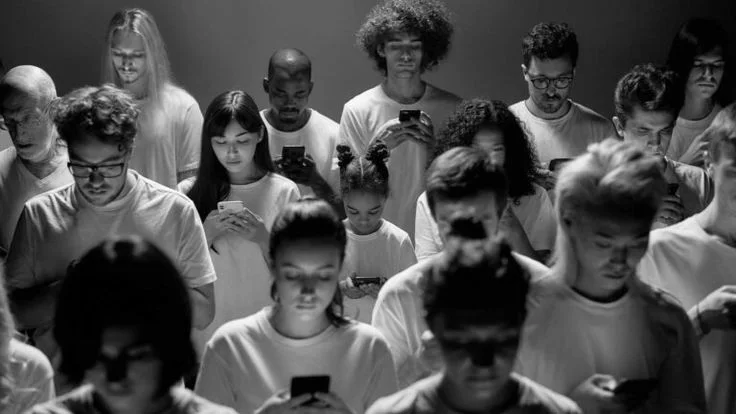
JurnalPost.com – You might start by opening TikTok just to check the latest news, but your fingers seem to take control, continuing to scroll through the screen. Sometimes, we do not even realize how much time has been spent just scrolling through our phones. This habit is known as doomscrolling.
This phenomenon is becoming increasingly common in daily life, especially among the younger generation who interact with social media almost every day. Although it may seem like a normal activity, this habit can affect how a person manages their time, attention, and even their emotional state.
Understanding What Doomscrolling Is
Doomscrolling is the habit of continuously consuming content via social media or digital platforms, particularly negative, worrying, or bad news. The term was initially used to describe the behavior of someone who keeps reading negative news even though such information can cause anxiety.
However, in daily life, this phenomenon is also often associated with the habit of scrolling without a clear purpose and finding it difficult to stop. A person might initially just want to find information, but ends up continuing to scroll because they are curious about the next piece of content.
Normal Scrolling or Doomscrolling: What Is the Difference?
At a glance, normal scrolling and doomscrolling look like the same activity. Both involve the habit of scrolling through screens to view various content on social media. However, if observed more closely, there are differences in purpose, patterns, and the impact on the user.
Normal scrolling is the activity of browsing social media to seek entertainment, obtain information, follow trends, or simply fill spare time. For example, someone opens Instagram to see friends' posts, watches funny videos on TikTok, or looks for cooking tutorials.
This activity is still considered normal as long as it is done consciously, has a purpose, and can be stopped when the user feels satisfied.
Meanwhile, doomscrolling leans more toward the habit of consuming content continuously and finding it difficult to stop, especially negative, worrying, or bad news content.
A person might initially just want to know the developments of an event, but instead continues to scroll to find additional information even though the content consumed makes them feel anxious or uncomfortable.
The difference between the two lies not only in the duration of usage but also in the behavioral patterns and the user's emotional experience.
Normal scrolling can be done with control and a clear purpose, whereas doomscrolling tends to trap a person in a cycle of content consumption that is difficult to break.
Thus, not all scrolling activity can be called doomscrolling. Enjoying social media is not a problem as long as we are still able to control our time, choose our content, and know when to stop.
Why Is It Hard to Stop Scrolling?
One reason it is difficult to stop scrolling is curiosity about the next piece of content. Every time you scroll, there is always a possibility of finding something interesting, funny, surprising, or even controversial. This drives users to keep looking for new content.
Additionally, social media algorithms play a role in maintaining user attention. Digital platforms are designed to recommend content based on the user's interests and habits.
Features like infinite scrolling allow someone to keep viewing content without having to change pages or stop at a certain point.
This habit also often appears when someone feels bored, lonely, or is avoiding work. Social media becomes the easiest option for instant entertainment.
As a result, opening the phone becomes an automatic response whenever one has no activity, even when there is actually nothing important to look for.
The Impact of Doomscrolling on Daily Life
Although it seems trivial, the habit of doomscrolling can have an impact on daily life. One of these is a decrease in concentration and productivity.
Someone who too frequently switches from one piece of content to another may find it difficult to maintain focus when doing tasks or work.
Another impact is the disruption of sleep patterns. The habit of using a phone before bed often makes someone delay their rest time because they feel they still want to see the next piece of content.
In fact, lack of sleep can affect physical condition and the ability to concentrate the next day.
Not only that, consuming too much bad news and negative content can trigger feelings of anxiety, worry, and emotional exhaustion. This is especially true when someone is constantly exposed to information about conflicts, disasters, crime, and various other problems.
Ultimately, this habit not only wastes time but can also reduce one's opportunity to enjoy life outside the screen.
Six Signs You Are Starting to Get Trapped in Doomscrolling
1. Intending Five Minutes, Ending Up for Hours
You initially only wanted to open social media for a moment, but time keeps passing without you realizing it. You are often even surprised when you see that your phone usage duration is much longer than planned.
2. Hard to Stop Even Though You Feel Bored
You are actually no longer enjoying the content you are viewing, but you keep scrolling. There is an urge to keep looking for something new, as if the next piece of content will be more interesting.
3. Constantly Searching for Negative News or Information
When you find bad news about disasters, conflicts, crime, or worrying events, you are actually driven to look for other information.
Even though the information makes you anxious, you still feel the need to know the latest developments.
4. Feeling Anxious After Opening Social Media
Instead of feeling entertained, you actually feel worried, afraid, or restless after seeing various negative information. Your mind is constantly filled with things that you cannot actually control directly.
5. Ignoring Activities That Should Be Done
College assignments are delayed, rest time is reduced, and even simple activities like eating and interacting with people around you are disrupted because you are too engrossed in scrolling.
6. Always Opening the Phone Without a Clear Purpose
Whenever you feel bored, are waiting for someone, or are not doing anything, your hand automatically opens social media. Sometimes, you do not even know what you are actually looking for.
How to Reduce the Doomscrolling Habit?
Reducing doomscrolling does not mean you have to stop using social media entirely. The most important thing is to build awareness and the ability to control its usage.
A simple step that can be taken is to set a time limit for social media usage. For example, allocate specific times to open social media and avoid the habit of opening it whenever you feel bored.
Additionally, turning off unimportant notifications can also help reduce the urge to keep checking your phone.
Diverting attention to other activities is also one way that can be done. Reading books, exercising, working on hobbies, or spending time with friends and family can be alternatives to reduce dependence on the screen.
Something no less important is to be more selective in consuming information. Following accounts that provide education and useful information and limiting exposure to negative content can help create a healthier social media experience.
Control the Screen, Do Not Let Yourself Be Controlled
Social media is essentially created to make it easier for humans to obtain information, communicate, and get entertainment. However, that convenience can turn into an unhealthy habit when users lose control over their own time and attention.
Doomscrolling is a reminder that not everything available on the screen must be consumed continuously. There are many valuable things outside the digital world that are often missed because we are too busy scrolling.
So, the next time you intend to open social media for only five minutes, try asking yourself: do we really need that information, or are we just trapped in an endless scrolling habit?
Because, in the end, we are the ones who should be controlling technology, not letting technology control our lives.









Comments 0
Write a Comment Share your response