

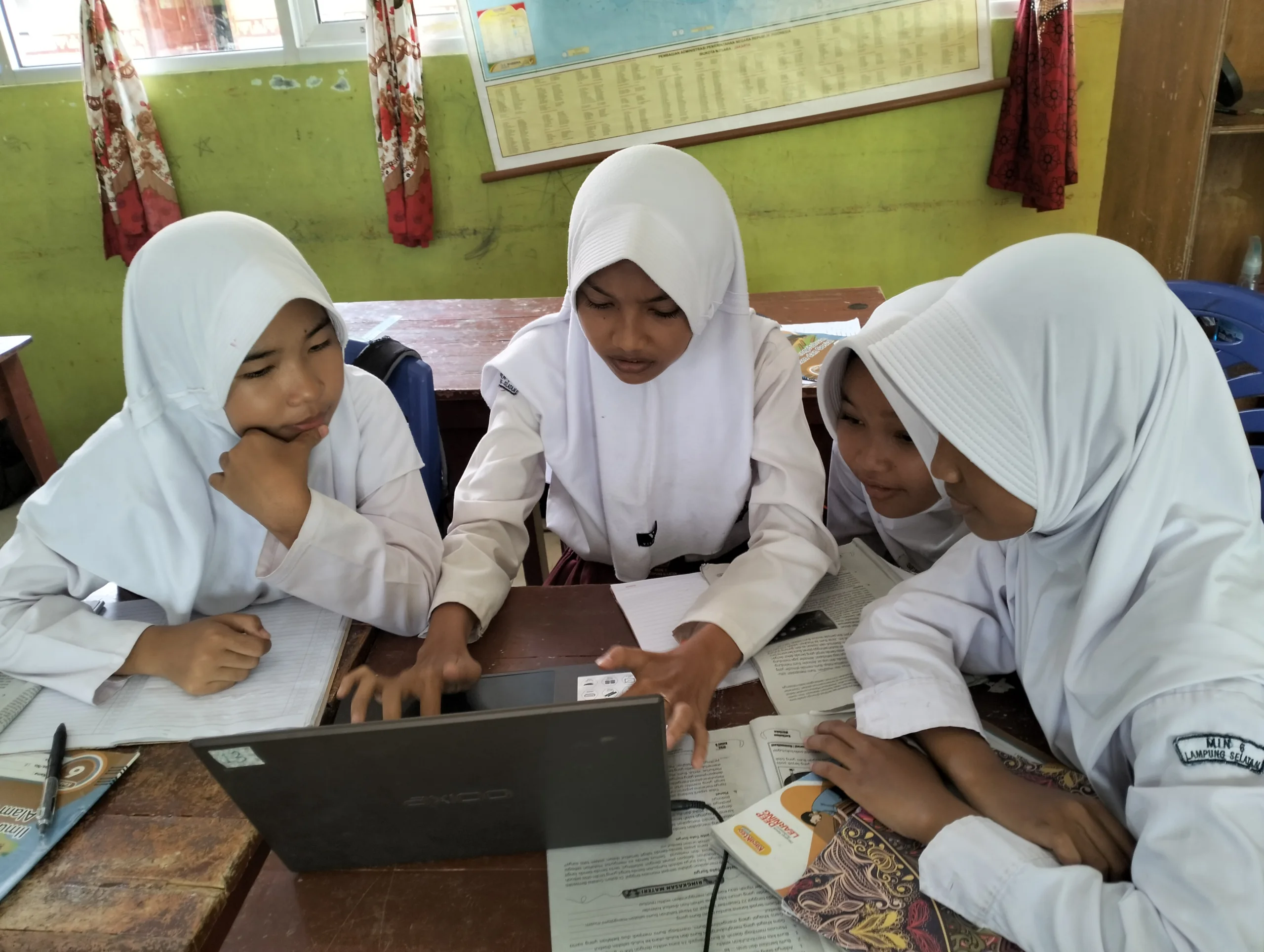
JurnalPost.com - A student might be able to explain the laws of trade in a Fiqh lesson, memorize evidence regarding honesty, and even achieve high marks on an exam. However, does this knowledge sufficiently equip them to act honestly during transactions, manage money wisely, and act responsibly in economic life? This simple question leads us to a fundamental issue in the development of the Islamic Religious Education (PAI) curriculum: to what extent has the religious knowledge studied in the classroom transformed into life skills?
PAI has a broader purpose than merely transferring religious knowledge. This education is expected to shape individuals who are faithful, pious, and possess noble character, while also being capable of fulfilling their responsibilities in personal and social life. However, the current challenge in education is not just ensuring students know religious teachings, but how that knowledge grows into awareness, habits, and tangible abilities in facing life's challenges.
We must acknowledge that mastering religious knowledge does not automatically result in the skill to practice it. Students may understand the importance of honesty, but they may not necessarily be able to maintain it when facing situations that demand difficult choices. They may study teachings on social care, but they may not be accustomed to collaborating, communicating, and solving problems in their environment. This gap between knowing and doing should be the focus of PAI curriculum development.
One approach worth considering is the development of a curriculum based on life skills . This idea is not entirely new in Islamic education. Ahmadi, through his article “Life Skills Orientation in Madrasah Curriculum” (2016), has outlined the opportunities for incorporating life skills into the madrasah curriculum. He connects prophetic values, such as shiddiq (truthfulness), amanah (trustworthiness), fathanah (intelligence), and tabligh (advocacy), with personal, social, academic, and vocational skills, as well as soft skills (https://doi.org/10.15575/jpi.v27i3,531)
This thinking demonstrates that Islamic values have a close relationship with human ability to navigate life. Therefore, our challenge is not just to reintroduce the concept of life skills, but to strengthen their position as an orientation within the overall design of the PAI curriculum.
In this context, life skills should not be narrowed down to skills for working, entrepreneurship, or earning an income. Life skills from the perspective of Islamic education must encompass a more holistic dimension. At least five dimensions can be developed: spiritual and moral, personal and intellectual, social, vocational and practical, and adaptive and digital.
These five dimensions are interconnected. Spiritual and moral skills serve as the foundation for decision-making; personal and intellectual skills help students think critically and independently; social skills build the ability to communicate and collaborate; vocational and practical skills equip them to create; while adaptive and digital skills help them face the changing times responsibly.
This orientation is in line with the four pillars of education from UNESCO in the report Learning: The Treasure Within (1996), led by Jacques Delors. Education needs to pay attention to learning to know , learning to do , learning to live together , and learning to be . These four pillars emphasize that education should not stop at the mastery of knowledge but must provide space for action, social life, and character formation (https://unesdoc.unesco.org/ark:/48223/pf0000109590)
So, how is this idea translated into the PAI curriculum? In my view, a reconstruction is needed that touches all its components, rather than just adding life skill materials or holding occasional practical activities.
First, the curriculum objectives need to be directed toward forming students who not only understand Islamic teachings but are also capable of actualizing their values. Second, learning outcomes need to connect knowledge, attitudes, and applicable skills. Third, learning materials need to be linked to real issues close to the students' lives. Fourth, learning strategies need to provide space for contextual experience, projects, collaboration, and problem-solving. Fifth, assessment needs to evaluate the ability to apply religious values, not just measure the ability to remember and explain. Sixth, curriculum evaluation needs to pay attention to the relevance of learning experiences to the development of students' life skills.
For example, Fiqh learning about trade should not stop at understanding the pillars, conditions, and laws of transactions. Students can gain learning experiences that develop financial literacy, honesty, responsibility, and decision-making skills. Similarly, Akidah Akhlak (Creed and Morals) learning about commendable behavior can be directed toward the practice of polite communication, self-control, empathy, and conflict resolution.
The need to continuously strengthen the relevance of religious learning is also visible in educational policy. On 23 June 2026, the Ministry of Basic and Secondary Education announced an update to Learning Outcomes through the Decree of the Head of BKPDM Number 020 of 2026, which specifically touches on the subjects of Religion and Character Education. This change serves as a reminder that the development of religious learning needs to continuously respond to the needs of students and the development of education (https://www.kemendikdasmen.go.id/siaran-pers/15636-capaian-pembelajaran-baru-telah-terbit-yang-berubah-hanya-mata-pelajaran-agama-dan-budi-pekerti)
Certainly, curriculum reconstruction cannot be burdened on teachers alone. It requires policy support, educator readiness, the development of teaching materials, a supportive school environment, and the involvement of families and the community. Madrasahs and schools must become living spaces where students not only learn Islamic values but also gain opportunities to practice them.
Ultimately, the success of religious education should not be viewed only by how much religious knowledge students have mastered, but by the extent to which that knowledge shapes their way of thinking, attitudes, decisions, and actions. The PAI curriculum needs to move from merely teaching about a good life toward learning that equips students to live life well.
Because meaningful religious education does not just produce humans who know the truth, but also humans who possess the skills to carry out the truth and bring benefit to life.




Comments 0
Write a Comment Share your response