

SURABAYA, JurnalPost.com – From the moment Ampel was designated as our community service location, the shadow of potential challenges immediately filled my mind. This area is diverse, inhabited by residents from various ethnic backgrounds, and is often perceived as difficult to gather for socialization forums.
That concern became even more grounded when the Head of RW 07, Riza Firdausi, explained that mobilizing residents for health activities presents its own unique challenges. This is especially true in an environment with strong religious character, where the boundaries of interaction between men and women must be maintained.
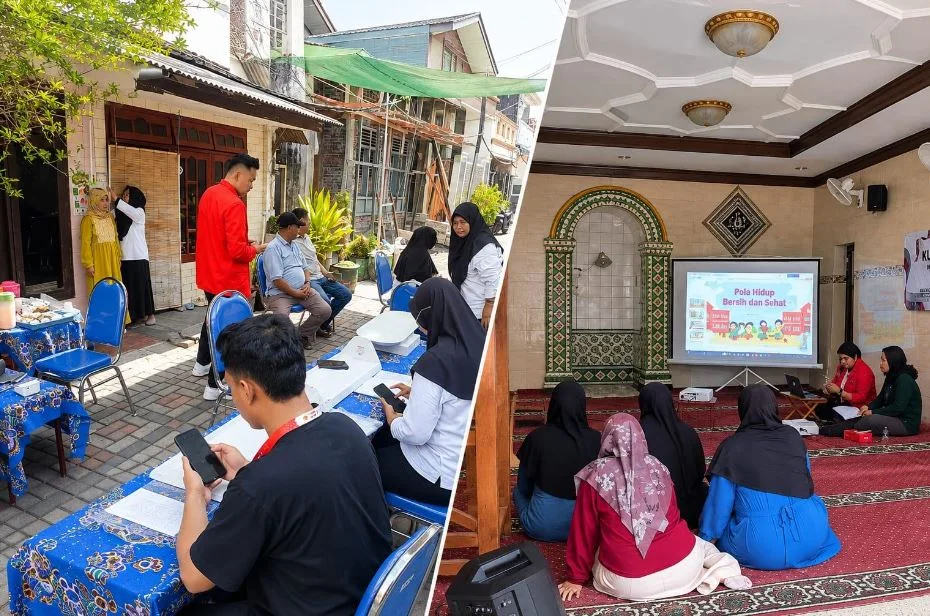
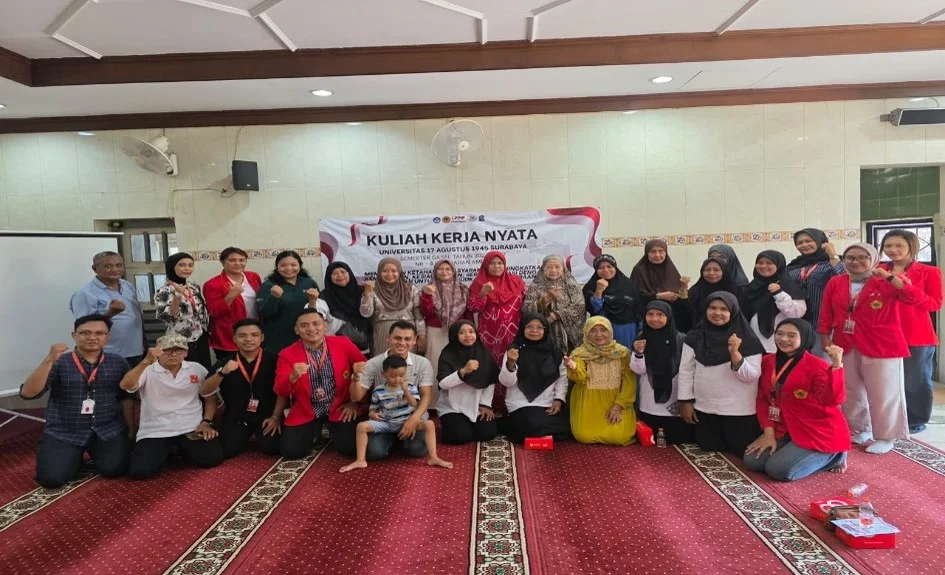
We faced this reality directly through two series of health socialization events in RW 07, namely education on Clean and Healthy Living Behavior (PHBS) and balanced nutrition with the elderly and toddler Posyandu on Saturday (7/11/2026), followed by stunting prevention education with Puskesmas nutritionist, Bombang Sariawan, A.Md., on Saturday (21/11/2026).
From these two meetings, which were held in a musala due to the lack of an adequate community hall, I identified one fundamental issue.
Health programs often stumble not because the material is incomplete, but because the approach has not yet integrated with the residents' social reality.
Spatial Etiquette and Limitations Are No Excuse to Give Up
In RW 07, the absence of a community hall led us to use a musala as the venue. Because the material in both meetings was primarily aimed at mothers, the interior of the musala was prioritized for them and the participants.
Consequently, we, the male students, did not enter the musala, while some male residents waited and listened from the outside.
To outsiders, this arrangement might seem complicated and inconvenient. However, that is precisely where the social sensitivity required of program implementers in the field lies.
Respecting interaction boundaries and spatial etiquette in a Muslim community with strong religious traditions is not an obstacle to be broken, but an entry point for residents to feel valued.
When students are willing to adapt to local spaces and customs, initial resistance can be gradually reduced.
Fear of Restrictions and 'Full Stomach' Mindsets Hinder Prevention
Another, much more subtle obstacle lies within the residents' mindset.
The Head of the Great Surabaya Cadres (KSH) for RW 07, Nur Ilmiyah Izzah, revealed that residents, especially the elderly, are often reluctant to attend because they fear being strictly restricted or forbidden from consuming their favorite daily foods and drinks for health reasons.
The fear of being scolded or told to avoid various foods began to melt when the approach was carried out in a familial manner, door-to-door with the KSH and PKK, and packaged in casual language.
A similar mindset is also seen in the issue of stunting. Amidst the ethnic diversity of RW 07 residents, there is still an assumption that a child is safe as long as they are willing to eat and are not fussy, as experienced by Yuni Kartika (27), a young mother with a toddler.
In reality, stunting can have serious long-term impacts, such as increased susceptibility to disease, impaired cognitive development, suboptimal physical growth, and an increased risk of non-communicable diseases in adulthood.
Linking stunting prevention with the Healthy Living Community Movement (GERMAS) is important so that residents see health not as a temporary list of prohibitions, but as a long-term investment in the family's quality of life.
When Posyandu Data and Check-up Habits Are Disconnected
Another issue that is no less crucial is the broken chain of child growth and development records.
Some Ampel residents choose to have their children examined at other health facilities outside the Posyandu, such as their preferred hospitals. Choosing the most trusted health service is, of course, the right of every family.
However, when the results of external examinations are not recorded or connected to the Posyandu and PKK at the RW level, comprehensive monitoring of child growth becomes less than optimal.
In fact, data collection at the RW level is not intended to compete with hospital services, but to ensure that child nutrition monitoring runs holistically and that no cases escape collective attention.
Reorganizing How We Approach Residents
The experience of running two community service programs in the RW 07 environment provided us with many valuable lessons.
From the anxiety at the start of the activities, the limited facilities without an RW hall, the division of roles inside and outside the musala, to the efforts to embrace residents amidst their busy schedules, everything proves that fieldwork is never as simple as theory.
All these activities were able to run thanks to the support of the Head of RW 07, the Great Surabaya Cadres, the PKK, the RW 07 residents' board, Puskesmas health workers, and the solidarity of my fellow group members.
Moving forward, if we want efforts in stunting prevention, balanced nutrition fulfillment, and the application of PHBS to truly leave a mark on the community, the approach must be more adaptive.
Students, cadres, and health workers need to enter through the channels of trust and local etiquette. Meanwhile, families and health service facilities need to build a habit of complementing each other's child growth data.
Without that, health education will continue to spin on the surface—lively while the event is taking place, but difficult to take root in the daily lives of the community.



Comments 0
Write a Comment Share your response