

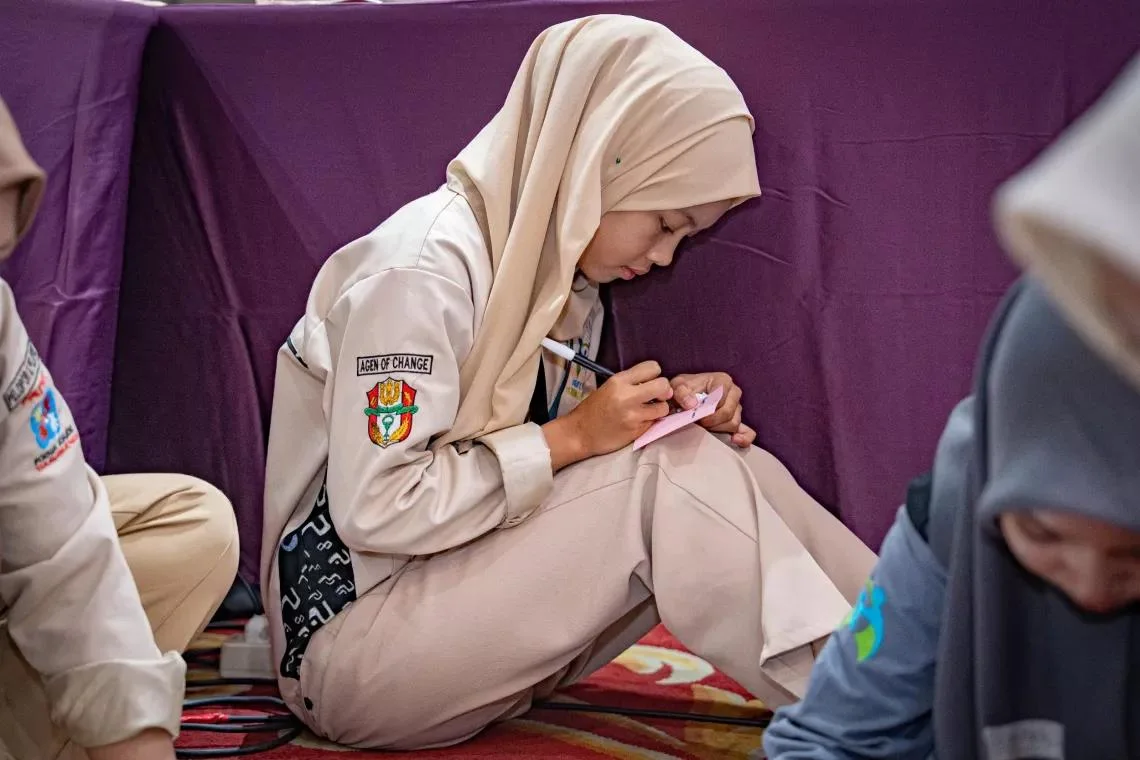
JurnalPost.com — Youth is a critical period for individuals to pursue education, develop personal potential, gain experience, and prepare for the future. During this phase, young people have the opportunity to build a foundation of knowledge and skills before entering the workforce or family life.
However, not all young people have the opportunity to undergo this process optimally. Early marriage remains a social issue that has the potential to hinder the continuity of education and the development of youth potential.
Although the government has established a minimum age for marriage, the practice of marrying at a relatively young age is still found in various communities.
In some circumstances, early marriage is even considered a way out of family problems. In reality, the decision to marry without mental, physical, and financial readiness can have long-term consequences for the lives of the couple and their children.
Factors Contributing to Early Marriage
Early marriage does not occur without cause. There are various economic, social, cultural, and environmental factors that can influence a person's decision to marry at a young age.
One factor that can drive early marriage is the limited economic capacity of a family. For some families with limited income, the cost of education up to the university level remains a significant challenge.
In such conditions, marrying off a child is sometimes seen as a way to reduce the family's economic burden, with the expectation that the responsibility for meeting living needs will shift to the spouse.
However, this decision does not necessarily solve economic problems. On the contrary, marriage without financial readiness has the potential to create new issues.
In addition to economic factors, social circles and the development of social media can also influence how teenagers view married life.
The ease of accessing various digital content without parental guidance and reproductive health education can increase the risk of making immature decisions.
In some cases, unplanned pregnancies lead families to decide to marry off their children due to social pressure, even though the couple is not yet prepared to manage a household.
Societal views also play a role. The assumption that one will struggle to find a partner if they delay marriage can create pressure on the younger generation.
On the other hand, the portrayal of married life that appears fun on social media sometimes makes teenagers fail to understand the complexity of responsibilities in a marriage.
A lack of motivation to learn, career goals, and opportunities to participate in personal development activities can also be factors influencing the decision to marry at a young age.
Early Marriage Risks Hindering Education
One of the impacts of early marriage that requires serious attention is the disruption of educational continuity.
When someone marries at school age or while still pursuing higher education, their daily responsibilities change. The time and energy previously used for studying must be divided among various household obligations.
For adolescent girls, these challenges can become even more severe when facing pregnancy, childbirth, and the responsibility of caring for a child.
Physical conditions during pregnancy, limited time, and social pressure can become obstacles to returning to learning activities.
There are also many challenges faced by young men after marrying at a young age. The responsibility of meeting family needs can push them to enter the workforce before completing their education.
Dividing time between work, family, and academic activities is not easy. Without adequate support, this condition can increase the risk of dropping out of school or university.
Stunted education also has the potential to limit a person's opportunity to acquire knowledge, develop skills, and obtain employment that matches their potential.
Impact on Family Economic Conditions
Marriage requires financial readiness to meet various household needs. Couples who marry at a young age often face challenges because they do not yet have sufficient work experience, education, or income sources.
Limited skills and educational qualifications can narrow the available job options.
Meanwhile, household needs continue to grow, ranging from housing costs, food, and health, to the needs of children.
The imbalance between income and expenses can create economic pressure that affects family life.
In certain situations, young couples may still have to rely on financial assistance from their parents to meet daily needs.
If this condition persists in the long term, limited education and economic status have the potential to create an intergenerational cycle of poverty.
Therefore, completing education and building financial independence are important steps in preparing for family life.
Challenges of Mental Readiness and Personal Development
Beyond education and economic issues, mental readiness is a crucial aspect that needs to be considered before deciding to marry.
Married life demands the ability to communicate, control emotions, resolve conflicts, and make joint decisions responsibly.
Couples who lack emotional readiness may face difficulties when dealing with differences of opinion, economic pressure, or child-rearing responsibilities.
Problems that are not managed well have the potential to develop into prolonged conflicts and disrupt family harmony.
Marriage at a young age can also limit a person's opportunity to develop their talents and skills.
Young people who actually have potential in academics, entrepreneurship, arts, or other skills may have to postpone various personal development plans due to household responsibilities.
Opportunities to participate in job training, expand social networks, build a career, or start a business can also become more limited.
Risks to Maternal and Child Health
Physical readiness is another aspect that cannot be ignored in the discussion of early marriage.
Pregnancy during adolescence can increase the risk of a number of health complications for the mother and baby, including anemia, premature birth, and delivery complications.
In addition to physical readiness, knowledge regarding child-rearing is also an important factor in building a family.
Young couples need an adequate understanding of nutritional fulfillment, child health, psychological development, and appropriate parenting patterns.
Limited knowledge and economic resources can be a challenge in meeting the child's growth and development needs optimally.
Thus, the impact of early marriage is not only related to the lives of the couple but also has the potential to affect the well-being of the next generation.
The Role of Family and Educational Institutions
Efforts to prevent early marriage require cooperation between families, educational institutions, the community, and the youth themselves.
Parents have an important role in building open communication with their children, especially when they enter adolescence.
Discussions about education, career planning, reproductive health, and the responsibilities of married life can help children understand the consequences of every decision made.
Approaches through good communication need to be prioritized over simply issuing prohibitions without explanation.
Meanwhile, schools and universities can contribute through career guidance programs, skills training, reproductive health education, and counseling on readiness to build a family.
When young people have clear life goals, they can better understand the importance of education as a foundation for achieving their desired future.
The community also needs to build a social environment that supports young people in completing their education and developing their potential without putting pressure on them to marry immediately.
Education as the Foundation of the Future
Marriage is not a race to determine who builds a household first. Marriage is a long-term commitment that requires maturity, physical and mental readiness, and the ability to meet family needs.
Utilizing youth to complete education, expand experience, improve skills, and build financial independence is an important part of preparing for family life.
Young people need to realize that every decision made today can influence their lives in the future.
With the support of family, the educational environment, and the community, young people are expected to be able to plan their future more maturely and build a harmonious and prosperous family life at the right time.








Comments 0
Write a Comment Share your response