

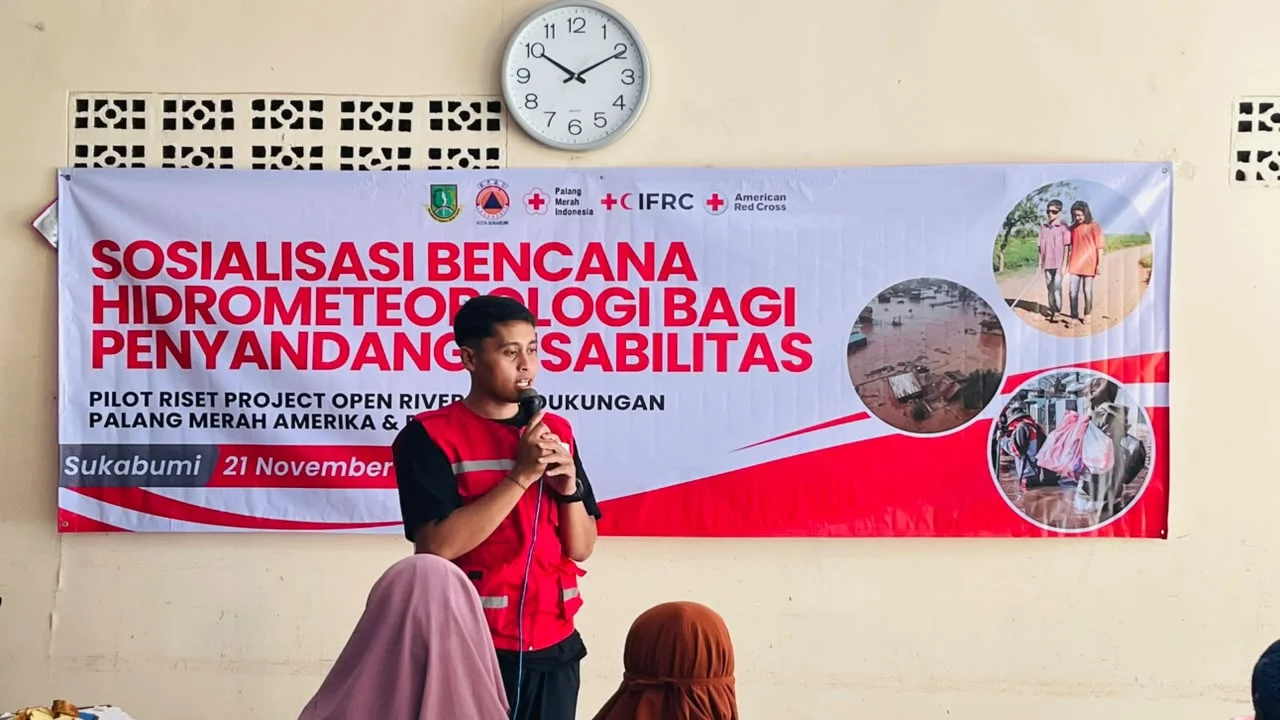
SUKABUMI, JurnalPost.com - The Indonesian Red Cross (PMI) of Sukabumi City is strengthening its preparedness for hydrometeorological disasters by involving people with disabilities in educational activities, simulations, and the development of flood early warning communication mechanisms.
This activity is part of the OpenRiverCam (ORC) Pilot Research Project carried out by PMI Sukabumi with support from the American Red Cross and the PMI National Headquarters.
The program focuses not only on utilizing river monitoring technology but also on ensuring that disaster information is accessible and understandable to the entire community, including people with disabilities.
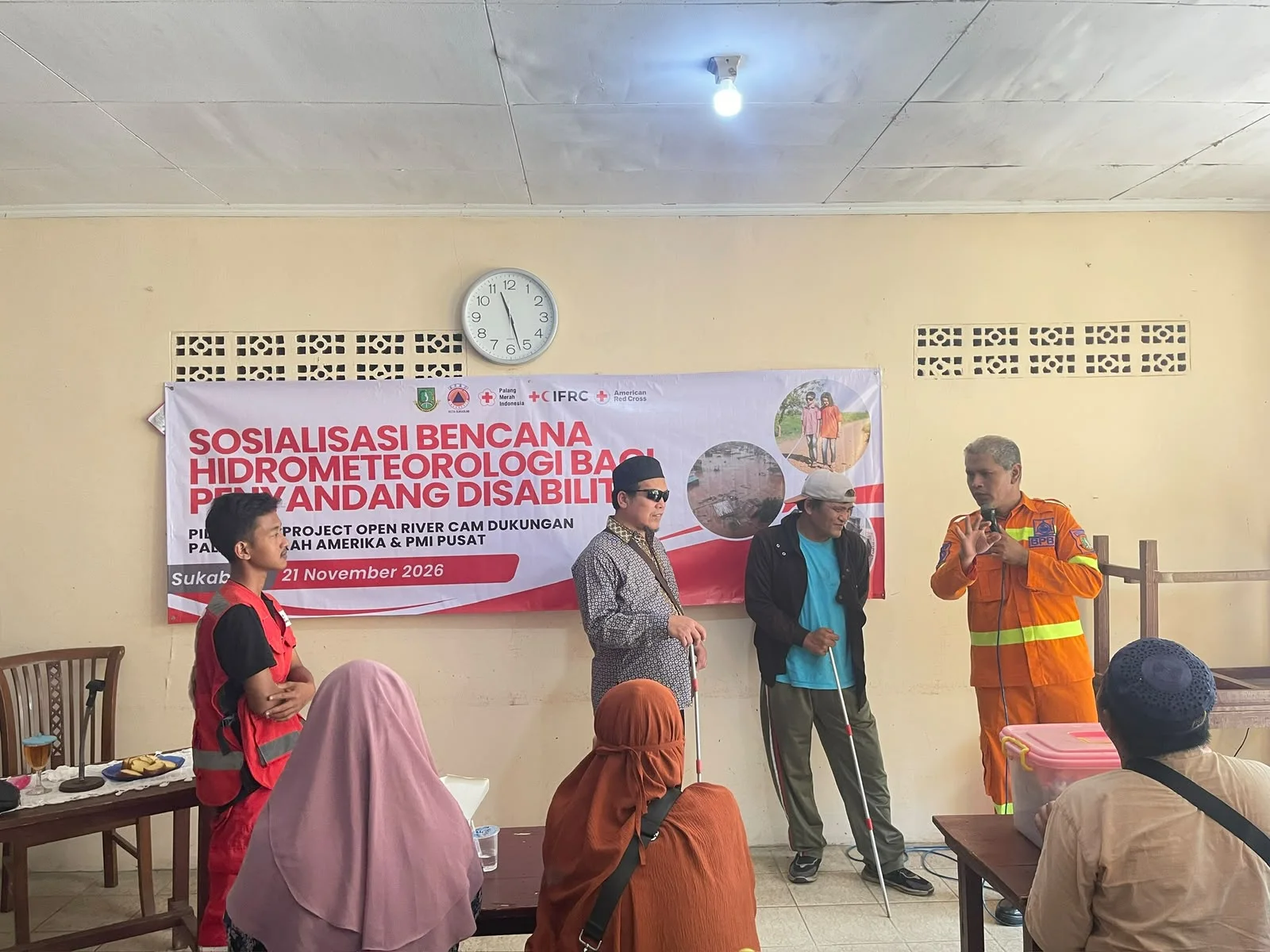
During the event, PMI Sukabumi invited speakers from the Sukabumi City Regional Disaster Management Agency (BPBD) and PMI to provide insights into hydrometeorological disaster threats, particularly flooding.
Participants received information regarding potential disaster risks, early warning systems, and the steps to take when receiving alerts about threats in their residential areas.
People with Disabilities Participate in Early Warning Simulations
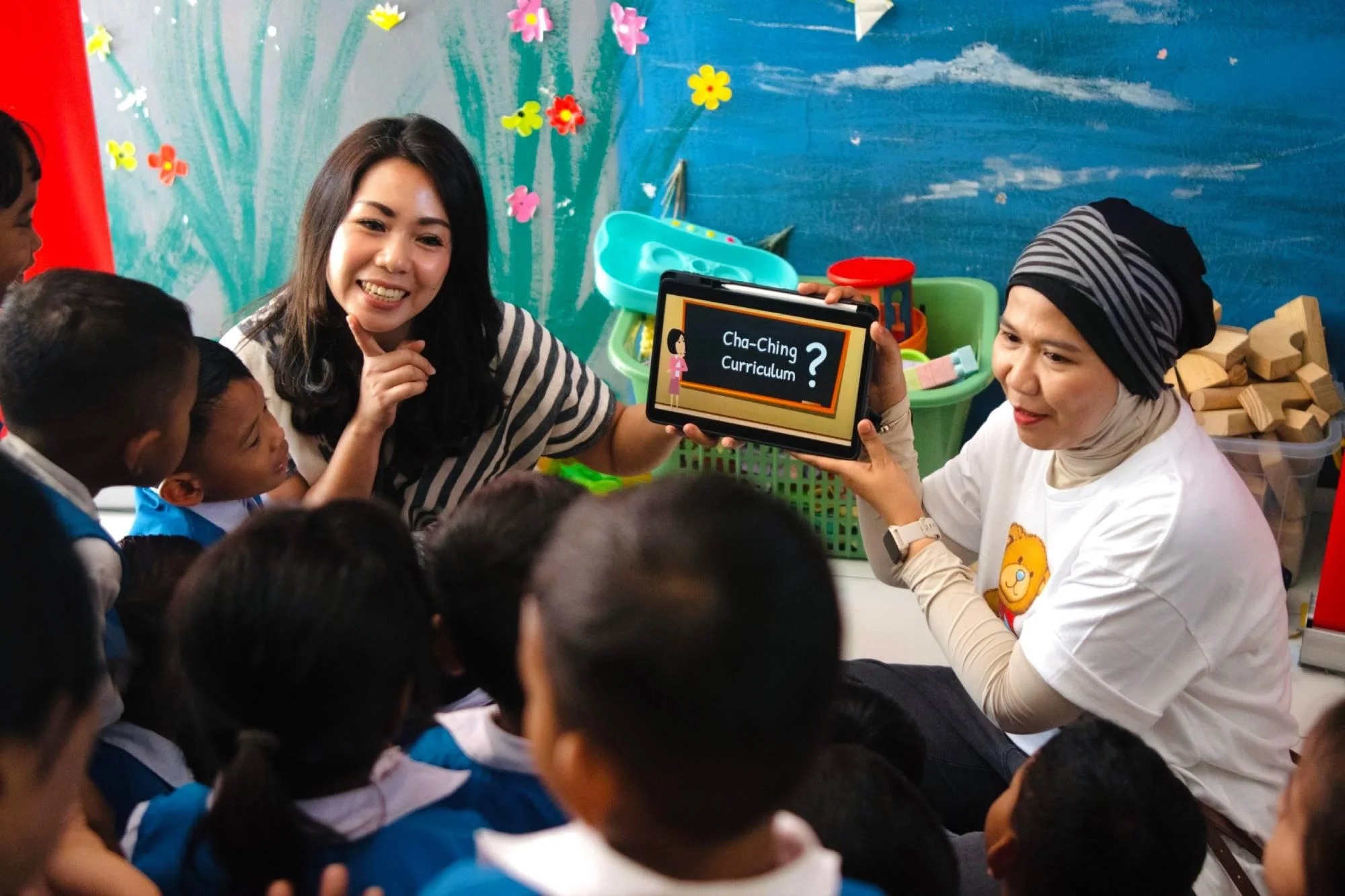
In addition to the presentations, participants took part in disaster response simulations.
Through these simulations, participants practiced various stages, from receiving and verifying warning information to disseminating it to the public and determining appropriate protective actions based on the situation.
This simulation is a crucial part of building preparedness, especially for community groups with different accessibility needs when facing emergencies.
A key discussion point during the activity was the development of communication and coordination mechanisms with organizations for people with disabilities, particularly those representing the visually impaired.
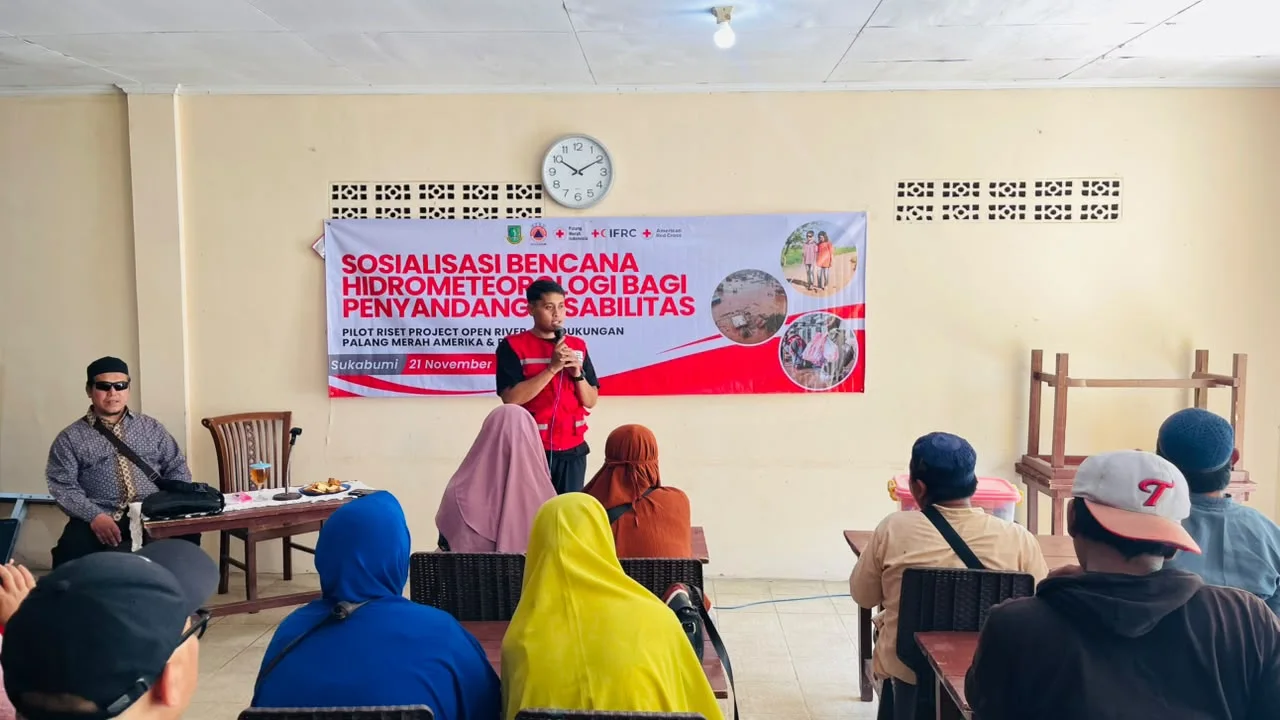
The discussion covered the selection of accessible communication channels, the designation of parties responsible for disseminating warnings, and procedures to ensure that vital information is received and understood by the public in a timely manner.
With these mechanisms in place, the dissemination of disaster information is expected to rely on more than just one form of communication, which might be difficult for some groups to access.
BPBD: Disaster Preparedness is a Shared Responsibility
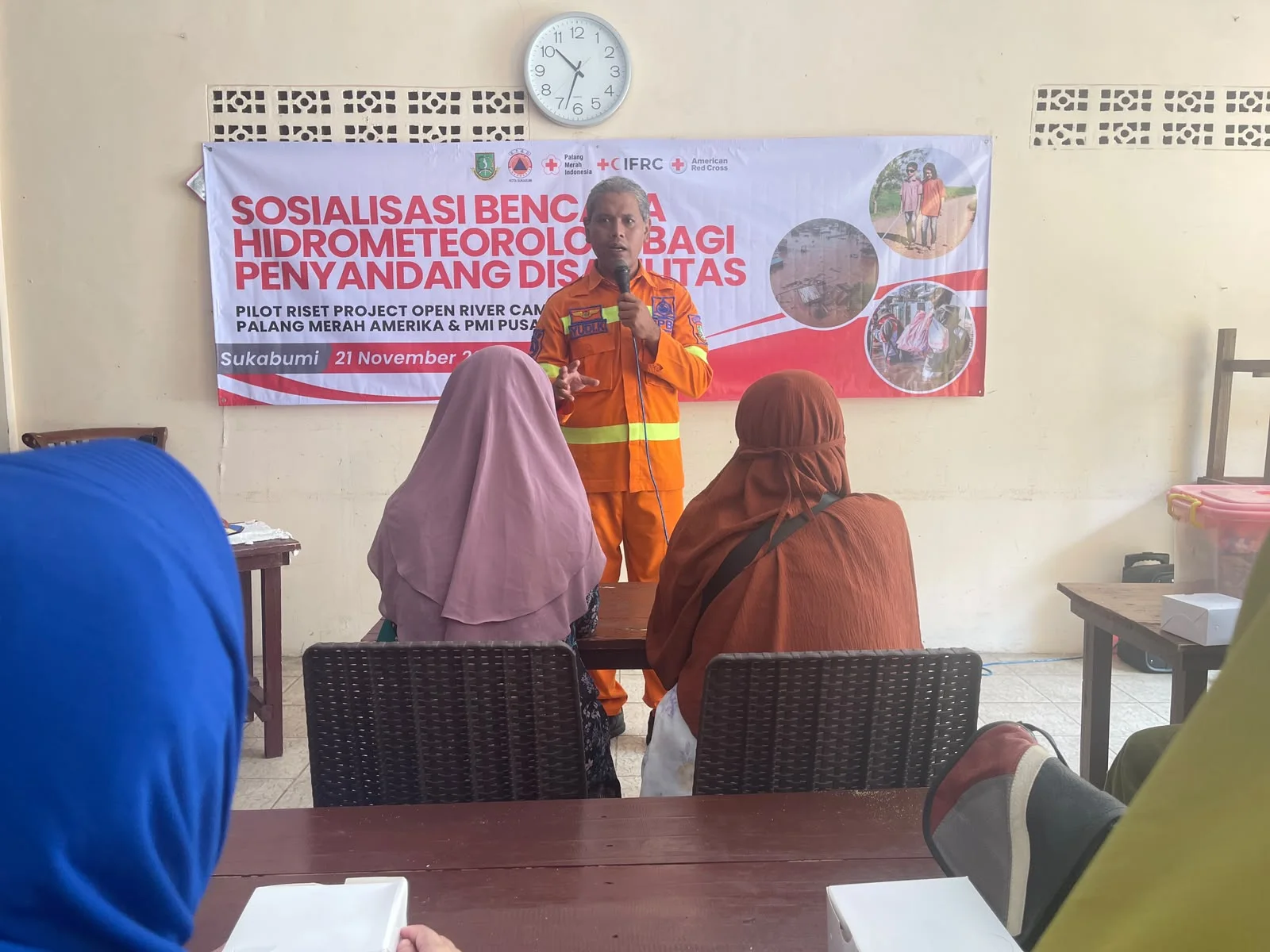
Representing the Sukabumi City BPBD, Yudi Kristianto emphasized that disaster risk reduction efforts require the involvement of all elements of society without exception.
He stated that people with disabilities have the same right to receive clear, easily understood, and accessible disaster information tailored to their needs.
“Disaster management is a shared responsibility. People with disabilities must have equal access to clear and accessible disaster information. Establishing agreed-upon communication and coordination mechanisms is vital so that when an early warning is issued, every member of the community knows what actions to take and where to seek help,” said Yudi Kristianto, a representative of the Sukabumi City BPBD.
Meanwhile, PMI Sukabumi staff member Dinar Mochamad explained that the development of river monitoring technology must be balanced with increasing the community's capacity to understand and respond to the information generated.
“Through the OpenRiverCam Pilot Research Project, PMI Sukabumi is striving to develop river monitoring innovations to support the strengthening of flood early warning systems. However, technology alone is not enough. The information produced must be accessible, understood, and acted upon by everyone, including people with disabilities,” explained Dinar Mochamad, a staff member at PMI Sukabumi.
Dinar added that the simulations provided an opportunity for participants to apply the knowledge they had previously gained during the presentation sessions.
Participants were also able to practice the communication and coordination patterns required when information regarding potential disasters is received.
“What we want to achieve is a situation where, when an early warning is received, everyone knows what to do, who to contact, and how to ensure that all members of the community receive that information. That is why agreed-upon communication mechanisms are a vital part of preparedness,” added Dinar.
American Red Cross Promotes 'Early Warning for All' Principle
Senior Program Officer for the American Red Cross in Indonesia, Teguh Wibowo, noted that the activities conducted by PMI Sukabumi represent a form of sustainable development, particularly in strengthening the involvement of people with disabilities in disaster risk reduction.
He linked this step to the achievement of the Sustainable Development Goals Sustainable Development Goals (SDGs), especially in ensuring that no group is left behind in receiving protection during disasters.
“What PMI is doing is a concrete example of implementing sustainable development, particularly in supporting the achievement of the SDGs. This activity opens space for people with disabilities to exercise their rights and participate in disaster risk management. When we talk about 'Early Warning for All,' it truly means everyone. Every person has the right to receive early warning information,” said Teguh Wibowo, Senior Program Officer for the American Red Cross in Indonesia.
Teguh also emphasized the importance of involving organizations for people with disabilities in all stages of disaster management.
This involvement should begin at the preparedness stage, including the development of contingency plans and the execution of evacuation simulations, and continue through the emergency response and recovery phases.
According to him, this approach aligns with the principles of Protection, Gender and Inclusion (PGI), which are part of the policies and commitments of the International Red Cross and Red Crescent Movement.
OpenRiverCam Utilizes Cameras and Automatic Weather Stations
In its implementation, the OpenRiverCam Pilot Research Project was developed by PMI Sukabumi in collaboration with IPB University and several other stakeholders.
The OpenRiverCam technology utilizes cameras and video analysis to monitor river conditions and water flow. The data obtained can be used as a basis for hydrological analysis and flood risk assessment.
The development of the system is also supported by three Automatic Weather Station (AWS) units placed at strategic monitoring points along the river system.
These three points are located in the upstream, middle, and downstream sections of the river to support the collection of information regarding weather and environmental conditions.
The integration of river monitoring and weather data is expected to improve the availability of information needed for hydrometeorological risk analysis while supporting the development of a flood early warning system in Sukabumi City.
However, the presence of monitoring devices does not automatically guarantee that the entire community can respond effectively to disaster threats.
The information generated still needs to be conveyed through communication mechanisms that can reach various community groups, including people with disabilities.
Therefore, the technological development in this project runs concurrently with efforts to strengthen community capabilities, build inter-agency coordination, and develop more inclusive communication procedures.
Through collaboration between PMI, BPBD, the American Red Cross, organizations for people with disabilities, and other parties, this activity is directed toward building a disaster preparedness system that is more accessible and responsive to community needs.
People with disabilities are not only positioned as recipients of early warning information but are also involved in the planning, decision-making, and implementation of preparedness actions at the community level.



Comments 0
Write a Comment Share your response