

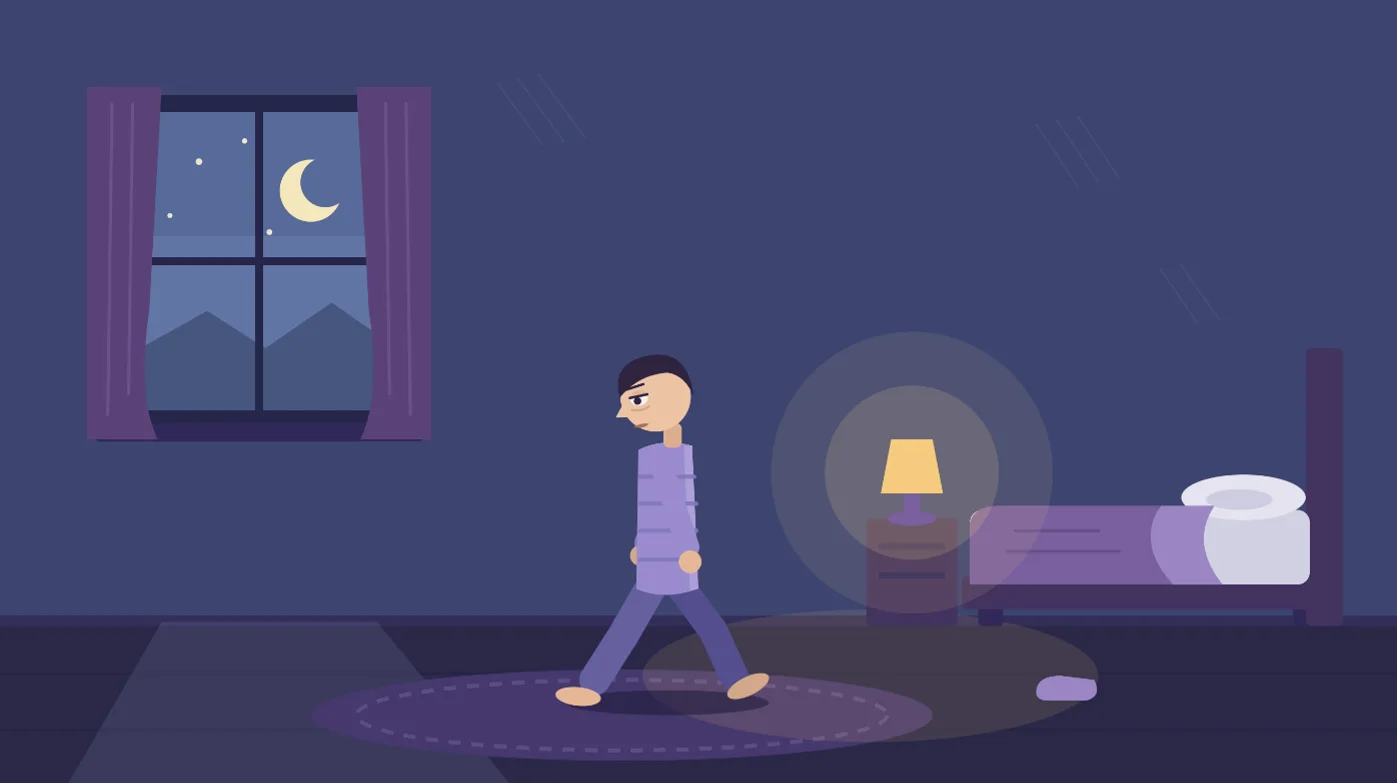
JurnalPost.com - Have you ever imagined someone getting out of bed, walking to the living room, opening a door, or performing other activities while they are actually still asleep? This phenomenon is known as sleepwalking or somnambulism.
For some, this event might sound strange, or even like a scene from a movie. However, behind this unusual behavior lies a sleep phenomenon that can be explained scientifically.
Sleepwalking is a form of parasomnia, a disorder involving unusual behaviors or experiences while a person is asleep. This condition generally occurs when someone experiences a partial awakening from non-rapid eye movement (NREM) sleep, particularly during the deep sleep stage.
This means that some bodily functions have become active, allowing the person to move, but their consciousness has not yet fully transitioned to a waking state.
This is why a person can walk or perform certain activities without truly realizing what they are doing. People experiencing sleepwalking may have their eyes open, but their response to their surroundings is not like that of a fully awake person.
After returning to sleep and waking up in the morning, individuals who experience this condition often have no memory of the event.
More Than Just a Strange Sleep Habit
One common misconception still found in society is the belief that sleepwalking is related to mystical occurrences or intentional behavior. In reality, sleepwalking is a sleep phenomenon well-recognized in the fields of medicine and psychology.
This condition is more common in children than in adults. For many children, sleepwalking episodes decrease as they age. However, adults can also experience it, so the condition should not be considered exclusive to childhood.
The causes of sleepwalking are not yet fully understood. However, several factors are known to increase the likelihood of episodes, such as sleep deprivation, irregular sleep schedules, fever, stress, alcohol consumption, genetics, and certain sleep disorders. Some types of medication may also be linked to the emergence of sleepwalking behavior.
It is important to understand that stress is not the only factor linked to sleepwalking. Not everyone experiencing psychological pressure will walk in their sleep. Likewise, someone who experiences sleepwalking does not automatically have a specific psychological problem.

Therefore, broader understanding is needed so that the public does not rush to conclusions about a person's condition.
When Safety Becomes a Concern
Although most sleepwalking episodes do not cause serious problems, the condition still requires attention. When a person moves without full consciousness, they may not be able to recognize their surroundings well. Consequently, the risk of falling, bumping into objects, or having an accident can increase.
This risk makes the role of family and those nearby important. If you encounter someone who is sleepwalking, avoid shouting at, shaking, or startling them.
Instead, approach them calmly and gently guide them back to bed if possible. If the person needs to be awakened, do so softly, as they may feel confused or disoriented immediately after waking.
Families can also help by ensuring the sleeping environment is safer, keeping walking paths free of obstacles, and monitoring doors and access to risky areas.
These simple steps can help reduce the likelihood of accidents, especially if sleepwalking episodes occur repeatedly.
Understanding, Not Judging
The issue of sleepwalking is not only related to physical conditions but also to how the social environment treats those who experience it.
Imagine someone who only discovers they walk in their sleep after being told by family members. They might feel confused, embarrassed, or worried about becoming the subject of gossip.
In such situations, the response of those around them is significant. Turning the experience into a joke or linking it to baseless mystical beliefs can reinforce misconceptions.
Conversely, providing accurate explanations and non-judgmental support can help individuals feel safer in sharing their experiences.
We also need to understand that people who experience sleepwalking are not pretending or intentionally performing these activities. Their behavior emerges when their consciousness is not yet fully awake.
Therefore, the necessary approach is not to blame, but to understand the condition and help ensure their safety.
When to Seek Professional Help?
Not all sleepwalking incidents require special medical treatment. However, an examination by a healthcare professional should be considered if the incidents are recurrent, cause injury or risk of accidents, disrupt sleep quality, or are accompanied by excessive daytime fatigue.
The onset of sleepwalking that occurs for the first time in adulthood should also be examined to determine potential underlying factors.
Treatment will be tailored to each individual's condition. Healthcare providers can evaluate sleep patterns, daily habits, medication use, and the possibility of other sleep disorders.
In many cases, improving sleep schedules, getting enough rest, and addressing underlying conditions can help reduce sleepwalkingincidents.
Ultimately, sleepwalking reminds us that sleep is not just a state where the body stops being active. There are complex processes occurring within the body and brain, even when a person appears unaware of their surroundings.
The public does not need to be experts to understand this phenomenon. However, everyone can start by seeking information from trusted sources, avoiding baseless assumptions, and responding appropriately when encountering someone who experiences it.
Because, behind someone who walks in their sleep, there is an individual who needs understanding, not judgment.
References
American Psychiatric Association. (2013). Diagnostic and statistical manual of mental disorders (5th ed.). American Psychiatric Publishing. https://doi.org/10.1176/appi.books.9780890425596



Comments 0
Write a Comment Share your response