

JurnalPost.com - The evolution of the business world has fundamentally changed how people select and purchase products. Today's consumers consider more than just price; they weigh quality, design, packaging, uniqueness, and the overall benefits offered. Technological advancements have made information easily accessible via digital media, giving consumers a wider array of choices. They can now compare products, seek alternatives, and switch to other brands if they find a more compelling option. This reality compels micro, small, and medium-sized enterprises (SMEs) to move beyond merely maintaining existing products and instead align them with evolving market needs.
Innovation is a critical factor in determining a business's ability to compete. Without updates, products risk losing their appeal as consumers discover alternatives that better suit their requirements. Competition is no longer just about who can produce goods, but who can offer greater value to their customers.
However, Indonesian SMEs still face challenges in implementing innovation. According to data from the Central Statistics Agency (BPS, 2026) in 2025, out of a total of 4,461,888 micro and small manufacturing businesses, only 750,630 had implemented innovation, while 3,711,259 had not. This means only about 16.82% of businesses have innovated, while 83.18% have yet to do so. These figures highlight that innovation remains a significant hurdle for the micro and small manufacturing sector in Indonesia. This situation warrants attention, as the capacity to innovate is closely linked to a business's ability to maintain product appeal, enhance competitiveness, and address shifting market demands.
Innovation Does Not Always Require Large-Scale Changes
When hearing the word 'innovation,' some may immediately envision groundbreaking inventions or the use of high-end technology. In reality, innovation for SMEs does not always have to start with something massive. It can involve small steps, such as developing new flavors for food products, improving packaging designs, enhancing raw material quality, adding product features, or streamlining production processes.
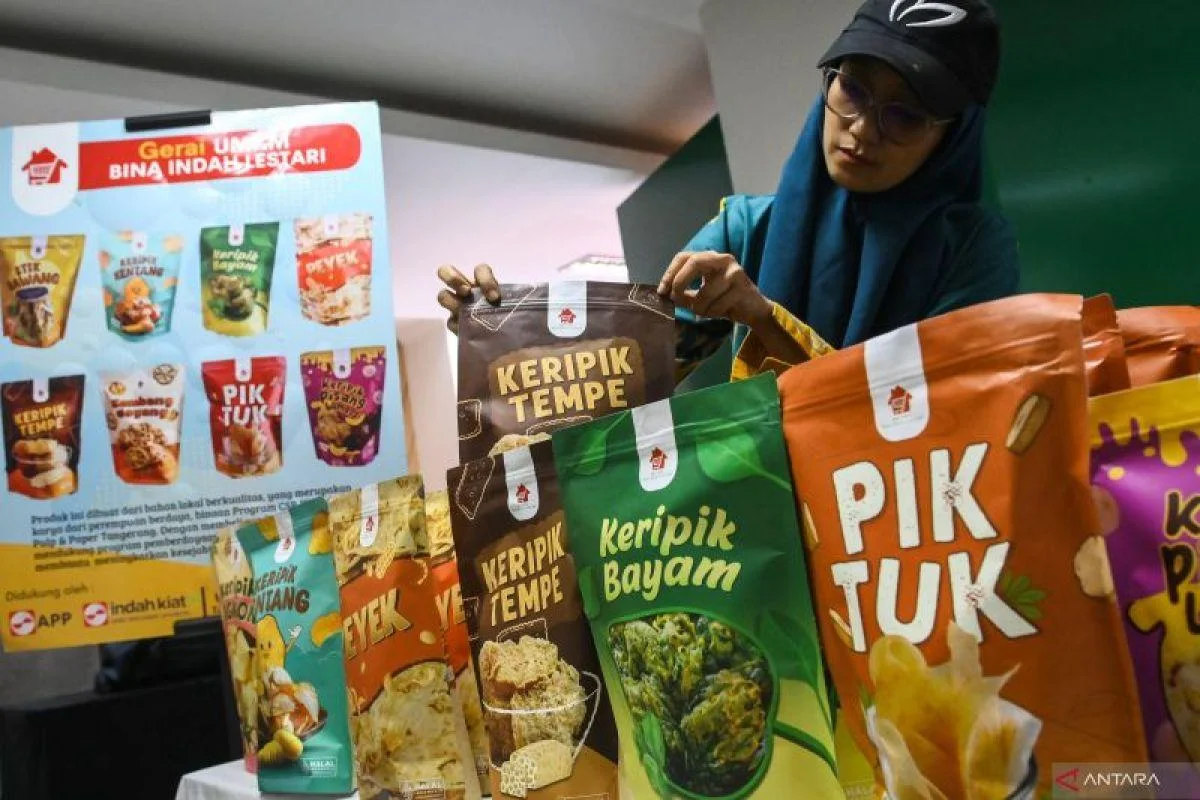
For example, a banana chip business that initially sold only one flavor could innovate by introducing new varieties based on consumer tastes. Business owners can also update packaging to be more practical, hygienic, and attractive, while adding clear product information to differentiate themselves from competitors. Similarly, craft SMEs can refresh designs and color palettes without abandoning their local identity. Such changes may seem simple, yet they provide a fresh experience for consumers.
Product innovation can be achieved through product development, production process improvements, updated marketing strategies, and organizational changes. This means innovation is not just about the goods sold, but also how a business creates and delivers value to its customers. Incremental updates or small, continuous improvements are viable options for SMEs with limited resources (Darmawan and Bahri, 2026). In other words, SME owners do not need to wait for large capital to start innovating; they can begin with simple improvements that customers actually need.
Why Do Continuously Developed Products Compete Better?
A primary reason for SMEs to innovate is to stand out among a sea of similar products. Imagine several businesses selling the same type of food at similar prices. If all products have nearly identical tastes, appearances, and packaging, consumers will likely choose based solely on price or convenience. However, when one business offers better quality, interesting variations, or more practical packaging, it gains a greater opportunity to capture consumer attention through added value.
Research findings by Dewi et al (2022) indicate that product innovation has a positive and significant influence on the competitiveness of SMEs. This research covered various sectors, including culinary, retail, handicrafts, and services. One form of innovation identified was the use of more attractive packaging and labeling on food products, making them easier for consumers to recognize. Woven products also underwent design updates to align with market demand.
Based on this research, it is clear that competitiveness is not always built by selling products at the lowest price. Uniqueness and added value can also be reasons for consumers to choose one product over a competitor's. When an SME can offer something different while maintaining quality, it has a better chance of building brand identity and earning customer trust.
Consumers Change, SMEs Must Adapt
One of the greatest challenges in running a business is understanding that consumer needs are not static. Products popular today may not necessarily remain in demand months later. Lifestyle changes, trends, purchasing power, and shopping habits all influence consumer decisions.
Product development is inseparable from a business owner's ability to understand the market. SMEs need to know what products consumers are interested in, how they evaluate quality, what their complaints are, and how competitors are positioning their offerings. Such information can be obtained through simple methods, such as reading buyer reviews on marketplaces, observing comments on social media, conducting small surveys, or asking customers directly (Tannyago and Widoatmodjo, 2025).
For instance, a beverage business owner might learn that customers want drinks with adjustable sweetness levels. This information can serve as a basis for updating the menu. Similarly, a clothing business owner might discover that consumers prefer comfortable fabrics and versatile designs. Such insights present opportunities to develop products that better align with market needs.
Digital media plays a crucial role here; it functions not only as a promotional tool but also as a means to understand consumer behavior. Comments, reviews, product engagement, and responses to promotional content can all serve as sources of information to guide future product development.
Limited Capital Is No Excuse to Stop Innovating
Limited capital should not stop SME owners from making improvements. Initial steps can be taken through simple innovations that consider the business's current capacity. Business owners can minimize risk by testing one or two product variants in limited quantities before a full-scale launch. Consumer feedback can then be used to determine if the product is worth further development.
Business owners can also leverage social media to conduct polls, gather customer suggestions, and introduce new products without incurring high promotional costs. Furthermore, evaluating production processes can help identify ways to reduce raw material waste while maintaining product quality.
These examples demonstrate that innovation does not always require large capital. What matters more is the ability to set priorities, utilize available resources, and have the courage to attempt changes based on market needs.
Innovation as an Investment for Business Sustainability
Business owners innovate as an investment to ensure long-term sustainability. Products that are continuously improved have a better chance of maintaining customer satisfaction, building brand reputation, and fostering stronger relationships with consumers.
Continuous innovation helps SMEs build product uniqueness, improve brand reputation, and increase customer satisfaction. Innovation yields greater benefits when accompanied by efficient marketing strategies and business management. Well-developed products can be a key driver for business success in reaching consumers and sustaining growth.
Nevertheless, innovation does not mean business owners must constantly follow every emerging trend. Following trends without considering the business's specific characteristics can cause a product to lose its identity. SMEs need to choose updates that align with their capabilities, product values, and customer needs.
Ultimately, the success of innovation is not about how many new products are launched, but how effectively those updates provide value to consumers and contribute to business growth.
Choose to Innovate or Get Left Behind
Business competition will continue to evolve, as will consumer needs and desires. SMEs that rely solely on past successes risk losing relevance as the market shifts. Conversely, businesses that are willing to learn, listen to customers, and improve their products have a much better chance of surviving and discovering new opportunities.
Product development must be carried out consistently and based on market needs. Therefore, the question for SME owners is no longer whether they need to innovate, but when they will start. It does not require massive changes, expensive technology, or abundant capital. One small, targeted improvement can be the start of significant business growth. Innovation is not just a way to look different from competitors; it is a strategy to ensure products remain in demand, the business retains its place in the hearts of consumers, and the enterprise continues to grow.
References
Badan Pusat Statistik. (2026). Profil industri mikro dan kecil 2025.
Darmawan, D., & Bahri, F. (2026). Pengaruh inovasi produk terhadap daya saing UMKM: Sebuah kajian pustaka. BISEI: Jurnal Bisnis dan Ekonomi Islam, 11(1), 1–13. https://doi.org/10.33752/bisei.v11i1.11825
Dewi, L. K. C., Antari, S., & Yuni, H. K. (2022). Peran inovasi produk dalam memediasi pengaruh entrepreneurial marketing terhadap daya saing UMKM di Desa Petak Gianyar Bali. Jurnal Bisnis & Kewirausahaan, 18(2). https://doi.org/10.31940/jbk.v18i2.94-101
Purnomo, Sari, S. N., & Arini, R. E. (2025). Dampak inovasi produk, orientasi pasar, dan akses permodalan terhadap keunggulan bersaing UMKM di Jawa Barat. Jurnal Multidisiplin West Science, 4(12), 2649–2659. https://doi.org/10.58812/jmws.v4i12.3073
Tannyago, S., & Widoatmodjo, S. (2025). Pengaruh orientasi pasar dan inovasi produk terhadap daya saing dan kinerja pemasaran pada UKM di Jakarta. Jurnal Manajemen Bisnis dan Kewirausahaan, 9(6), 1077–1089. https://doi.org/10.24912/jmbk.v9i6.36032



Comments 0
Write a Comment Share your response