

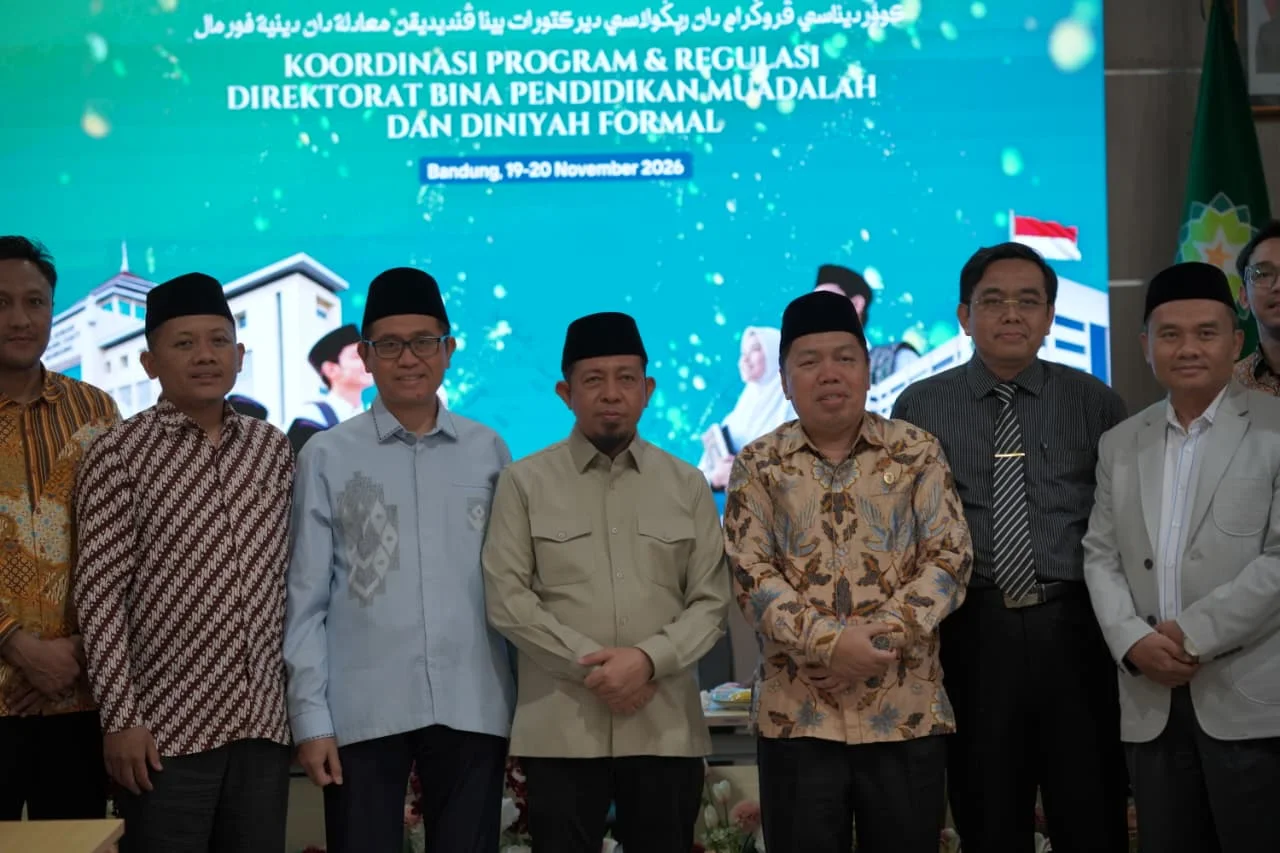
JurnalPost.com - The Directorate General of Pesantren at the Ministry of Religious Affairs is exploring a strengthened synergy with State Islamic Religious Universities (PTKIN) to map the potential of pesantren and initiate the opening of academic programs in pesantren studies.
This initiative was discussed during the Program and Regulation Coordination meeting of the Directorate of Muadalah and Formal Diniyah Education at the campus of UIN Sunan Gunung Djati Bandung. The coordination meeting carried the theme, "PTKIN Pesantren Study Synergy for Mapping Pesantren Potential and Exploring the Development of Pesantren Study Programs."
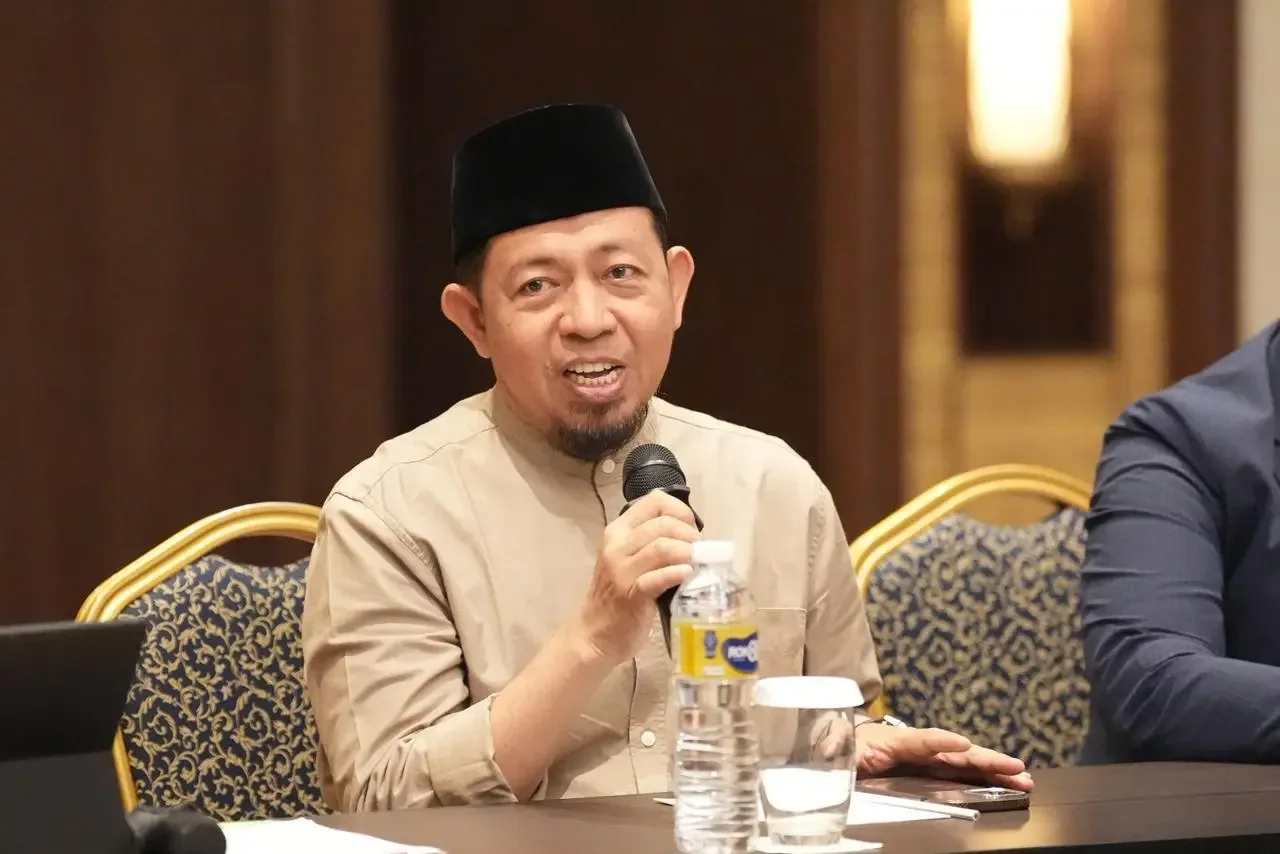
Attendees included Director General of Pesantren Basnang Said, Rector of UIN Bandung Rosihon Anwar, Director of Muadalah and Formal Diniyah Education Mastuki, and several professors from State Islamic Religious Universities. Pesantren stakeholders were also present. The forum aimed to build a shared perspective on the direction of scientific development for pesantren within higher education.
Director General of Pesantren, Basnang Said, emphasized the importance of regulatory support as a foundation for developing new study programs oriented toward pesantren studies. According to him, there must be regulations that provide space and certainty for universities to open study programs in Pesantren Management or Pesantren Studies.
“The development of these study programs needs to be accompanied by the strengthening of the academic ecosystem through the establishment of a Center for Pesantren Studies within PTKIN. This research center is expected to become a hub for research development, documentation of pesantren intellectual treasures, strengthening of academic networks, and the study of various strategic issues related to pesantren,” said Basnang Said, Thursday (19/11/2026).
According to Basnang, the development of study programs and pesantren research centers are two complementary agendas. The study program serves as a space for education and human resource development in the field of pesantren, while the research center plays a role in strengthening research traditions and the production of knowledge about pesantren.
Rector of UIN Sunan Gunung Djati Bandung, Rosihon Anwar, stated that pesantren and universities possess complementary scientific strengths. Pesantren have a strong tradition and religious knowledge base, while universities possess scientific methodologies and academic approaches that can enrich the development of pesantren studies.
“Pesantren have a good foundation of religious knowledge, while PTKIN campuses have good scientific methodologies, creating a great synergy,” he expressed.
According to him, this collaboration is a strategic opportunity to develop the treasury of pesantren knowledge so that it is not only preserved within the tradition of pesantren education but can also be developed through more systematic and multidisciplinary academic approaches.
Director of Muadalah and Formal Diniyah Education, Mastuki, emphasized that Law Number 18 of 2019 concerning Pesantren has provided recognition for the long history and contributions of pesantren to the life of the nation. Through this regulation, pesantren education is positioned as a distinct educational path within the national education system, with the obligation to maintain and develop the unique characteristics of each educational unit.
According to Mastuki, this recognition needs to be followed up through the facilitation of pesantren scientific development, one of which is by building synergy with PTKIN to explore the opening of new study programs that specifically develop pesantren studies.
“The task of the Ministry of Religious Affairs is to provide facilitation for the development of pesantren science by synergizing with PTKIN to open new pesantren study programs,” he asserted.
He explained that the development of pesantren study programs requires a strong academic foundation. One of the important stages that must be prepared is the drafting of an academic manuscript that formulates the body of knowledge or the scientific structure of pesantren studies.
“To achieve that, we need an academic manuscript on the body of knowledge of pesantren studies. This is important so that the development of the study program has a clear, systematic, and academically accountable scientific basis,” explained Mastuki.
He also emphasized the importance of understanding the limits of authority in the study program development process. Academic matters such as the opening of study programs, departments, and faculties are the domain of universities and academics. Meanwhile, the ministry plays a role in facilitating and ensuring that the development process runs in line with the needs and interests of pesantren stakeholders.
“The development of study programs must be built through the synergy of various parties, including universities, pesantren leaders, experts, and policymakers,” he concluded.



Comments 0
Write a Comment Share your response