

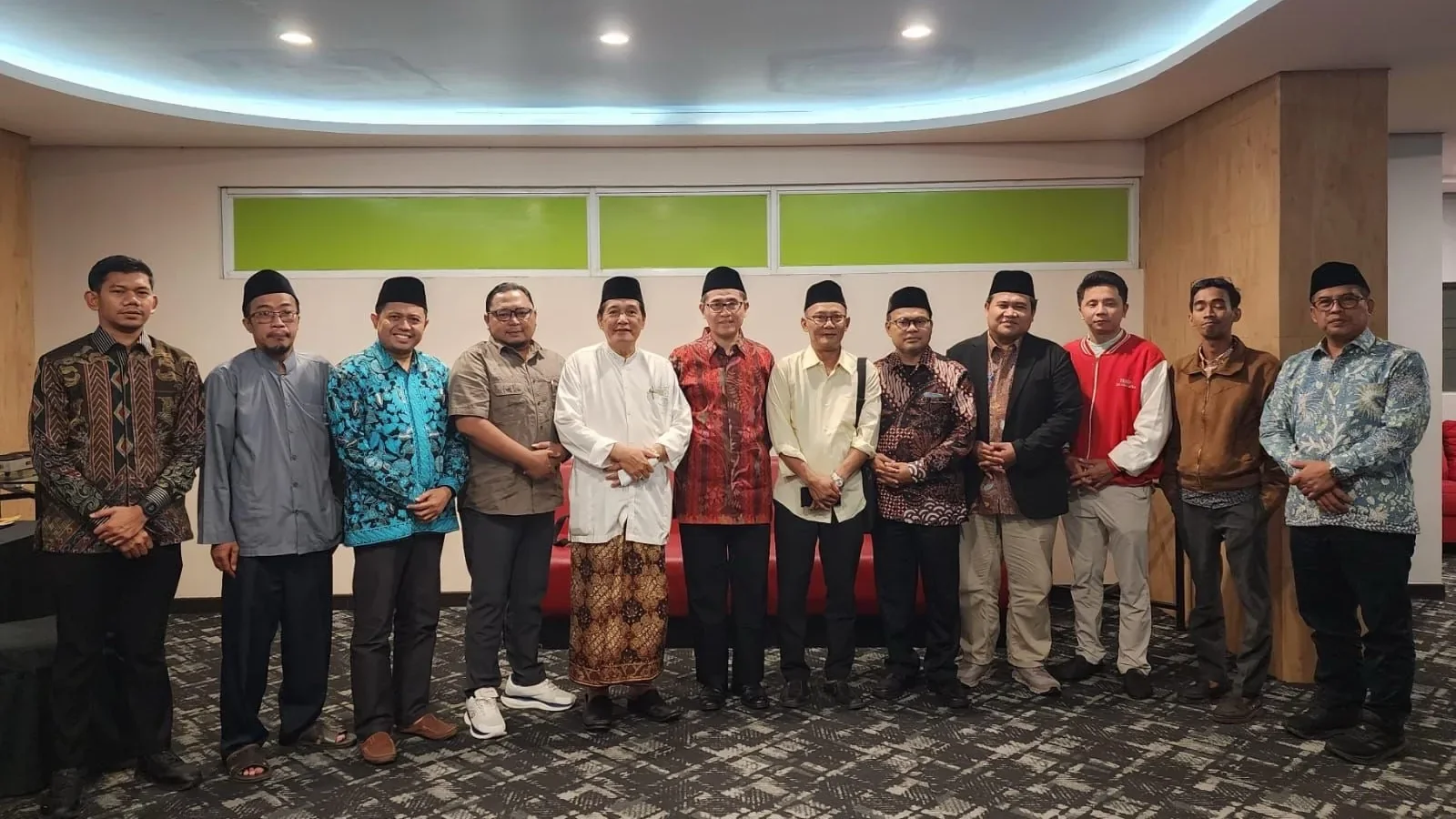
Tangerang, JurnalPost.com – The Ministry of Religious Affairs is partnering with research centers and scholars from seven State Islamic Universities (UIN) to prepare policy research on Islamic boarding schools (pesantren). The Directorate General of Pesantren is gathering research proposals to help map the needs of these institutions and establish program priorities.
The discussion took place during a forum held by the Directorate General of Pesantren in Gading Serpong, Tangerang, from 12 to 14 November 2026, as documented by LP2M at UIN Sayyid Ali Rahmatullah Tulungagung. The research agenda relates to the implementation of Law Number 18 of 2019 concerning Pesantren, which governs their functions in education, religious outreach, and community empowerment.
Mastuki, Director of Muadalah and Formal Diniyah Education at the Directorate General of Pesantren, encouraged cross-campus research centers to undertake collaborative studies. He noted that Islamic higher education institutions possess the researchers and reference materials necessary to assist the Ministry in formulating policies across these three areas.
“Research centers focused on pesantren studies need to conduct collaborative research to explore the vast and rich landscape of pesantren studies,” said Mastuki.
From Classical Texts to Pesantren Mapping
Abdul Munip, Head of the Martin van Bruinessen Pesantren Research Center at UIN Sunan Kalijaga Yogyakarta, proposed research on the intellectual heritage of pesantren. He noted that studies on these institutions have been conducted since the colonial era. Universities can update this work by examining traditions such as spiritual asceticism (tirakat) and manakib, scholarly lineages (sanad), the editing of classical manuscripts (tahkik), and the methods used to teach classical texts (kitab kuning).
“We need to update this research on intellectual heritage. There are many themes regarding pesantren that are open for study by Islamic higher education institutions,” said Abdul Munip on Friday (13/11/2026).
Dedy Ibmar and Savran Billahi, two researchers from the Center for the Study of Islam and Society (PPIM) at UIN Syarif Hidayatullah Jakarta, proposed foundational studies to capture the current state of pesantren. They questioned whether the traditional classification of pesantren into 'traditional' and 'modern' categories remains sufficient to understand shifts in leadership patterns and the expanding role of pesantren in society.
The two researchers highlighted the role of pesantren in managing endowments (waqf), fostering diversity, and developing economic enterprises. This mapping is intended to serve as a reference for the Directorate General of Pesantren to identify the specific needs of each institution and determine which areas require priority attention.
Research on Student Protection and the Environment
PPIM also presented a study on the vulnerability and resilience of students (santri) in the face of sexual violence. Regarding environmental issues, the researchers cited examples such as waste management in Pekanbaru pesantren, the use of waste to produce concrete blocks in Central Java, and the development of biocompost in Bandung.
In the report Environmentally Friendly Pesantren: Growing or Failing? published by PPIM in 2025, it was noted that 269 out of 361 pesantren surveyed have environmental programs. Tree planting and waste management were among the most commonly implemented activities.
In addition to Abdul Munip and the two PPIM researchers, the forum was attended by Mohammad Asrori from UIN Maulana Malik Ibrahim Malang, Muhammad Shohibul Itmam from UIN Sunan Kudus, Muhammad Muntahibun Nafis from UIN Sayyid Ali Rahmatullah Tulungagung, Syukron Affani from UIN Madura, and Moh. Nor Afandi from UIN Kiai Haji Achmad Siddiq Jember.





Comments 0
Write a Comment Share your response