

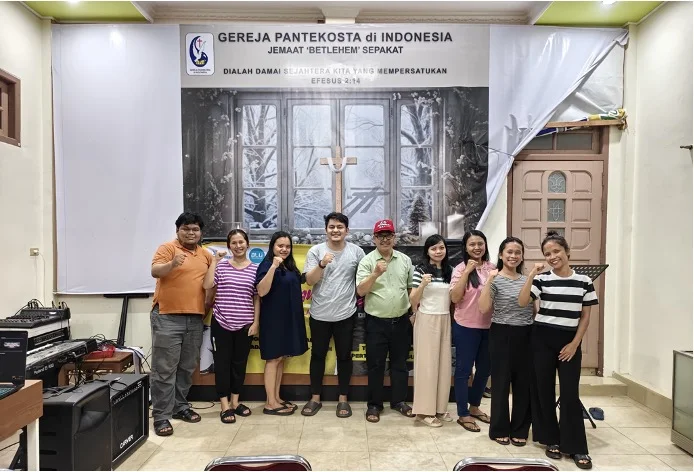
PONTIANAK, JurnalPost.com– Lecturers from the Indonesian Institute of the Arts (ISI) Surakarta have carried out a Community Service (PKM) program through church music training for the music team at the Pentecostal Church in Indonesia (GPdI) Bethlehem Sepakat, Pontianak, West Kalimantan.
The six-month program aims to improve the skills of church musicians, particularly in mastering basic instrument techniques, understanding chords, and the ability to play music collectively to support worship services.
The training was conducted through four face-to-face meetings combined with online mentoring. The activity received funding support from the ISI Surakarta DIPA for the year 2026.
The program was led by Abraham Anton Febrindo Luwiga, S.Sn., M.Sn., along with Riana Kapri, S.Sn., M.A. Both also involved two students, Arya Bima Eka Saputra and Naufal Annandhita Naruwendha.
In addition to being part of the implementation of the higher education tridharma, this activity also supports the Sustainable Development Goals (SDGs), specifically the fourth goal regarding quality education and the 17 goal concerning partnerships for the goals.
Helping Church Musicians Develop Skills
The program was initiated based on the condition of some musicians at GPdI Bethlehem Sepakat who had previously developed their musical skills autodidactically. They generally learned playing techniques through videos on the internet or by observing other musicians.
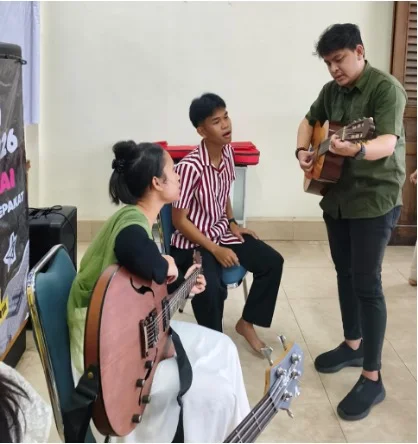
This learning method helped participants become familiar with their instruments but did not fully provide a systematic understanding of playing techniques and music theory. Therefore, the ISI Surakarta service team designed training tailored to the needs of guitar, keyboard, and bass players.
The activity began on 27 June 2026 with an initial visit focused on mapping the participants' baseline skills. From this stage, the implementation team identified the skills already possessed by the participants while determining the material that needed to be deepened during the mentoring.
The training material included an introduction to musical notation, basic instrument playing techniques, an understanding of chord forms and functions, and the application of chord progressions in musical performance.
To make it easier to understand, the learning was not only delivered through theoretical explanations but was applied directly using spiritual songs already familiar to the participants.
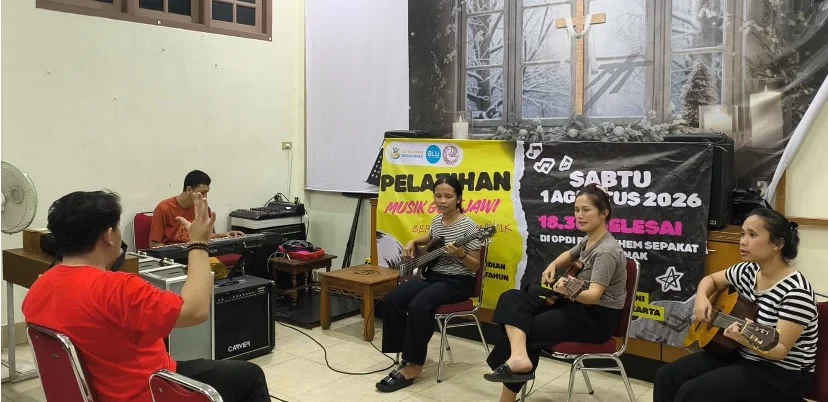
[Photo Picture3 – Documentation of church music training activities by the ISI Surakarta team]
Gradual Training Through Direct and Online Meetings
After the first meeting, the training continued on 11 July, 1 August, and 5 September 2026. Each meeting was designed to strengthen participants' abilities gradually, starting from mastering fingering techniques to applying chord progressions in musical performance.
Participants also received training on transitions between chords so that the playing sounded smoother and in accordance with the rhythm of the song. This ability is an important part of church music performance, especially when several instruments are played simultaneously.
In addition to individual skills, participants were guided to understand the role of each instrument in an ensemble format. Thus, guitar, keyboard, and bass players do not just focus on their own playing but also learn to build musical harmony as a group.
Mentoring did not stop after the face-to-face meetings ended. The implementation team continued to provide guidance via the Zoom platform to monitor participant progress, evaluate training results, and provide corrections on playing techniques that still needed improvement.
Through this combination of direct and online learning, participants had the opportunity to continue practicing while receiving direction from the service team throughout the program.
Participants' Musical Ability Shows Improvement
The training showed positive development in the skills of the participants who followed the activities until the final stage. The musicians began to be able to apply fingering techniques and perform chord transitions better on their respective instruments.
Participants also showed improvement in adjusting their musical performance to the rhythm of spiritual songs. This skill is expected to help them play worship accompaniment music in a more directed, compact, and harmonious manner.
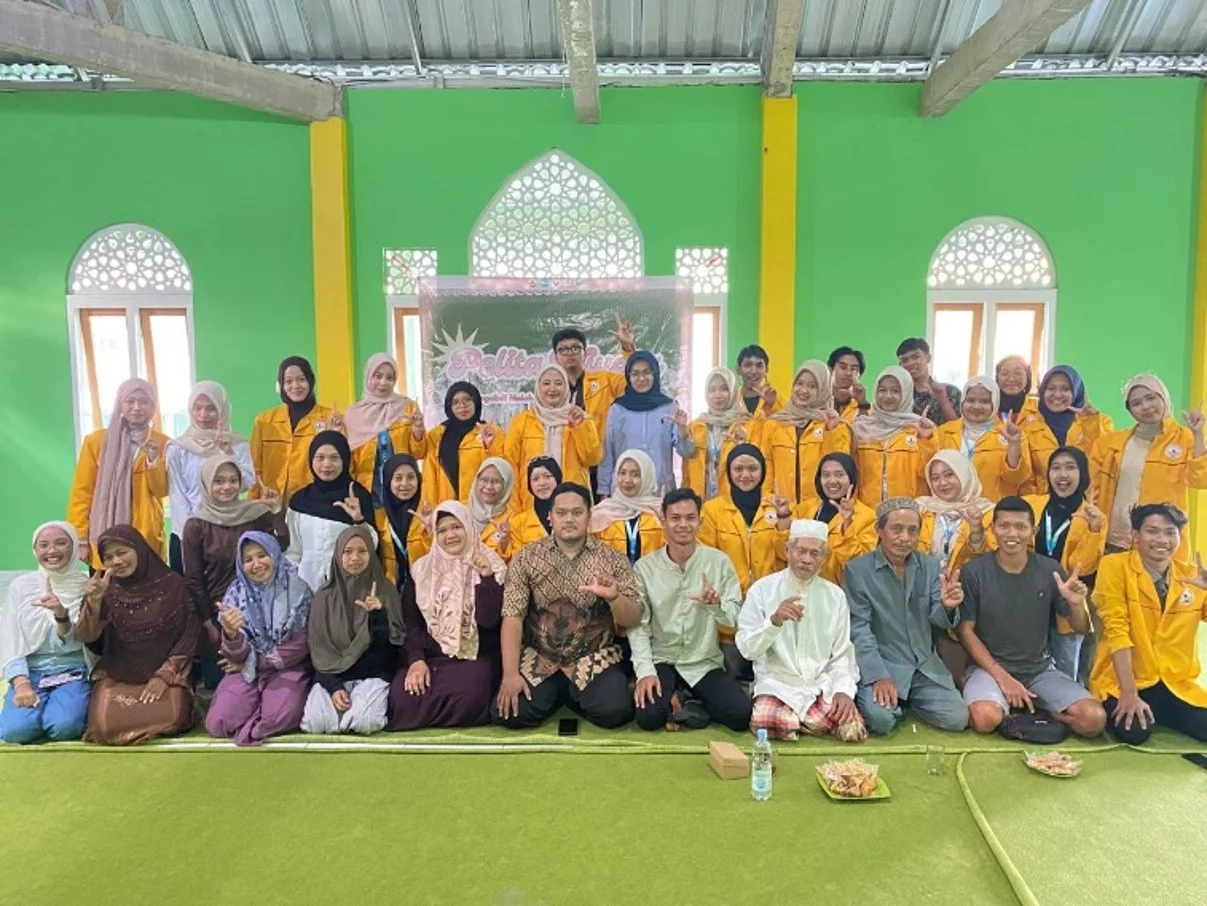
[Photo Picture2 – Documentation of activity results and camaraderie between participants and the ISI Surakarta service team]
In addition to providing direct benefits to the church music team, this service program also produced a number of academic outputs and activity documentation. These outputs include scientific articles, cooperation documents with partners, and activity dissemination posters registered for copyright protection.
Through this program, ISI Surakarta seeks to expand the contribution of arts education to the community. Knowledge and skills developed in the higher education environment are expected to be applied directly to meet community needs.
The implementation team also hopes that the collaboration with GPdI Bethlehem Sepakat can continue. This partnership is considered to have the potential to be a means of sustainable musical skill development, while also supporting the improvement of the quality of music ministry in worship activities.
This activity demonstrates that higher education arts service is not only oriented toward technical skill development but can also strengthen the relationship between the world of education and the community through practical learning that is tailored to the needs of partners.



Comments 0
Write a Comment Share your response