

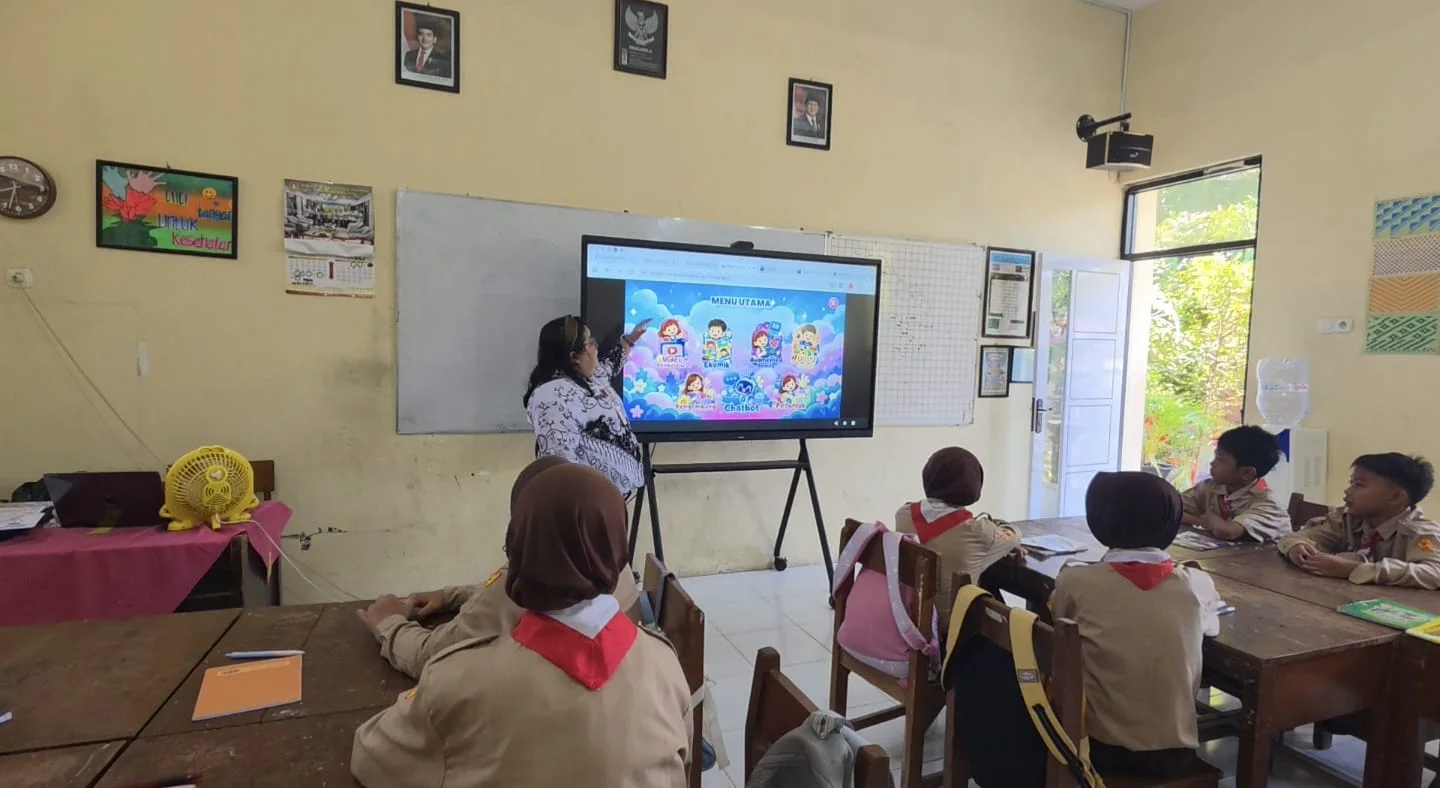
SEMARANG, JurnalPost.com – Discussing reproductive health with elementary school-aged children remains a challenge for many parents and teachers. This often-sensitive topic requires a specialized approach to ensure children gain accurate knowledge without feeling fearful, embarrassed, or uncomfortable asking questions.
Addressing this issue, Chitra Sintarani, S.Pd., M.Pd., a teacher at SD Negeri Sambiroto 02 in Semarang, developed a learning innovation called SAKTI through a program titled “My Body is Precious, I Protect It!”.
This innovation combines concrete game-based media with artificial intelligence ( AI ) technology to help students understand reproductive health, personal hygiene, body boundaries, and self-protection methods appropriate for their age and developmental stage.
Chitra believes that reproductive health education must be introduced through the right approach, as children's curiosity about their bodies can arise at any time, often before adults are prepared to provide explanations.
“If children do not receive accurate information from parents or teachers, where will they seek answers? That question drove me to find a way to deliver reproductive health material in a safe and child-friendly manner,” Chitra explained.
Starting from AI-Assisted Educational Games
The development of SAKTI began with the use of concrete learning media designed with the help of AI technology.
In the initial phase, Chitra utilized artificial intelligence to help develop learning concepts, illustrations, visual designs, materials, and educational content, which were then realized in the form of games and learning cards.
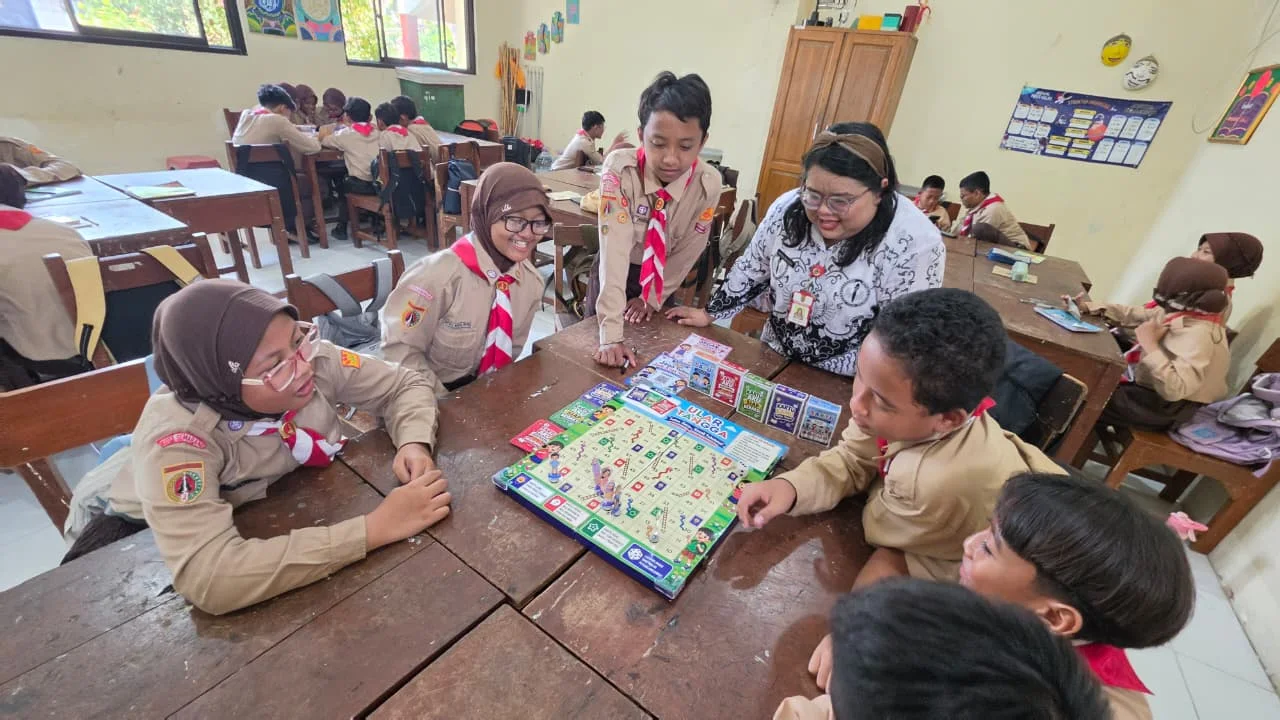
Through these media, students are introduced to various fundamental topics, ranging from identifying body parts and maintaining personal hygiene to understanding body boundaries and distinguishing between safe and unsafe touch.
The learning process is packaged through game-based activities so that students do not merely listen to the teacher's explanation but are actively involved in the learning process.
Beyond assisting in material delivery, these games provide opportunities for students to discuss, collaborate, and understand situations related to safety and self-protection in their daily lives.
This approach serves as an alternative for teachers to convey reproductive health material using simple, scientific language that aligns with child development.
Teacher Enthusiasm Drives SAKTI's Evolution into a Digital App
The SAKTI innovation journey expanded after Chitra shared her experience using these media during a Tugu Muda Learning Community event with other teachers in Semarang.
The learning media introduced garnered attention from several teachers, many of whom expressed interest in borrowing and using the physical SAKTI media in their own classroom activities.
This high level of interest sparked the idea to develop SAKTI in a digital format so that its use would not be limited by the availability of physical game sets.
By again leveraging AI technology, Chitra developed various digital learning media, such as e-comics, animated videos, digital snakes and ladders games, educational cards, and an educational chatbot.
These various media were then integrated into a single SAKTI application designed to be accessed flexibly by teachers, students, and parents.
Although now available in digital form, the use of physical media is maintained, as both are designed to complement each other according to learning needs.
Physical media provide direct experience through games and peer interaction, while the digital application allows users to read materials, watch videos, play educational games, and obtain additional explanations.
The SAKTI application and learning media can be accessed via https://s.id/MediaSAKTICSR.
Building a Safe Learning Space for Children
In its classroom implementation, Chitra does not immediately begin lessons with explanations of organs or reproductive health.
Students are first invited to recognize their emotions and establish a safe and comfortable learning atmosphere.
The teacher and students then establish classroom agreements, such as mutual respect, using polite and scientific language, not laughing at peers' questions, and respecting each student's privacy.
Students are also not forced to share personal experiences that might make them feel uncomfortable.
Once the agreements are in place, activities proceed with the exploration of the SAKTI application.
Students can study body parts and reproductive organs scientifically according to their age, read e-comics, watch animated videos, and understand the importance of maintaining personal hygiene and health.
The educational chatbot serves as a resource that students can use when they need additional explanations regarding the material being studied.
Learning is then reinforced through games and exercises in understanding various situations that children might face in daily life.
One of the key messages introduced is three simple actions to take when a child faces a situation that makes them feel unsafe, namely saying no, walking away, and telling a trusted adult.
This material is presented to help students understand that they have the right to maintain their body boundaries and seek help when facing situations that compromise their sense of safety.
Students Invited to Create Self-Protection Campaigns
Learning through SAKTI is not directed solely at mastering material; students are also given the opportunity to communicate the knowledge they have gained through creative works.
In a campaign titled “My Body is Precious, I Protect It!”, students create various educational products, ranging from posters and mini-comics to videos, drawings, and stickers.
These works contain messages about the importance of valuing one's body, maintaining personal hygiene, understanding personal boundaries, and having the courage to ask for help.
Some of the messages highlighted include “My Body is Precious,” “I Know My Body Boundaries,” “Dare to Say No,” “Maintain Personal Hygiene,” and “Dare to Tell.”
The students' work can be shared with friends or displayed in the school environment so that the educational messages gained during the lesson can reach more students.
Through this activity, students not only learn to understand information but also practice communicating positive messages using their own language and creativity.
AI as a Supporter, Not a Replacement for the Teacher's Role
Amid the increasingly widespread use of artificial intelligence in education, Chitra emphasizes that technology must remain a tool to support the learning process.
According to her, the presence of AI can help educators design more diverse and engaging media, but the responsibility for providing guidance, ensuring the accuracy of materials, and creating a safe learning environment remains with the teacher.
“Artificial Intelligence is not a replacement for the teacher. AI is a partner to help develop physical and digital media so that reproductive health education can be delivered more safely, engagingly, and in a child-friendly manner. Technology is just a tool. The teacher still has the primary role in guiding, accompanying, and creating a space where children feel safe to ask questions and learn,” she explained.
The development of SAKTI serves as an example of digital technology utilization that stems from real needs in the classroom.
This innovation also demonstrates how learning experiences using simple media can be developed into educational tools that are more accessible to various parties.
Chitra hopes that the presence of SAKTI can help teachers and parents discuss reproductive health more openly, responsibly, and in accordance with the developmental needs of children.
Through the combination of physical games and digital applications, the learning process is expected to not only provide knowledge but also foster a child's awareness to value their body, maintain personal hygiene, and have the courage to seek help when needed.
For Chitra, the main message she wishes to instill through this innovation remains simple: “My body is precious, I protect it.”



Comments 0
Write a Comment Share your response