


YOGYAKARTA, JurnalPost.com – Efforts to create a safe and comfortable school environment require more than just issuing regulations. These policies must be translated into tangible activities that teachers can implement and students can directly benefit from.
The government has issued the Regulation of the Minister of Basic and Secondary Education (Permendikdasmen) Number 6 of 2026 regarding a Safe and Comfortable School Culture. This regulation emphasizes the importance of involving all school community members in creating a secure educational environment, including through the strengthening of psychological well-being and violence prevention.
However, implementing this policy presents its own challenges. One of these is how teachers can effectively teach emotional management, build empathy, and help students understand and prevent bullying behaviors through daily learning activities.
Addressing this issue, four students from the Islamic University of Indonesia (UII) forming the EQUE-TIM have developed EMOQUEST, a digital-based educational board game designed to train emotional regulation and social conflict resolution skills in elementary school students.
The team consists of Nandini Saputri from the Psychology Study Program, Bunga Ira Widiastuti and Yuda Fathi Albani from Digital Business, and Eza Herda Herdiana from Informatics. The development of this innovation was supervised by Latifatul Laili, S.Psi., M.Psi., a psychologist.
Through the EMOQUEST innovation, EQUE-TIM successfully qualified as finalists in the 2026 Student Digital Innovation Competition (LIDM) in the Digital Learning Innovation for Education division.
Learning to Manage Emotions Through Play
EMOQUEST was developed using a social-emotional learning approach based on the framework of the Collaborative for Academic, Social, and Emotional Learning (CASEL).

In practice, students play in groups using a game board and cards containing various social situations relevant to their daily lives.
These situations range from conflicts with friends and differences of opinion to misunderstandings and actions that could potentially hurt others' feelings.
Through the available response options, students are encouraged to identify the emotions that arise, consider their friends' feelings, and determine more appropriate responses when facing conflict.
The game does not just emphasize the ability to answer questions; it also encourages students to discuss, understand other perspectives, and learn to make decisions without resorting to violence.
During this process, the teacher acts as a facilitator who guides the game while helping students reflect on their experiences without providing judgmental feedback.
This approach is expected to make character education and emotional management a more enjoyable and accessible learning experience for children.
Designed to be Affordable and Equipped with a Digital Dashboard
One of the advantages offered by EMOQUEST is its ease of implementation in schools with varying facilities and infrastructure.
The game board and cards can be printed independently by the school, eliminating the need for expensive specialized equipment.
Furthermore, the supporting digital system is designed to function with minimal internet connectivity. This concept is intended to allow EMOQUEST to be used in schools with limited access to technology.
EMOQUEST is also equipped with a web-based dashboard to help teachers monitor the development of students' social-emotional skills.
Through this feature, teachers can obtain preliminary information regarding students' emotional response patterns and identify conditions that may require further attention or support.
However, the information generated is not intended as a psychological diagnostic tool, but rather as a resource for observation and to support the learning process.
Data management for children is also a priority in the development of EMOQUEST. The system is designed with access restrictions based on user roles and parental consent, in accordance with personal data protection principles.
Undergone Limited Trials in Three Schools
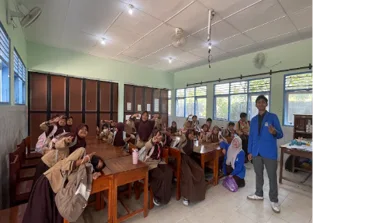
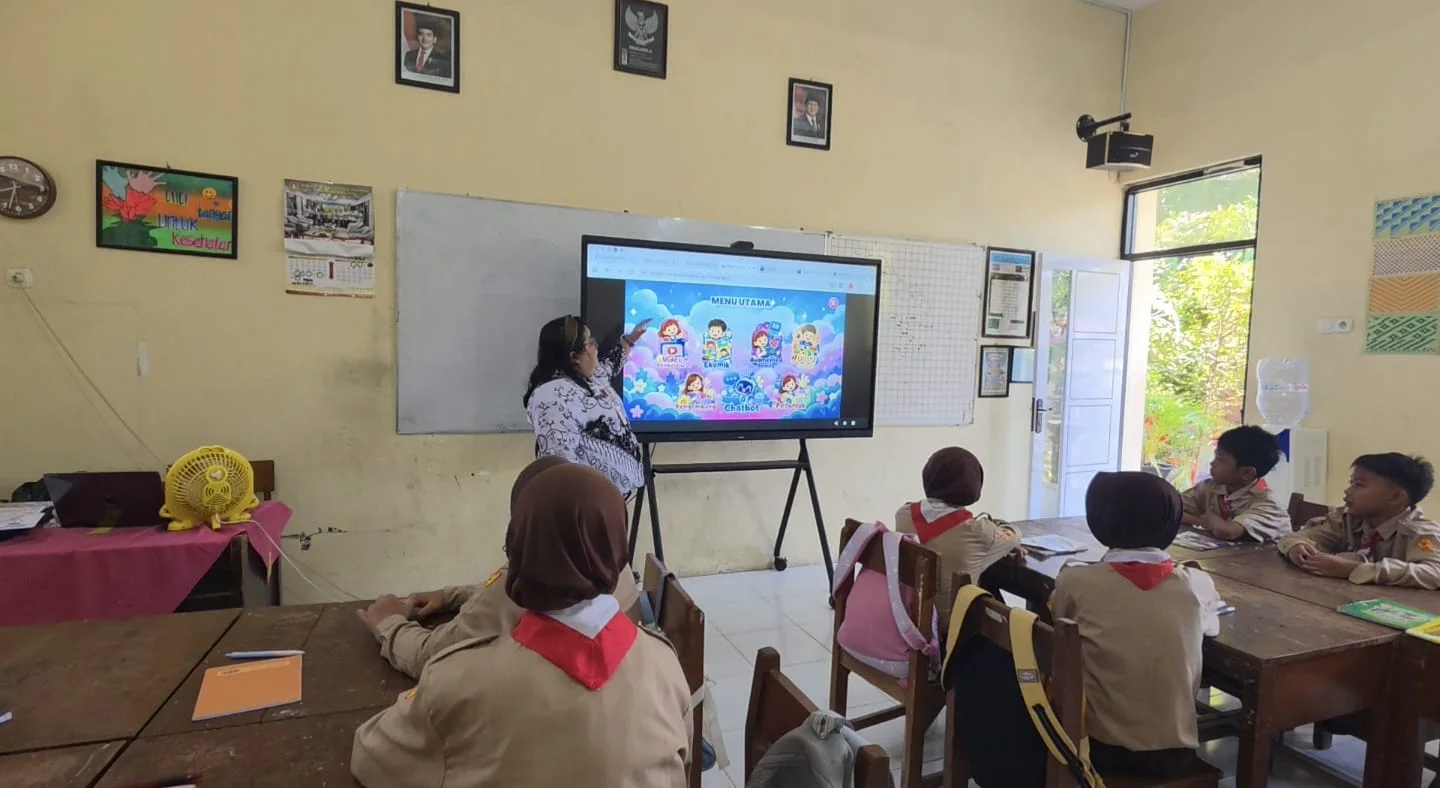
During its development phase, EMOQUEST underwent limited trials at three elementary schools in Sleman Regency, Special Region of Yogyakarta.
These trials provided an opportunity for the development team to observe the game's usage firsthand and gather feedback from the school environment.
Based on the initial evaluation provided by the team, an elementary school teacher assessed the media as suitable for use with some revisions. Meanwhile, a UII educational psychology expert gave a positive assessment of the learning substance developed.
The feedback also emphasized the importance of maintaining direct interaction between students so that the use of technology does not replace social communication in the learning process.
The trial results were then used as a basis for refining the game mechanics, learning materials, and digital support features.
Despite receiving positive initial responses, the development team recognizes that further testing is still needed to determine the effectiveness of EMOQUEST in supporting emotional regulation and bullying prevention on a broader scale.
Encouraging Early Bullying Prevention
The presence of EMOQUEST demonstrates that efforts to create a safe and comfortable school can begin with simple approaches that are close to the students' daily lives.
Bullying prevention is not only related to reporting mechanisms or handling incidents after they occur, but also requires the formation of positive habits through a continuous educational process.
In this context, the ability to recognize emotions, control responses, respect differences, and understand others' feelings becomes an essential part of building healthy social relationships in the school environment.
Support from local governments, education offices, universities, and schools is also needed to open opportunities for the development and implementation of similar learning innovations.
Such collaboration can be carried out through teacher mentoring, testing of learning media, or the development of social-emotional education programs tailored to student needs.
Through EMOQUEST, EQUE-TIM hopes that the innovation they have developed can serve as an alternative learning medium to support the creation of a safer, more comfortable, and child-friendly school.
Ultimately, a safe school is not just an environment with anti-violence rules, but a space where children learn to recognize their feelings, respect others, and resolve conflicts without hurting anyone.








Comments 0
Write a Comment Share your response