

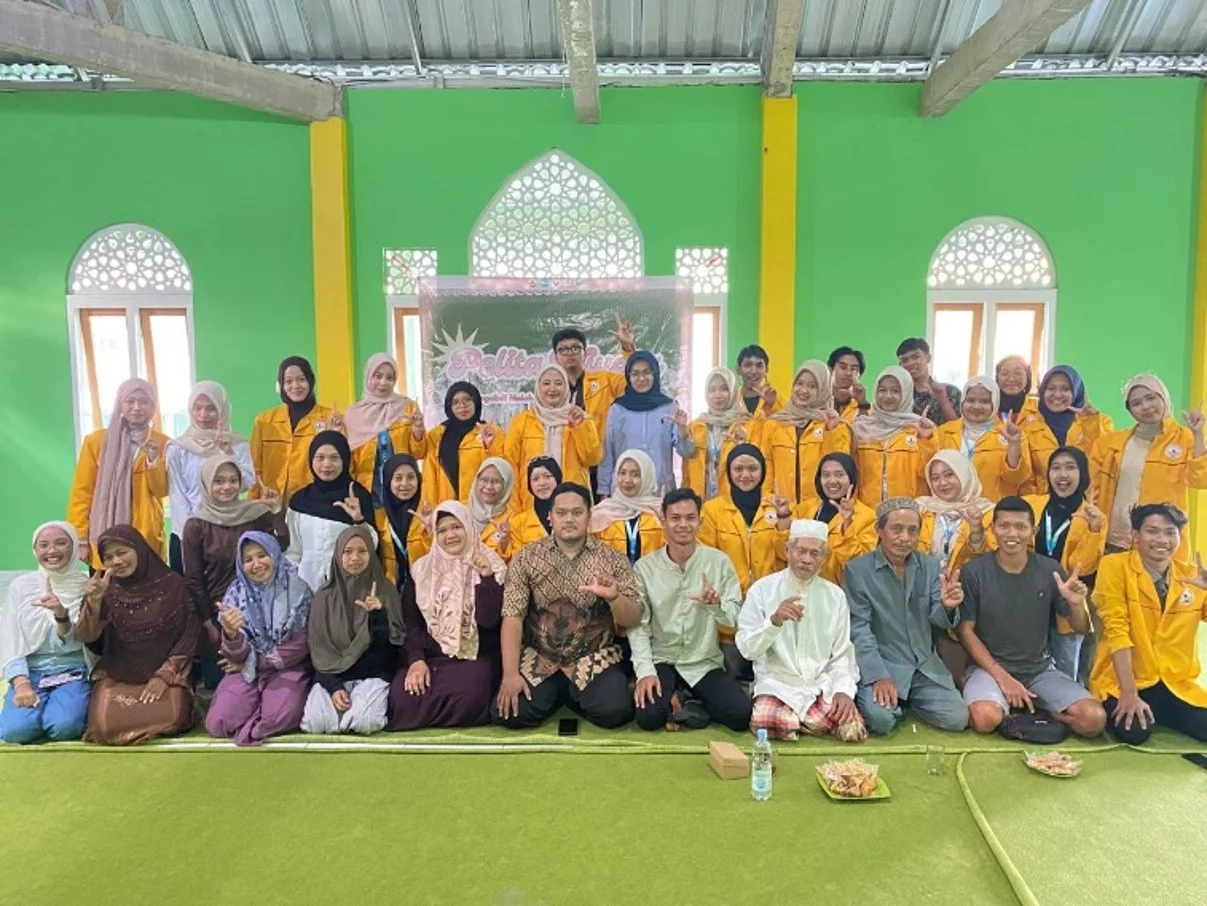
MAGELANG, JurnalPost.com – The Indonesian Language and Literature Education Student Association (Himaprodi PBSI) of the Faculty of Teacher Training and Education (FKIP) at Universitas Tidar has carried out a community service program titled Pelita Wiyata 2026 in Jurangsari Hamlet, Gondangrejo Village, Windusari District, Magelang Regency.
The activities, which took place from 1 to 9 August 2026, targeted two main areas: education and community empowerment. Through this program, students aimed to provide engaging learning experiences for children while encouraging the community to transform household waste into valuable resources.
Carrying the theme “Serving Through Education, Creating for the Future”, Pelita Wiyata serves as an implementation of the Tri Dharma of Higher Education, specifically in community service.
The program involved the leadership of Himaprodi PBSI alongside student volunteers. Various activities were designed based on the needs and characteristics of the local community, ranging from organic waste management training and interactive learning to literacy reinforcement and the development of children's creativity through dance.
Encouraging Residents to Process Organic Waste into Compost
The service series began on 1 August 2026 with an opening ceremony and a workshop on processing organic waste into 'galpos' (gallon composters).
The workshop featured Joko Wahyono, S.Si., from the Magelang Regency Environmental Agency (DLH) as a speaker. Participants included neighborhood heads (RT) 1 through RT 4 and representatives of the Jurangsari Hamlet community.
The opening ceremony was also attended by the Head of Jurangsari Hamlet, Indra Lesmana, and a representative from the Gondangrejo Village Government, Ahmad Fauzi, who offered their remarks and support for the students' service program.
After gaining a basic understanding of waste management, the activities continued on 2 August 2026 with training on creating 'galpos' for the youth of the Jurangsari Hamlet Karang Taruna.
Prior to the training, students also participated in a community cleanup with local youth as part of the preparations for Indonesia's Independence Day celebrations.
The waste management program continued on 8 August 2026, involving the men and women of Jurangsari Hamlet. Held in the local mosque courtyard, participants practiced turning kitchen scraps into compost using gallon containers.
The activity received a positive response from the community. Given that most residents work as farmers, processing organic waste into fertilizer was seen as a practical benefit for their daily agricultural activities.
Through this simple practice, the community was introduced to ways of reducing household waste while producing organic fertilizer for their plants.
Providing Interactive Learning at MI Nurul Huda
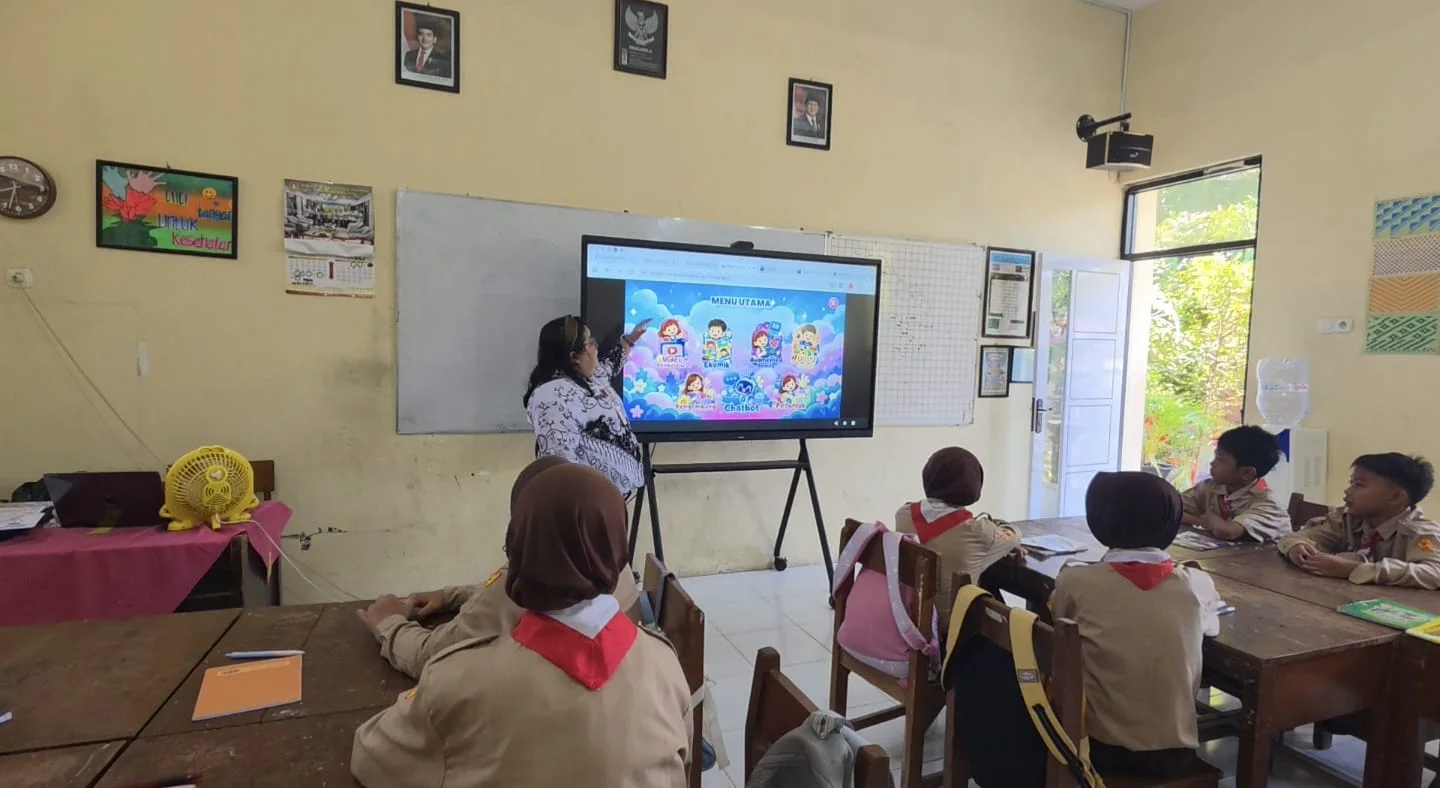
In addition to assisting the hamlet community, the Pelita Wiyata team conducted educational activities at MI Nurul Huda from 3 to 7 August 2026.
This learning program involved Himaprodi PBSI board members from the 2024 cohort and student volunteers from the 2025 cohort. They supported students, particularly in grades IV, V, and VI, using teaching methods that emphasized active student participation.
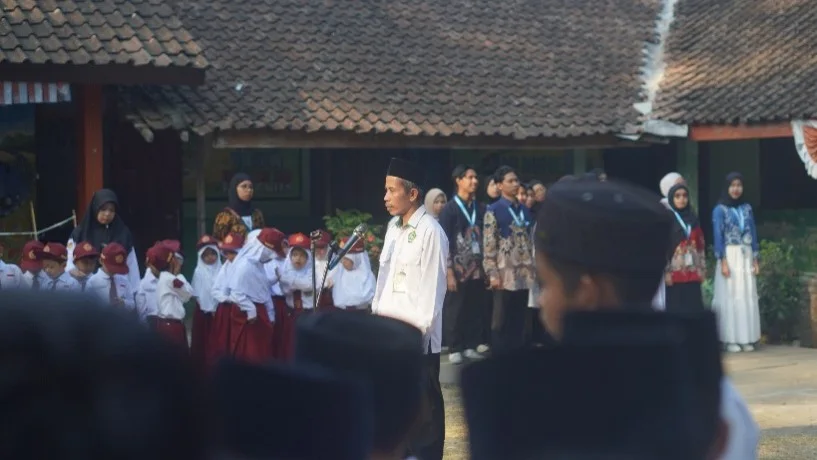
On Monday, 3 August 2026, the day began with a flag ceremony and religious routines, including the recitation of Asmaul Husna and short surahs.
Afterward, students entered their assigned classrooms. The first session focused on introductions and learning about descriptive texts.
The material continued on the second day with exercises in writing descriptions based on objects familiar to the students' lives. Students were encouraged to observe their surroundings or identify figures they knew before translating their observations into writing.
This approach was applied so that students would not only understand the theory but also develop their ability to observe, organize ideas, and convey information in writing.
Entering the third and fourth days, the learning activities shifted to procedural text materials.
Students were first given an understanding of the structure and usage of procedural texts. Subsequently, they were invited to practice the material by creating trash cans from used gallon containers.
This practice bridged Indonesian language learning with environmental education. Beyond understanding the sequence of steps in a procedural text, the students gained hands-on experience in repurposing waste into useful items.
Reading Corner and Dance to Develop Creativity
Literacy reinforcement was a key component of the Pelita Wiyata activities. Students and volunteers created a reading corner to provide a space that supports reading habits within the school environment.
Outside of classroom learning, students also assisted with dance rehearsals for students in grades I through VI, who were prepared to perform at the closing ceremony.
Several students also received coaching for the Magelang Regency-level Sports and Arts Week (Porseni), specifically for the Indonesian and Arabic speech competitions.
Through these activities, the students aimed to provide a diverse learning experience that is not limited to academic ability but also encompasses the development of skills, confidence, and creativity.
At the end of each teaching session, the team conducted evaluations to improve the implementation of learning for the next meeting.
A Closing Ceremony Filled with Togetherness
The educational activities at MI Nurul Huda concluded on Friday, 7 August 2026.
The event began with religious routines, including Dhuha prayers and a seven-minute sermon (kultum) delivered by a local cleric.
Afterward, students participated in joint activities in the hall, ranging from watching an animated film about the story of Prophet Musa to remarks from the Pelita Wiyata project manager, the head of Himaprodi PBSI, and the school principal, followed by dance performances.
The sense of togetherness was also evident during the session where teachers shared their impressions, followed by farewell greetings with students and staff, and the presentation of a commemorative plaque to the school.
Meanwhile, the community service activities in Jurangsari Hamlet concluded on 9 August 2026 through the students' participation in the Independence Day celebration festivities.
The hamlet children performed a dance they had practiced with the students. The Pelita Wiyata team also assisted in running various competitions and presented a commemorative plaque to the residents through the hamlet head.
The event served as a farewell moment between the students and the community after spending time together throughout the program.
Although the service program has ended, it is hoped that the good relationships and bonds between the students and the community will be maintained.
Service Results Exhibited at the FKIP Showcase
The Pelita Wiyata 2026 program did not end with the activities in the field. Several results of the service, including the compost made with the community and the work of MI Nurul Huda students, were exhibited at the FKIP Universitas Tidar showcase on Thursday, 29 October 2026.
The exhibition served as a form of documentation for the activities while showcasing the students' contributions to developing community potential through educational and environmental approaches.
Through Pelita Wiyata, PBSI Universitas Tidar students gained the opportunity to apply the knowledge and skills learned during their studies in real-world situations.
On the other hand, the community and students gained practical experience and knowledge that is expected to continue to be utilized after the service program ends.
The implementation of Pelita Wiyata 2026 is expected to serve as an inspiration for future student service activities, with an increasingly broad scope of benefits and programs that continue to be adapted to the needs of the community.


Comments 0
Write a Comment Share your response