

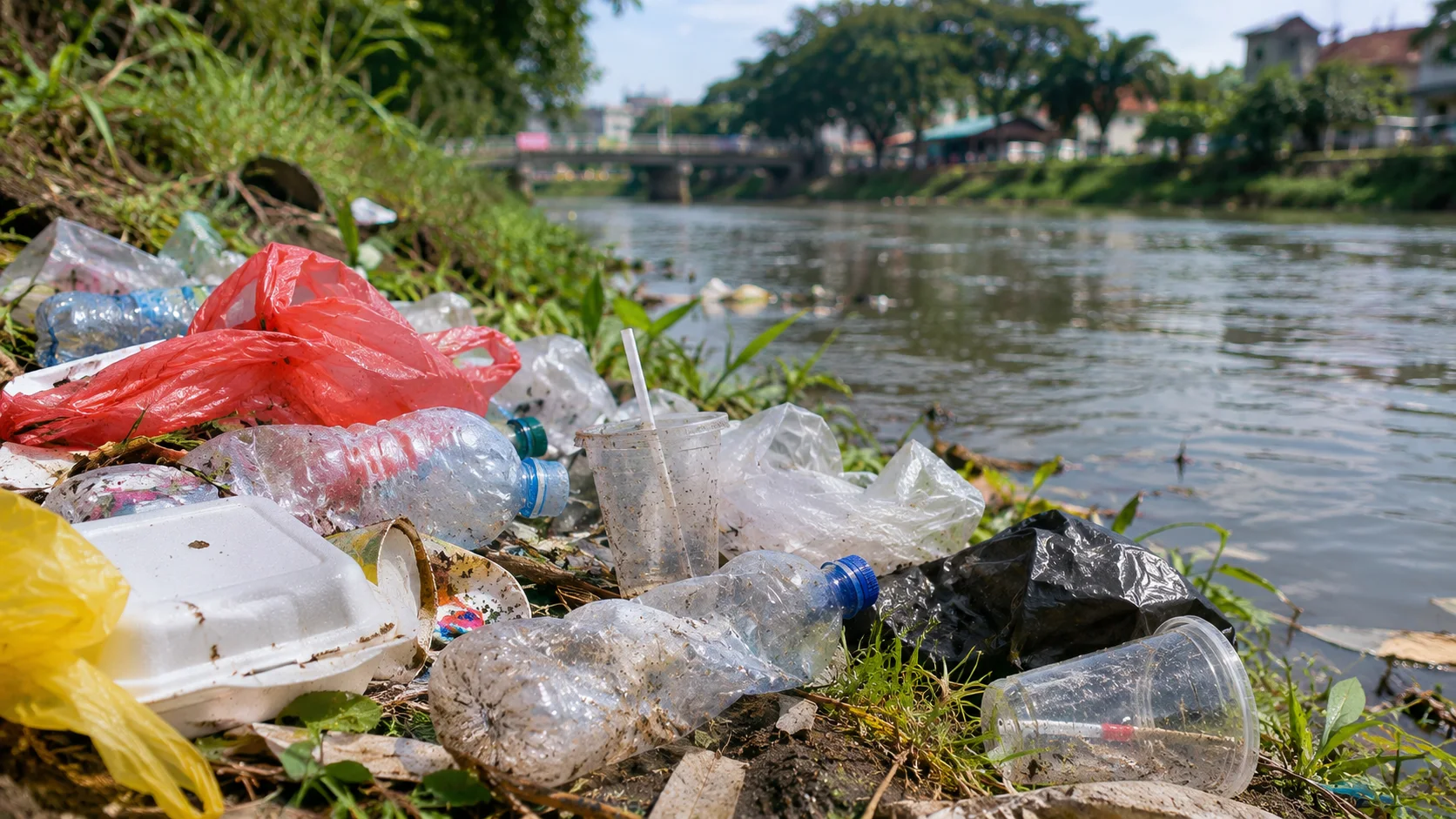
JurnalPost.com - Every day, without realizing it, we generate plastic waste through various simple activities. Buying drinks at a stall, ordering food online, shopping at the market, or receiving items wrapped in multiple layers often ends up in piles of plastic.
Shopping bags, straws, single-use cups, and food packaging are used for only a few minutes. However, once discarded, these items can become an environmental problem for a much longer time.
Plastic does offer various conveniences. The material is lightweight, practical, relatively cheap, and easy to find. It is no surprise that its use has become a part of modern life.
Almost every consumption activity involves plastic, and sometimes we even receive packaging that is not actually needed. Unfortunately, that convenience often makes us forget to think about where the plastic goes after it is no longer used.
We feel that the matter is settled once the trash is out of our hands. In reality, the actual problem is just beginning.
Plastic Waste and Public Consumption Habits
The issue of plastic waste is not just a matter of a lack of trash cans or limited sanitation workers. This issue is also closely related to consumption patterns and the public's perspective on the use of disposable items.
We are accustomed to using something for a short time and then throwing it away without thinking about the impact it causes.
That habit might seem simple if done by one person. However, when the same behavior is performed by millions of people every day, the amount of waste generated certainly becomes a much larger problem.
A culture of consumption that prioritizes practicality reinforces the public's dependence on single-use plastics.
When buying food or drinks, for example, consumers often receive extra plastic bags, straws, and various other packaging. It is not uncommon for some of that packaging to be avoidable.
The problem is that the use of single-use plastic has been considered normal, so the public rarely questions whether every piece of packaging is truly necessary.
In fact, the more plastic that is used, the greater the need for adequate waste collection and management systems.
The Impact of Plastic Waste on the Environment
Plastic waste that is not managed properly can cause various environmental problems.
Plastic thrown away carelessly has the potential to clog drains, pollute rivers, and be carried out to the sea. This condition not only disrupts environmental cleanliness but can also endanger animal life and the balance of the ecosystem.
In residential areas, plastic waste that accumulates in drainage channels can block water flow. Meanwhile, plastic that enters rivers and oceans can disrupt the organisms living within them.
The problem becomes even more complex when plastic weathers and breaks down into very small pieces known as microplastics.
These particles can spread throughout the environment and are more difficult to control than large pieces of plastic waste.
The impact of plastic pollution may not always be visible immediately. However, that does not mean the problem can be ignored.
A polluted environment ultimately has the potential to affect human quality of life, especially when pollution occurs in water sources, residential areas, and ecosystems that support human life.
Ironically, we often pay more attention to the cleanliness of the environment around our homes than to the impact of the waste we produce ourselves.
As long as the trash has entered the disposal site, we feel we no longer have any responsibility.
In fact, throwing away trash does not mean eliminating it. The trash only moves to a different place and still requires proper management processes.
This way of thinking is what needs to change if the public truly wants to reduce the problem of plastic waste.
Reducing Single-Use Plastic Starts with Yourself
To overcome the problem of plastic waste, changes are needed that start with the public's habits in daily life.
One of the simplest steps is to reduce the use of single-use plastics in various consumption activities.
The public can get into the habit of bringing their own shopping bags, using refillable water bottles, and bringing food containers when buying food outside the home.
The habit of refusing straws, plastic bags, or single-use cutlery when not needed can also help reduce the amount of waste generated.
These steps may seem small. However, if done consistently by many people, these efforts can make a positive contribution to waste reduction.
Equally important is changing the mindset that bringing your own equipment is not a hassle, but rather part of your responsibility to the environment.
This habit can be built gradually until it becomes part of the public's lifestyle.
Reducing plastic waste does not mean rejecting all plastic use, but rather emphasizing use that meets needs and avoiding single-use items that are not actually necessary.
The Importance of Waste Sorting and Developing Waste Banks
In addition to reducing plastic use, the public also needs to get into the habit of sorting waste based on its type.
Plastic waste should be separated from organic waste so that the collection, processing, and reuse processes can be carried out more easily.
Sorting from the household level is one of the initial steps that can support a more effective waste management system.
Local governments, together with the community, can also optimize the existence of waste banks as collection points for materials that still have economic value.
Through waste bank programs, the community can collect certain waste that can be recycled or reused according to the type and condition of the material.
This program not only functions as a means of maintaining environmental cleanliness but can also provide economic benefits to the community.
Waste that was previously considered useless has the potential to have value if managed correctly.
From an economic perspective, waste management also shows that an item that has finished being used does not always lose all of its utility value.
However, the success of a waste bank program requires community support, organized management, and access to parties who can utilize or recycle the collected materials.
Thus, waste sorting does not just become a temporary activity, but can develop into a sustainable habit.
Government and Business Actors Must Also Be Responsible
Efforts to reduce plastic waste cannot be fully burdened on the public as consumers.
The government also needs to take concrete steps by providing adequate waste management facilities.
Sorted trash cans need to be available in various public spaces, markets, schools, and residential areas.
In addition to providing facilities, supervision of littering practices also needs to be strengthened so that the public becomes more aware of their responsibility to protect the environment.
The government can encourage single-use plastic reduction programs through education, policies limiting the use of certain packaging, and collaboration with various parties in building a better waste management system.
On the other hand, business actors also have a responsibility to reduce the use of unnecessary packaging.
Companies and business owners can start considering the use of packaging that is easier to manage, reducing excessive wrapping, and providing options for reusable containers.
Shops and shopping centers can also provide appreciation or incentives to consumers who bring their own shopping bags.
This step can encourage changes in consumer behavior while showing that concern for the environment can be part of responsible business practices.
Thus, efforts to reduce plastic waste are not just the obligation of consumers, but are a shared responsibility between the community, the government, and the business world.
Environmental Education Must Be Strengthened Early On
Environmental education plays an important role in shaping public awareness regarding the issue of plastic waste.
Schools and universities can be places to instill environmental care habits through various simple activities that are applied consistently.
The habit of bringing your own food containers and water bottles, providing sorted trash cans, holding environmental cleanup activities, and developing plastic waste collection programs can be part of environmental education.
Through these activities, students not only gain knowledge about the importance of protecting the environment but also gain direct experience in applying it.
Students can also act as drivers of change by setting an example and inviting the surrounding community to be more concerned about waste issues.
Environmental concern should not stop at campaigns or commemorations of certain days. This awareness needs to be realized through concrete actions in daily life.
However, all these solutions will not work optimally if they only become temporary programs or activities.
Awareness of protecting the environment must be built into a habit, not just done when there is a certain activity.
The public needs to understand that responsibility for waste does not end when the trash is thrown away, but also includes how to reduce, sort, and manage it from the beginning.
The Earth Is Not a Trash Can, Change Must Start Now
Ultimately, protecting the earth is not just the task of the government, sanitation workers, or environmental groups.
Everyone has a role in determining the condition of the environment in the future.
We need to stop viewing single-use plastic as an object that can be used and thrown away without consequences.
The Earth is not a place to pile up everything we no longer want. If today's convenience must be paid for with environmental damage in the future, it is time for us to rethink those habits.
Big changes do not always have to start with big actions.
Change can start with simple decisions, such as bringing your own shopping bag, sorting waste, reusing items that are still usable, and reducing the purchase of products with excessive packaging.
If the community, government, and business actors are willing to work together, the problem of plastic waste is not impossible to reduce.
Protecting the earth is not just about complaining about the amount of trash, but also about the courage to change habits and take concrete action.
Because the earth is not a trash can, and future generations deserve to enjoy an environment that is clean, healthy, and livable.
About the Author
Kodamah is a student of the Accounting Study Program at Pamulang University, with Student ID Number (NIM) 251011200175.



Comments 0
Write a Comment Share your response